Showing posts with label politics. Show all posts
, , ,

US election 2024 prediction

Okay, let's get it out of my system. What's going to happen on November 5 and shortly after?

I'm in a state of cognitive dissonance simultaneously holding three different mental models in my head.

The Rational Ignorant

When sliding into the first one, I'm sure anyone who claims to know who will win the 2024 presidential election is full of it. American politics is effectively a two-party system with calcified electorates, where the elections are almost always decided by very small margins. Any of the major parties could put forward a German Shepherd and have a non-negligible chance of winning (the Republicans are so sure of this that they test their luck and put forward a Putin-loving convicted rapist and insurrectionist). At the last election, each of the seven swing states was won or lost by mere tens of thousands of votes. Biden carried Arizona with 49.4% of the votes against Trump's 49.0%. There is no way of telling where fractions of a percentage will go.

The Scared

The second mental model draws its power from the mood inside my information bubble, which is dark. Most Never Trumpers and pundits foresee a Trump victory. But being worried is the default state of liberals, which allows me to...

The Confident

...find solace in the third one. God knows I need it. With this hat on, I predict Kamala a landslide victory. I base this on personal gut feeling and on the analysis of Peter Zeihan who agrees with my gut that Trump is a loser with a capital "L". After 2016 he managed to lose every single election where he chose to make himself the center of the vote. The 2018 midterms, the 2020 general election, the 2021 Georgia runoff elections, 2022 midterms. In 2020, he himself was ejected from office (making him the first one-term president of the last thirty years), and for the rest, the candidates he endorsed failed miserably.

He was never popular. He won 2016 with 45.9% of the popular vote (against Hillary's 48.0%) and his approval rating hovered consistently in the low 40s. The elections are decided by swing voters and a substantial proportion of them have developed a loathing of Trump as intense as his fans' devotion.

For the reasons above, until his disastrous debate performance, I was quite sure Biden would win, and even after that, I thought he had a nigh even chance. However, with Biden stepping down, the pent-up energies of democrat voters frustrated by their candidate's age blew up in an overwhelming surge of enthusiasm for Kamala. And in the last couple of months, she has done reasonably well. Her debate performance was spot-on (thanks to her preppers, who after 9 fucking years finally figured out how to talk to The Donald), and her interviews were good enough. Not good, mind you. But good enough. I believe that she is the dream candidate of few, but the preferred one of the tight majority in this binary race.

Trump on the other hand went to full idiot ("cat-eating Haitians") and full fascist (MSG-rally) mode, beyond anything we have seen before, and that's saying something. On the bright side, I don't think he has gained many new voters with that nor with his creepy shithead VP-elect Vance.

After November 5

Assuming that the last model proves to be the most accurate, what will happen after Trump loses?

I believe that bloodshed will happen. Trump and the imbecile half of the country won't accept the results. There will be instant lawsuits, as is normal, demands to stop the counting, as is moronic, and then a couple of other actions, which are criminal: Republican election officials sending in fake electors and/or refusing to certify the results, attacks on election officials, death threats to politicians, and mobs on the street. The constitutional crisis can last for weeks, giving constant opportunities for violence.

January 6 and the years since then normalized this behavior. Eighty-year-old taboos against political violence, Nazi slogans (and dinners guests and apologists) and even questioning democracy are broken. There is nothing hyperbolic or unhinged about the picture painted in the previous paragraph. Every single piece of it already happened four years ago. There are three crucial differences this time, however. 

One, the Trump voters have been fed with the Big Lie for four years now. They are angry, they are shameless, and they won't accept another defeat. 

Two, Trump has nothing to lose by attempting to grab power by violence and can't afford to lose anyway. If he fails to get back to the White House, he will spend his remaining days in courtrooms if he's lucky and behind bars if we are. 

Three, there is no one by his side who would even try to restrain him. His people are the ones who just held a 30s-style rally in Madison Square Garden.

This is gonna be very ugly.

, , ,

The post-Biden era starts

After eight years in the Trump era and only months before the next election, one had the feeling minor affairs (like wars, criminal indictments, rape allegations, gaffes) come and go but the grand events run their inevitable course undisturbed toward some November cataclysm.

What a change an hour or two can make.

Ten minutes into the Biden-Trump debate, the Democrats were united in horror, and ten minutes after it, they split into two camps. The staunch Biden supporters argued that Biden should do what every other presidential candidate has done after a bad interview or speech. Follow it up immediately with a string of rapid appearances to prove that the misstep was a fluke. Instead, Biden retreated into his family circle for the weekend and appeared in two, very friendly interviews with carefully curated questions the next week. He failed to come across as reassuring even in them ("...I'm proud to be the first black woman...serving with the first black president..."). Then he sent out an irritated letter to fellow Democrats in an act of defiance. The White House came out with some miserable explanations of a bad cold and a jet lag that we are to believe had lasted for 12 days. It's a shit show.

The other camp, and yours truly, said that even if Biden followed the advice and gave three live TV interviews a day for a full week with cartwheels and juggling, it wouldn't matter. He already demonstrated during the debate, that at the minimum, he has spells during which he is unable to make an argument or even to form coherent sentences. That was the test and he failed. World events don't follow the schedule of an 81-year-old man to occur only on his good days, and even on those only between 10AM and 4PM. What if there is a crisis in the middle of the night, and the president of the United States can't even formulate an order?

The debate proved that Biden doesn't have the mental capacity to do the job anymore. His actions since that he is delusional beyond the point of even recognizing how much he has declined in the past years.

Biden die-harders broadly come with two lines of arguments. One is the electoral advantage of the incumbent over any other candidates. Biden has a proven track record, he beat Trump already, he is the incumbent, he has the highest name recognition, and (amazingly) it was just a bad interview from a perfectly capable man. Don't believe your lying eyes. The other describes the administrative difficulties of changing horses mid-race.

None of these matter. Joe Biden has been a great president, but he is now in a serious mental decline. He cannot hold the most important job in the world, period. Even if his good days outnumber the bad days now, the ratio will only get worse. By the end of his second term, he would be 86. The famous video where he seems to wander off from a group of world leaders was doctored to hide the fact that he is approaching a group of parachuters instead of just having a senior moment. But even on the full video, you can see that it takes him around twenty seconds to get his sunglasses out of his pocket and put them on. Can you imagine him in 4 years?

This is a crisis that cannot be wasted. Except for Joe Biden, anyone and his dog would have wiped the floor with the thin-skinned, incoherent, blatantly lying Donald Trump in the debate, whose abysmal performance was only saved by Biden's meltdown. The Democrats will find a candidate who can do it. 

The right-wing media outlets reacted to the sinking realization in proportion to their pretensions of being impartial, principled actors. WSJ by suddenly publishing an opinion on why choosing Kamala won't help Dems, and the National Review by issuing an indignant complaint over the Democratic elites who want to subvert the will of their base by replacing a democratically elected candidate. They got scared and with good reason.

Biden will eventually resign with the amount of dignity left to him. And then, a new show starts.

, , , ,

Steven Bonnell aka Destiny

Steven Bonnell aka Destiny is probably the most interesting online political commentator who broke into the mainstream in the last couple of years. I stumbled into him in 2021, in the dark days of lockdowns, when he was still relatively little known outside the circle of fervent Youtubers. On that occasion, he debated Richard Wolff, a well-known Marxist professor of economy on the topic of socialism vs capitalism and I think he won the encounter decisively. Bonnell was composed, well-informed, asked the right questions, and above all, was generally curious about what the other side had to say. Even Wolff's fans admitted that the prof didn't come out too well and I quickly became hooked onto Destiny's channel. I find that he is rather unique in origin story, style, and skills in a realm filled with hundreds of online pundits, and one of the best things that this cesspool space has produced in years.

Unlike most established political gurus, Bonnell has no academic background (not even a college degree) and no experience in journalism, or writing, or business and is not affiliated with any political party or ideology. In a field completely dominated by high-pedigree individuals, he is as blue-collar as it gets. A college drop-out who worked in a casino and a carpet laundry before taking up professional gaming as a full-time occupation under the name "Destiny". Soon, he started to engage in debates on various topics while simultaneously playing video games on the screen. That was in the early 2010s. Gamergate triggered the emergence of a large number of streamer-commentators among whom Destiny stood out as a left-leaning (in the American sense) personality in a crowd that largely stretches from conservatives to the far-right, but he really started to gain recognition in tandem with the rising of Trump.

The video-gaming part has been dropped by now, but Destiny is as present as ever, with his 24/7 14-hours daily online presence making Lex Friedman look like a slouch. He debates anyone and everyone on current issues and general topics in politics and economy (and sometimes in philosophy and science) from Nick Fuentes-like neo-nazis to die-hard communists, radical feminists and Andrew Tate fanboys, Hamas-sympathizers and Zionists, social justice warriors and election deniers, anti-vaxxers, radical libertarians, and anyone in- or wildly outside the Overton-window. 

Regarding his own views, he began as a "pull up yourself by your own bootstraps"-type conservative and over the years evolved into what he describes as a social democrat. I'd rather call him a centrist, but in the States, the political categories don't exactly mean the same as in Europe (as almost all Americans misuse the words "liberal" and "socialist"). In a nutshell, he is a social liberal and an economic centrist. To draw the general contours: he believes in liberal values (rule of law, democratic institutions, individual freedom) and in free markets buttressed by a welfare state. He is absolutely pro-Ukraine, pro-vaccine, strongly pro-Israel, strongly pro-Biden (and anti-Trump), left-of-center on trans issues, and regards the US as an altogether positive geopolitical force.

He is also unideological in a refreshing way, who tries to build his argument on empirical data instead of on some moral basis. As he once put it, if the evidence showed that central planning is superior to free markets, he would be open to be convinced by it, as opposed to most rightwing commentators for whom it's not so much a question of economics, but of identity. 

His atypical background aside, his views - which are fairly aligned with the mainstream - wouldn't make him stand out from the crowd. His uniqueness lies in his personality, skills, and content-incontinence. But most of all, his personality. He has one skill few people possess in sufficient amount and which is indispensable if one wants to stay in this business long. His skin is not so much thick as literally impenetrable. Destiny is impossible to be triggered by personal insults or condescension. In one on-premise debate, the right-wing degenerate Milo Yiannopoulos tried to crawl under his skin by telling the audience how Destiny parades his wife around as the town-whore (until his recent divorce, Destiny lived in an open relationship), then went a step further and made remarks on his 9-year old son. All this in the context of arguing for 12th-century Christian values. Destiny simply ignored him then offhandedly shot back with a joke Milo did not get. He came across as the piece of shit he is, and that was the end of his desired career comeback effort.

The source of this resilience is the result of both nature and nurture. At the core is something Destiny must have been born with instead of having learned because in an interview with Alex O'Connor (formerly known as Cosmic Skeptic), he admitted that he sometimes doesn't understand the emotional state of others. As a side note, he also doesn't think animals are anything more than consciousness-less biological machines, and repeated attempts from Alex failed to disabuse him of this disturbing view. The nurture part comes from growing up in the gamer culture where depraved talk (in his words) is the norm and people think it's funny because it's so bad and not taken seriously at the same time. Anyone who stays long there will grow insensitive to the most graphic death threats and obscene verbal abuses that are thrown around all the time. In the world of normal human beings, Destiny is just impossible to rattle. It doesn't mean that he is some Spock-like character who is immune to emotions. He loses his temper quite often and tells his opinion in a very vulgar manner if he runs out of patience with what he perceives as stupidity. 

Another thing he must have been born with is the obsession with which he dives into any topic that piqued his interest. When learning about a new thing - let's say the history of the Israeli-Palestinian conflict he started studying after Oct 7 - he famously starts from Wikipedia (which was mocked recently by Joe Rogan, which is funny, regarding how much time Rogan spends spreading misinformation about things he knows little about), then follows the links all the way to reading history books and UN resolutions if needed. A good observation he often makes is that if you actually read full articles instead of just their headlines, regardless of the source (let it be Fox News or CNN), you will be better informed than 90% of the people. Taking it a step further, Destiny often demonstrates the surprising fact that if you start from the level of a layman but completely dedicate yourself to studying a political/historical topic for a couple of months and you know how to discern the most important facts from the details, your judgment on major points can be as well-informed as the judgment of any expert of the topic.

On top of his natural abilities, Destiny has 10+ years behind him as an online debater. He is just superb at what he does. He has a very quick wit, can think on his feet, and adapt to his opponent's style on the fly. He knows how to let buffoons like Milo undermine themselves while appearing professional and polite, can be extremely confrontative and engage in a shouting match if needed, but can also shine in a good-faith argument with very smart but ideologically blinkered opponents. But to be frank, he is the best when he loses his patience: he still doesn't respond to ad hominems in kind, but instead dials up the speech speed and launches barrages of perfectly reasonable arguments laden with expletives (a must-watch). 

He knows his limits as well and how much skills can matter over logical arguments. Once he said that the smartest flat-earther in the world would probably wipe the floor with him in a debate.

The quality is matched by the quantity. His output is inhuman. Despite having become a millionaire, he still spends 14 hours a day online, jumping from one debate to another, with no signs of exhaustion. When not, he goes to campuses to debate libertarians and trans-activists, and Trump rallies to interview those who turn up there. And still in a T-shirt, hoody, or tracksuit like a 20-year-old Gamer. It's an unusual way to spend your life. 

Even with all those attributes working in his favor, as recently as a year ago, I was sure that he would never break into the mainstream. The people he is associated with contain Marxist hardliners, white supremacists, Andrew Tate-worshipping misogynists, and some of the lowest scum the space can produce. If you'd like to venture into the dark underbelly of American political forums in any direction, you'll hardly find a better guide than Destiny. You can also be genuinely surprised by the difference in human quality between individuals even there. If I was forced to have a chat with a Nazi, I would choose Richard Spencer over Nick Fuentes without hesitation. 

The content is dicey, but the style isn't helpful either, to put it mildly. As mentioned above, Destiny comes from the gamer culture. Old habits linger on, and he can still be extremely vulgar, either on purpose or just for fun. Once he was discussing the concept of marginal utility in an online conversation and said something like "$10,000 could be a life-changing for someone in the bottom 10 percentile, but I would probably spend it in a couple of days just by fucking your mother a thousand times." There are thousands of hours of videos of him to cut out 10 seconds from to make him look like anything from a serial killer to a pedophile. In 2022, he got banned from Twitch for "hateful conduct". 

Nevertheless, on his eternal C-league status, I am happy to have been proven wrong. In the past year, he has appeared on debate panels, was invited to give speeches at universities, appeared on Lex Friedman's podcast, then on Within Reason with Alex O'Connor, and finally, on Piers Morgan. He sat across the table with Alex Jones, Ben Shapiro, Norman Finkelstein, Jordan Peterson from the "real world", and basically debated everyone in the Youtube sphere. He worked his way up from the sewers and made his entry to the top tier. Until he gets bored with it, I think he is there to stay.


, , ,

After the Midterms

Apparently, even Trump has a half-life. We are looking ahead to a slow, ugly decay.

The rollercoaster ride after Trump's improbable victory in 2016 mostly distracted the attention from an important sequence of events. Elections. He has made every single one of them about himself and he has lost every single one as well. The 2018 midterms elections, the 2020 presidential elections (making Trump the first president in the last 30 years to be kicked out after one term, plus the first president after 1932 to lose the presidency, the House, and the Senate), 2021 Georgia Senate run-off (again costing the Republicans the Senate), and finally (so far) the 2022 midterms. In the latter, almost all of his crackpot endorsees were wiped off, making the midterms a practical Democratic victory.

I - and most other people - were wrong on Trump's prospects at least twice already. I didn't think it possible he would win in 2016, and I thought we saw the last of him after January 6, 2021. Yet he always managed to come back on top, even without his Twitter pulpit. Will he do it again?

I think not. In 2016, he eked out a narrow victory on the back of the American's craving for entertainment and rode that wave until only recently. Even after leaving the White House he could keep up the show with the incompetent coup attempt and beating the drums on the stolen election. The Republicans were in gridlock. Trump doesn't seem to be a winner anymore, but he is still the darling of enough of their voter base. 

But the midterms came, and his candidates lost the race and the Republicans lost the belief that Trump has a more special and closer relation to their voters than themselves.

There is blood in the water. Mike Pence, the most sycophant of Trump trustees (although to his credit, he refused to break the law for the dear leader), openly said that he hopes in 2024 there will be better candidates, and he didn't close out the option to be one of them. Mike Pompeo, Trump's Secretary of State, considers running himself and made disparaging remarks about former leaders whining about the past. And when even Ted Cruz seems to be hedging his bets, Trump must see that things are not going his way.

So when Trump announced his candidacy again, he did it in a very different world than the one of 2016. He is no longer the shiny new thing, he is not even much of an entertainer. He can keep repeating the stolen election mantra, but he can soon find it to be a lonely tune and a boring one. When his fellow election-denier nutjobs lost their elections, apart from Kari Lake, they just shut up and left. J.D. Vance, who won, forgot to name Trump among the 37 people he thanked after the event. Very suddenly, it just doesn't seem chic anymore.

Yet, the Republicans are still in the same gridlock. If Trump gets the nomination, they are probably sailing for another defeat in 2024. If they deny it from him, he could wreck the party in vengeance. In an era, where the voter base is so calcified that elections are decided by a percentage point or even a fraction of it, Trump can destroy the GOP's chances for at least another term by creating a new party, or just by continuing to promote the crazies.

On the top, and perhaps not independently, of that are Trump's mounting legal problems. US Attorney General Merrick Garland just named a special counsel to weigh charges against Trump over the classified documents found in Mar-a-Lago. Garland is not a partisan hack. This step against a former president and present candidate is unprecedented. Also is the hope from Trump's own party for Garland to succeed and rid them of this problem.

Just to counterbalance the above observations, let it be said that Trump has survived legal problems and political challenges, and mind-bogglingly even a failed coup. We might get surprised again. The Republicans are both stupid and coward enough to stick to him and Biden could be foolish enough to try to run again, at 82.


On a small and worthless man

When New Vac Times was launched, I had only vague ideas on what the opinion pieces are to be about. But I had the firm intention of never writing about Orban. That's a cottage industry nowadays, I despise the man and I'm loath to see that he is getting the attention he visibly craves.

But the conviction must have been shallow because a single podcast episode with two political scientists was enough to change my mind. Not because what they said about Orban was novel or interesting. Just the opposite. Their take on him is now common wisdom among liberal western intellectuals. It is also wrong. Plus, the New Vac Times has been created to be a safety valve to vent out stark opinions, so the columnist's friends and family won't get burdened with them.

So let's get it over with.

Viktor Orban is misunderstood, opined the podcast guests, misunderstanding their subject themselves. When people say this, what they mean is that there is more to Orban than meets the eye. My opinion is the exact opposite. OV is exactly what he looks like. People just don't look closely enough.

But I grant it that Orban is misunderstood. With some oversimplification, by two separate groups of people for two separate reasons. One group consists of ordinary liberal people. To them, Orban is a shamelessly corrupt, immoral, cynical wannabe dictator who supports Putin's fascist war against Ukraine because of cold, economical reasons (cheap Russian gas, the benefits of playing for the two sides, etc) and perhaps for personal benefit.

The other group is made up of liberal intellectuals and political scientists who see Orban as a kind of enfant terrible, a dark wunderkind of international politics. A gifted, amoral authoritarian, who was at least a decade ahead of his time and recognized that the era of liberal democracies might be a historical anomaly. That the future might belong to strongmen, and authoritarian rule might suit Hungary's interest better than clinging to the declining institutions and ideas of the West.

Both groups are wrong. The former because of the lack of imagination, the latter because of too much of that. Ordinary people are less off the mark, though.

What people on the street get wrong

Here is why I think the idea that Orban is simply playing a cynical game is wrong. Orban is not a shrewd, cold-hearted accountant who has carefully measured the pros and cons and come to the conclusion that it's in Hungary's best interest to be a Russian lackey (again). And he is not in it only for the money for himself, either. But because he is a genuine believer in the idea that democracy's era of supremacy is over, and he welcomes it. He never met a dictator he didn't like. Insiders described years ago how impressed he was by the way Putin treated his subordinates (that is, humiliating them). He said openly that he feels much more at home in post-soviet states than in Brussels. States run by ex-communist functionaries when not by ex-KGB men. Where torture and murder are still part of the political culture. He is also a megalomaniac narcissist obsessed with power. One can find interviews on the web from ten years ago where Orban is talking in cringeworthy English to Western journalists and every second word he utters is "I". Every third is "strength". The motto of the Hungarian Presidency of the EU in 2012 was "Strong Europe". And this was the way he spoke not to his base but to a Western audience he still tried to woo then. 

Orban supports Putin not because it's in his long-term interest. But because he wants a world where the strongmen rule openly. Men he craves to belong to.

and what academics get wrong

Many intellectuals and political scientists see Orban as an exotic, intriguing specimen in their fields. He is a bad man, but a statesman-caliber leader with dark and grandiose ideas. He recognized the flaws of liberal democracy and offers an alternative in the form of Christian nationalism. But there is a much simpler explanation for his actions and his turn from a liberal politician to an authoritarian strongman. Orban is an incredibly corrupt politician who made his friends and family billionaires and enough of his supporters millionaires. As a reigning prime minister, he was caught on tape advising his wife's company on the smart strategies for winning government subsidies. Preempting the democratic ways of removing him from power is simply a way for him to stay out of prison. This is not a hyperbole. To Orban and his clique, a lost election and a politically independent Chief Prosecutor could mean years behind bars.

No one likes to face being a simple piece of thieving shit, so I'm sure Orban convinced himself that his authoritarian turn is necessary for the country, and showering taxpayer money on friends and allies is just the way things are done everywhere in the world.

So why do intellectuals ignore Occam's razor and project the image of an ideological adversary to a base criminal? I think because of two simple reasons. One is overdoing the basic requirement of scientific analysis. Avoid confirmation bias by trying to steelman your opponent's argument. But too much fairness turns into a self-congratulatory exercise. Too many people are patting themselves on the back for their generosity of giving the benefit of doubt to people who really and obviously don't deserve it.

The second reason has even more to do with vanity. If you are a political scientist or public intellectual whose vocation is to ponder abstract ideas like liberty, ethics, morals, value systems, etc, your profession defines the framework in which you think about real-world problems. You can't use your knowledge and tools to understand, let alone predict, decisions made based on a single person's greed, resentment, and insecurity. Honestly, you are useless at best and a distraction most of the time. So let's pretend there is more to Orban. Let's imagine there is some malicious but grand idea animating the man that is worth grappling with. Otherwise, no one will ask for your opinion, and the Viktor Orbans of the world are not only dangerous and depressing but boring.

what I get wrong

Here is my very brief take on Orban, beyond what was said above. I'm sure don't hit the bullseye either, but I'm close enough. Orban is an insecure man who has always had a chip on his shoulders. First, as a child of a lowbrow country-bumpkin family when he went to study in big-city Budapest. The second time as the leader of a small, not very significant country on the international stage. He is indeed a megalomaniac with other personality disorders in the medical sense. He feels that he is a statesman of historical caliber and Western leaders don't appreciate him. This resentment, the need to justify his venality and to escape its consequences, and historical contingencies are what made him what he is today. A not very interesting story.


,

History calls - and says playtime is over

As a teenager, I had the unconventional view that we live in a very pleasant age. I didn't know that it was unconventional and I didn't know too much about the past apart from what I was taught in school, but that seemed like a no-brainer. According to those high-school history books, before the second part of the twentieth century, people stumbled from one war to another. In peacetime, they simply lived in poverty, religious intolerance, and under the oppression of the nobility and the Church. Those who were too loud about not liking it faced horrendous torture and ended up serving as common entertainment when they were executed in public. Even if you were well-off and left in peace, there was no medicine, hygiene, education, policing, impartial justice system, and all the rest we take for granted today.

My own, more recent, family history didn't paint a much brighter picture either. All of my grandparents were dirt-poor as children. Apart from one grandfather, all of them lost siblings while growing up. They had six years in school tops, spent part of their teenage years in cellars during WW 2 hiding from bombs and Russian soldiers, then started their families in the darkest period of the communist dictatorship. My parents' lives, growing up in the sixties and seventies, were incomparably better. And I and my generation had it the best so far.

So it was baffling to find out that others didn't share my opinion. A cousin of mine was a devout Catholic and very much into medieval history, so for her, the Middle Ages rocked. It was understandable, in a way. But I also recall a conversation that happened around 11th or 12th grade. I don't remember how we came to the topic, but an otherwise very smart, though probably a bit naive, boy argued that peasants in the olden times must have had a much better life than we. They didn't need to hurry anywhere, had a great community, and were able to enjoy small things in life. Well, I thought, since they buried a third of their children, had not much to eat, and were brutally exploited, they'd better enjoy the small things they had. There was a couple of similar conversations in the following years. Not too many, but all reliably similar to make me feel rather lonely with my worldview.

Things are going well...

Much later, around 3-4 years ago, I came across Steven Pinker's books, in which he demonstrates the decline in violence through the ages, and the progress humanity has achieved in almost every part of life that counts. Life expectancy, security, material well-being, education, freedom, tolerance, etc. It is a very long list. Pinker's work has been either a massive boost to my confirmation bias, or just a welcome vindication of my default worldview.

Around the age of 23, when I started reading newspapers, my view changed a bit. I still thought that from a historical perspective, life today was great - although not everywhere -, but I also had the impression that a day will come when it will be viewed as a golden era - that is, the good times won't last forever. Not because the trends showed a downward trajectory, more like the opposite, but there are ups and downs in everything.

...too well

The point I want to make with this long-winded rambling is that things are really much better today than they used to be. Having done so, now I can present the central thesis of the post: this state of affairs has some unforeseen and negative consequences. Our life has become so safe and comfortable that we can afford to be unserious. Not only in the political sphere, but in the general social realm.

It's been demonstrated in plain view by the ubiquitous attitude towards public safety and the well-being of others during the recent pandemic. Many people who could work from home, watch Netflix 24/7, and in general were not very affected by the pandemic, when facing some mild inconveniences (like the requirement of vaccination for entering restaurants and theatres), cried immediately tyrannies. The obligatory mask-wearing on public transport was "unbearable oppression". Vaccine certificates are the proof of a "dictatorship". Everything was about "my rights" and no mention of "my responsibilities" towards others. Perhaps the restrictions were overdone. But those who think that they now live under tyranny have no idea whatsoever what real tyrannies look like. 

Back to politics, when Boris Johnson became the mayor of London back in 2008, I joked that the English are doing so well that they can afford to choose a clown as the mayor of their capital. At that time, I meant "clown" as more of a compliment. I didn't know anything about BoJo but he seemed like a cool guy. 

On more recent events, I never bought into the story that the voters for Brexit and Donald Trump were the losers of globalization who felt that the "elite" is despising them. I thought both disasters were brought about by people who were simply bored and wanted entertainment. Practically no one starves today in the UK or in the States. No child is without a roof over her head. No one is facing religious persecution, everyone has access to education. No one seems to remember why the European integration started (spoiler alert, the Second World War). We live a pampered life, where the fiercest battles we can find are fought in Brussels, the House of Commons, and in the US Senate, and it's boring.

Politics used to be about material things because just two generations ago material things were of life and death importance. Today, politics is mostly about identity and feelings. People can make incredibly stupid decisions at the polling booth and nothing really bad will happen. And when the lower level desires of the Maslow pyramid are satisfied, our attention turns elsewhere. We want entertainment and to feel important, righteous, and smart.

I heard recently a historian explaining how well Hitler understood the underlying principle. Promising fight and glory, even hardships for the noble cause, captures people's hearts and imaginations more than "gradual change", "material prosperity", "steady improvement", "insightful debates", etc. The latter ones are what democracies should be about.

The infantilization on the Left

Being unserious manifested itself in different ways on the two ends of the political spectrum. Many on the left, feeling disappointed that the great battles for liberal ideas happened before they were born, decided to pretend that we live in the most homophobic, misogynistic, racist world, so they can feel good about themselves by fighting against it. In reality, no human in history ever lived in a place where it was better to be a woman, homosexual, or brown-skinned than the present, in the West. It's not that the wokes remind us that there is still much to do to lift up minorities. Many of them say with full seriousness that so far, there has been no progress at all.

 ... and the Right

On the right end, people started to fantasize about non-existent enemies (hordes of Muslim migrants in Hungary, power-hungry, faceless bureaucrats in Brussels, godless liberals destroying the nation in the US), and to wax lyrical about older, better, more God-fearing times of national greatness and their strong, wise leaders. Paranoia about international philanthropists, like George Soros, was always present, but now, when there was no Cold War to fill people's hearts with real dread, it has grown a hundredfold.

It is fascinating that it doesn't matter how much a leader steals openly, trashes democratic norms, or even orders the murder of journalists and political opponents, he only needs to say: "I stand for Christian/traditional values", to get an out-of-jail card from religious right-wingers of otherwise democratic affiliations and high education. The majority of American public intellectuals on the Right, after getting past the mandatory throat clearing ("yes, Orban is overstepping the legal boundaries, his media-handling is heavy-handed, blah-blah..."), will continue on expressing their admiration for the kind of country that obnoxious tin-pot dictator has been building. Recently, up until a month ago, even Putin was a strong, masculine, Christian role model for not a negligible portion of Republicans. And for the full Hungarian right-wing elite.

Brexit has been a great example of making a decision that had clear, numerous, and thoroughly explained drawbacks, mostly imaginary benefits, and was made in a fight against non-existing enemies. Trump is the best example of how people can descend into complete, bottomless madness.

Reality calls

Putin's attack on Ukraine was a jolt of common sense into the common consciousness. Life can be serious, and decisions have consequences. Reality doesn't care about your pet fantasies. Our brief, ahistorical era of complacency is over.

It won't wake up people who are already invested in their beliefs. Almost nothing does. But it will sway people who are sitting on the fence. Many liberals will realize that the West might be not the worst place to live, and who goes to what toilet might be not the most important problem of the world today. And some strongman-sympathizer Christian nationalists will sympathize less. On both sides, the taken-for-granted advantages of liberal democracies, like not being sent to Siberian prison camps for opposing the government, or beaten up by the police just for protesting against a war, will be a bit more appreciated.

Regardless of how individual thinking on these issues will change, the public tolerance for people whining about hurt feelings and the oppressive nature of Western democracies will sink. Same for public admiration of "strong Christian leaders" (aka Putin&Orban).

The hardcore won't change, but as we finally have real problems to talk about, they will get less oxygen in public discourse. That's a good start.

,

Democracy, liberalism, rule of law

Can a country be democratic without being liberal? When I first heard Viktor Orban daydreaming about an "illiberal" democracy, back in 2014, I thought it was just an oxymoron. But in recent years, hearing people constantly complaining about undemocratic processes and governments in very different situations (Brexit: pro-and-contra, the Biden-presidency, Turkey, Eastern-Europe, etc), and experiencing how the adjective "liberal" has gradually become a form of accusation, got me thinking. What do these words, "liberal" and "democracy" actually mean? 

So I started thinking about the political systems we live in the West and trying to figure out what makes them work. Meanwhile, I consciously avoided opening any book or even a Wiki page on political philosophy. That would have spoiled the blue-collar intellectual pedigree of the blog, wouldn't it? Consequently, skepticism is stongly advised for what comes next.

I think the three main components that uphold Western-style societies are the rule of law, liberalism, and democracy. These are related, but not interchangeable concepts which get conflated in the popular discourse quite a bit. A joke comes to mind: one day, an older fish swims by two younger ones and greets them: "Hey boys, how is the water today?" As he passes, one of the two turns to the other and asks: "What is water?" The joke illuminates the fact that it's hard to see what characterizes something that surrounds you and taken for granted if you have never encountered the alternatives. So, for figuring out what the relationship between the three concepts above is, I tried to think about how political systems would look like that only implemented a subset of them.

First, I give some rudimentary description of each of these three concepts, as I see them, then take a look at that in what combinations they can co-exist.

The rule of law

...deserves to come first, since, as explained later, this seems to me not only the most important of the three, but also that what undergirds the other two. The expression means that there are written rules that place boundaries on personal liberty and regulate conduct between parties in all fields of life. Laws are enforced by an effective and apolitical police force, and disputes are resolved before impartial courts also independent of the political influence. If a society possesses nothing of the blessings of modernity beyond this, it's already a vastly better place to live in than people had to put up with before our era. According to most social scientists who study the development of nations (I mean the 3-4 I read), the legal guarantee of private property is the most important prerequisite of prosperity.

Liberalism

...., in a nutshell, is built upon two core ideas. Everyone is born with the same value, rights, and dignity, and secondly, everyone is entitled to live her life whichever way she chooses, as long as it doesn't violate the freedom of others to do the same. These two principles are not interchangeable, and it's easy to imagine a society where the first is upheld, but the second isn't. An ideal Christian society would be like that. Everyone is born as equal (in sin, that is), but lifestyle choices are rather vehemently constrained. The reversed situation in which people are unequal by birth but have the same opportunities and freedom seems implausible. 

Democracy

...., as understood today, is representative democracy with universal suffrage. In democractic countries, political leaders are elected by the citizenry for limited terms of service. At the next election, the leaders can be peacefully voted out of office, which decision they accept and leave.

These three components, on the assumption that they are independent, can be combined in eight different ways. Which of these are viable?

System 0: weak rule of law, illiberal, undemocratic

Assigning the number zero to this combination is approprioate, because this has been the default for almost all states in human history. Historical examples are therefore are abundant and there are many countries even today that fit the bill: Russia, China, Third World countries, etc. They are fully or partially undemocratic, practically or proudly illiberal, and the courts and police are under the thumb of the holders of power.

System 1: illiberal, undemocratic, with the rule of law

Examples for societies that respect the rule of law, but are neither democracies nor liberal include most late-nineteenth-century countries in the West. The United Kingdom, the Austro-Hungarian Empire, Bismarckian Prussia, ...etc. The rulers weren't elected by universal suffrage (or elected at all), poor and rich people were not treated as equals, societal pressures were stifling, but an aristocrat at least couldn't just go and kick you out of your house without a legal pretext. Which you could challenge in court. Theoretically, at least. In practice, the rule of law was lousy by today's standards, but it was definitely a huge step forward from the earlier eras.

System 2-3: weak rule of law, democratic (liberal or illiberal)

Democracy without a strong legal foundation never existed - at least not in a larger society, and probably never will. It is built on the practice of peaceful transfer of power which only works if it's enforced by law. People don't give up power without the threat of punishment, and if one does, the next one won't.

System 4-5: undemocratic liberalism (with or without the rule of law)

Like democracy, liberalism on its own never existed, either. Non-democratic countries by definition violate the principle that everyone has the same rights, and in practice, personal freedom as well. Liberalism presupposes democracy, which presupposes the rule of law. Or to look only at the relationship between law and liberalism: small communities can live without a legal system, but in larger ones, nonconformism needs the protection of the law. High level of cultural tolerance is not natural for humans.

System 6: Democratic, lawful, illiberal

Back to the idea that initiated this post. Can a country be democratic without being liberal? When I first heard Orban's latest "revelation", I dismissed it immediately (mostly for the reason that what he had in mind was simply a kleptocracy, but even he felt the need to dress it up to sound somewhat better). But I wasn't entirely right. The 1920s United Kingdom wasn't very liberal in today's sense, even though universal suffrage was granted in 1923. The 50s America weren't much better either, with institutional racism, pervasive homophobia, laws against sodomy, oral sex, interracial marriage, etc. In theory, a truly Christian democracy would be an illiberal one, too. Access to political power for everyone, but strict social norms (very illiberal ones for gays, women, atheists, etc) for all.
So illiberal democracy is a viable form of government, for a time being, anyway. In a healthy democracy, different opinions tend to percolate up to the decision-makers, constantly pushing against the consensus, which would broaden the range of accepted norms. An illiberal democracy either turns ever more liberal (which happened in most Western countries after the Second World War) or ever less democratic (e.g. pre-war Germany and Italy, or contemporary Hungary, Poland, Turkey).

System 7: Liberal democracy founded on the rule of law

Back to the water.
,

The US withdrawal from Afghanistan

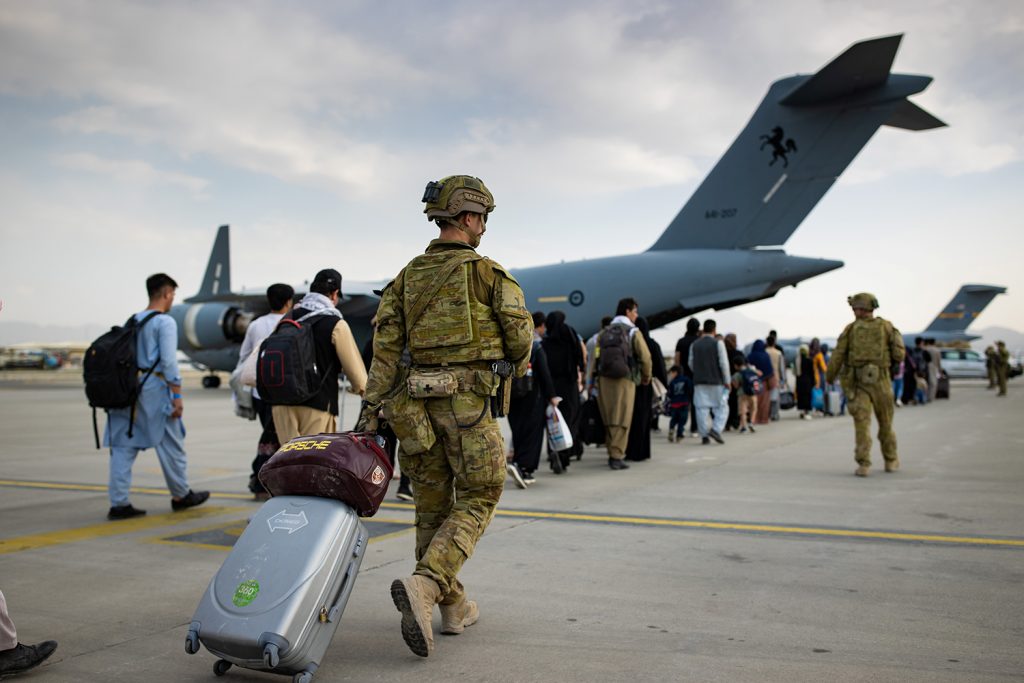
I thought about writing a post about Afghanistan right when the news broke, but it took about 20 seconds to dismiss the idea. Just thinking about the amount of information I'd need to consume to even have a vague idea of the big picture was almost as depressing as the news themselves. Nevertheless, my guttural reaction was that Biden should consider resigning. Throwing half a country to a fascist regime of 8th-century ideas just because the Americans are bored of a "war" that hasn't even made the news in years? Is there anything to talk about at all? 

Since then I've read and listened to a fair amount of articles and podcasts. I haven't gotten much better informed, but at least I've learned to appreciate the complexity of the situation. And to marvel at how opinions of well-informed people can be so starkly different. The only thing everyone seems to agree on is that the execution of the withdrawal has been an unmitigated disaster surpassing the worst expectations (Biden said there won't be pictures like that of the helicopters rescuing Americans from the top of the US Embassy in Saigon - he was absolutely right, seeing Afghans trying to hold on to the wheels of American airplanes taking off, then falling to their death is even worse). Beyond that, half of the people I usually listen to say that regardless of the blunder, Biden made the right decision, and the other half claims that it was both stupid and immoral. I could rarely notice even the trace of doubt from either side. It's worth emphasizing that I'm referring to very intelligent and well-intentioned people, who do journalism for a living, not right-wing assholes or woke idiots. Everyone seems lost in the whirlwind of information, instinctively groping for their favorite tropes to find a vantage point.

As for my current vantage point, I can accept a wide range of opinions barring "the Americans should not have forced their culture on the Afghans" or "it is their (the Afghans) decision how to live, who are we to say that our ideology is better than the Taliban's" - which is exactly what I was told just a couple of days ago. Sure. So there are gay people in the world who prefer to be killed on sight. Our gays are just brainwashed by our Western liberal culture to think that staying alive is better. The same goes for atheists (or just secular-leaning people), or women who want education, or Muslims who have a different interpretation of the holy scripts. Stoning, burning, chopping off limbs for petty crimes are wrong only by our measures. Seriously, how braindead people can be? (the answer is: quite, see anti-vaxxers).

Ranting is over, back to the big picture. I decided that instead of giving an opinion, I try to collect the questions I think one should ask before forming one. I came up with the following list:

  • If we accept both that the Americans had reason to go to Afghanistan and that they should have left already, then when would it have been a better time to leave?
  • If the war was a failure, what objectives have the Americans failed to achieve?
  • How much responsibility do the Afghans bear for the failure?
  • What have the Afghans gained and lost in the past twenty years?
  • What is changing actually? How much of the country was under American control and how much of it will the Taliban take over?
  • How much did it cost for the US in money, energy, political capital, military resources to uphold the Afghan state?
  • How much will the withdrawal cost in intelligence, global prestige, counter-terrorism efforts for the US?
  • What will be the effects on America's enemies and allies?
  • What will be the effects on the people of Afghanistan?
  • How will the answers to these questions change in 5, 10, 20 years' time?
  • Could have the withdrawal been done sensibly?

Along these lines, here is what I think now.

Objectives and results

The Afghanistan war started as America's retaliation against Al-Queda for 9/11. The US aim was to kill Bin Laden and destroy his terror organization and prevent further attacks on American soil. Al-Qaeda resided at that time in Afghanistan in the terrorist haven of the Taliban (the relationship between them and their hosts wasn't frictionless, but the Talibs hated America much more than they would have been willing to hand over Bin Laden). Contrary to the public image of a war-mongering, imperialistic US trampling over international laws, the invasion enjoyed unanimous international and domestic support across the whole political spectrum. For the first time in its history, NATO invoked its fifth article, declaring that the attack on America was an attack on the whole alliance.

Toppling a regime of a Third World country was not a challenge for the world's sole superpower, and the US had the resources and resolve to hunt down its targets. But had the Americans left right after achieving that, the terrorist groups would have simply re-organized, and the Taliban would have returned. So they had to stay and try to prevent it from happening. Thus, in the following years, the US half-heartedly committed itself to a second objective, namely building up a democratic Afghan state as a bulwark against extremism. After twenty years, both objectives can be deemed as failures. Al-Qaeda is not rooted out, the Taliban controls more territories than before the invasion, and the withdrawal immediately pulled the plug on the incredibly corrupt and incompetent Afghan state. It looks all but certain that the Taliban will take over completely, and whatever advances the Afghans have made in human rights and freedom will be reversed.

However. Even if the Afghan democracy lasted only twenty years, and it was miserable by Western standards (and often disappointing for their own citizens), it still meant that a generation grew up where girls could go to school, women could take a role in public life, boys could play football or watch TV, theaters opened, people could live their lives free of religious fanatics. 

Just to quantify a few achievements:

  • Consumption of electricity rose tenfold.
  • The infant mortality rate fell from 145 per 1,000 to 104 per 1,000
  • Life expectancy for women rose from 45.5 years in 2001 to 54.4 years in 2019
  • The literacy rate for women rose by 300 percent

This is just the tip of the iceberg. This is not nothing, this is actually amazing. This is something everyone should cherish who gives a damn about other people.

At what costs was this all possible? Calling Afghanistan a "forever war" was a catchy and misleading political slogan. From the US point of view, it has hardly qualified as a war at all. The number of US troops on Afghan soil had been decreasing for years. In September 2017, the number was 14,000. At the start of the Biden administration, 2,500. The American casualties in the last two and the half years were 24 soldiers. 24. Just for comparison, 58,000 US soldiers fell in Vietnam. In Germany today, 34,000 US soldiers are stationed. In Japan, 55,0000.

The brunt of the sacrifices fell on Afghan soldiers, among them around 60-75,000 died in the last twenty years, fighting against the Taliban. The number of civilian casualties is comparable.

Can we say that the achievements above compensate for the 120,000 deaths? I really don't know, no one does, it's just not computable.

Was it worth it for the US? The war cost around 2 trillion dollars. This is a far greater amount than one could comprehend, so let's not try to calculate how many ICUs could have been built from it. Money on this scale doesn't work like this, anyway. It also cost around 6-7000 American lives. Was it worth it? I don't know.

The costs of leaving

I remember that shortly after 9/11, the most often heard wisdom from the experts was that the next attack is not an "if", but a "when". And yet, 20 years passed and no serious terrorist attack took place on US soil. Would it have been different if not for invasion? I don't know, but I find it likely.

Now the US completely loses the intelligence network it has built up in the past twenty years and also its ability to act on the ground. How much will it cost in money and lives to prevent another 9/11, continuously, with no end?

Dismantling everything they built there and not leaving even a single base where they could operate from seems just a bad decision regardless of the time horizon.

The effects on allies and enemies

It's good to remember, that the Afghanistan invasion and war weren't a US operation. It was a NATO operation. The American unilaterally pulling the plug on it won't foster trust and goodwill in the future among their allies. And what do the Taiwanese think now? Or Japan or South Korea or Ukraine or the Baltic states?

As for the enemies, China, Russia, or Iran just can't stop gloating over the American humiliation. But under the surface, things are less clear. Are they really happy to see the US beaten, or would have rather seen it staying mired in the Middle East with no end? Does China feel emboldened now (vis-à-vis Taiwan), or rather worried that America will turn its focus fully on her? Afghanistan's Muslim neighbors sound jubilant now, but I've just listened to a Pakistani journalist, who said that under that unified facade they are less than joyous, because contrary to how ignorant Westerners think, it's not all tolerance and camaraderie in Muslim-land.

Could the withdrawal have been done better?

The answer is undoubtedly an emphatic yes. The evacuation has been a horrific blunder. Thousands of Afghans who worked with the Americans are desperately trying to get out of the country under the threat of imminent execution. Seemingly everything that could have gone wrong, did.
On the other hand, the Biden administration had a very bad hand to play with. The speed of the collapse took them as a surprise, for which the blame is squarely on them. They should also have prepared for the worst scenario much better. Yet, what would have been the effect of them saying a month ago: "Guys, we are off in 4 weeks, and your corrupt, incompetent government will be the first to throw in the towel, so get out of the country right now while you can, because you won't believe the shitstorm that's coming" ? What would that have led to?

So it could have been done much better. But not very well.

Summary

To finish with a banality, this is complicated - even if too many seem to think it's dead simple. For me, the only honest attitude seems something like "This is hard. I am for/against the withdrawal, but I accept that the other side can pose legitimate questions I just don't have the answers for". Biden's decision - which I still think was a bad one - will have long-lasting consequences on counter-terrorism, geopolitics, regional politics, American domestic politics, human rights, and a bunch of other things. It will change some for the better, some for the worse, and some better in 2 years and worse in 10. As the Zen master Gust Avrakotos said, "we'll see".


, ,

Trump again?

This is not a post I really wanted to write. I'm really sick of American politics. But my last statement on the topic, that is, Trump had finally committed a successful political suicide attempt, has been proven wrong dramatically quickly. So honesty demands a follow-up which at least gives the opportunity to look at the bigger picture. Let's do it and get over it.

The election immediately refuted some of my theories. I thought Trump is already in his "fat Elvis-stage", where he has become more of an embarrassment for the Republican voters. He lost his novelty, he didn't reach out for new supporters, he had proven to be a complete failure in every respect. Every ethnic minority will come out against him. He will lose big time. He didn't. Actually, it was a very close election (thanks to the electoral system). 10 million more people voted for him in 2020 than in 2016. But, at least, at the end of the day, he lost.

After the election, to no one's surprise, Trump kept shouting lies and conspiracy theories about his "stolen victory". "Great, keep doing it", I thought. The louder he is, the smaller he grows, and the bigger the embarrassment he causes to the GOP. All is well-deserved. What I didn't - and neither many others - expect was that the GOP would enthusiastically go along with his lies. That was bad because the longer they stick with Trump, the longer it will take to finally get over him.

And then came January 6. It was a cathartic moment. I think if the Senate had voted on the impeachment trial that day, Trump would have been finished. Even the Trump-fans of the party shat themselves enough to immediately blame Trump and distance themselves from him. 

And then, the impossible happened. The GOP "civil war" between Trumpists and normals lasted about two weeks and ended with a whimper. The Republicans not only refused to convict Trump, but ran back to him as fast as they could. The ten Republicans who voted with the Democrats face censure, death threats, and ouster from office. State-level Republican Parties literally censure them for being "insufficiently loyal" to the former president. They make the Soviet Politburo of the 80s look like a group of free thinkers.

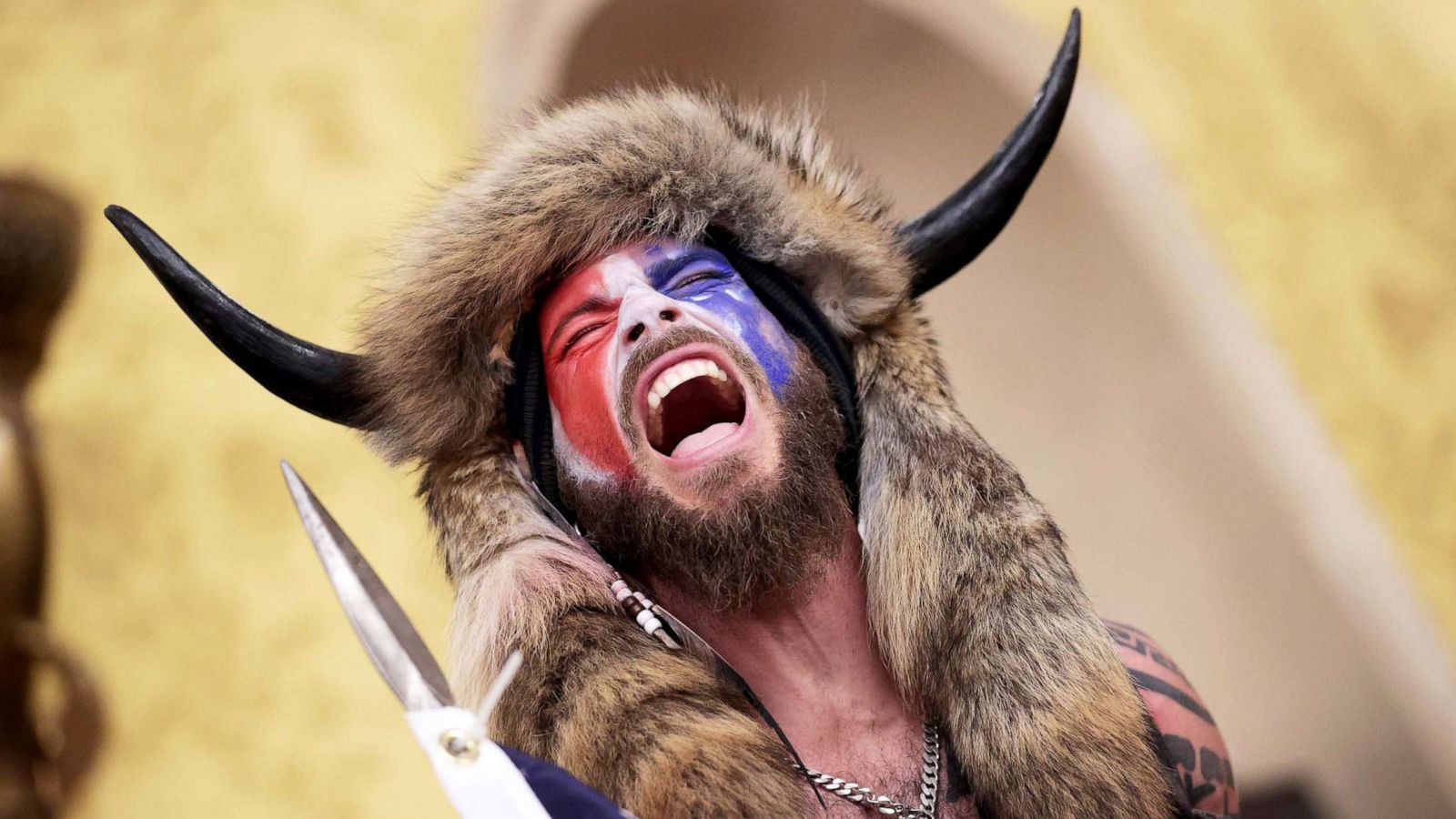
There is a reason why I said it was something impossible. In America, the world's oldest democracy, one of the main parties supports someone who openly tried to overthrow a democratic election, and having failed in that, he incited a mob to attack the nation's Capitol, which left 5 people dead. Ah, yes, and they also wanted to hang his vice-president. They not only support him, they practically worship him. The GOP is a party of traitors, and it's not hyperbole. It's a fact.

This is something about which if you weren't wrong, you just didn't pay attention. This might seem like a lame attempt to explain away how badly I read the situation, but I stand by it. 

So, will Trump be the Republican candidate in 2024? Let's sketch up the usual quick pro and con lists.

The GOP is in a very hard place now. I still think most of them would love to put Trump behind them. But there are two main reasons why they keep toadying to him. One is that none of them wants to face what Cheney, Kitzinger, Sasse, Cassidy, or the other dissenters are going through now. The other is that Trump holds them as hostages. If he created his own party, half of the voters might flock to him. (Yes, impeachment conviction would have solved your problems, coward idiots). Even if only 10% does, the GOP will never win an election again. Yet, January 6 left the stain of unacceptibility (for some, at least) on Trump. Even before that, he managed to be the first president in 30 years kicked out after one term, and the first in 100 years under whom the governing party lost the trifecta of the presidency, the Senate, and the House. He really doesn't look like anyone's idea of a winner. Yet, supporting him gives at least a chance for the GOP to win back the Senate in 2022 and the presidency in 2024.

And this is where the pro list ends. The con list has two items, one is Trump's looming legal battles, and the other is the other contenders.

Trump's legal challenges are numerous but fall into two broad categories. First of all, if McConnells dreams come true, the criminal system catches him for inciting the insurrection, or for trying to put pressure on officials to change the election result, or something like that. McConnell would love it, because then the system would do the dirty work of getting rid of Trump for him. Second, New York prosecutors finally got their hands on Trump's tax records. That could lead to some juicy stories, but unless he appears on the front pages lead away in handcuffs, none of them will shake his base.

About the other Republican presidential hopefuls, Nikki Haley, Ted Cruz, and Josh Hawley stand out. They would love to inherit Trump's voters, but until Trump is legally banned from running for the presidency, they have no chance. They are cowards, they are spineless, they are young, they might just wait for their turn in 2028.

So, the con list is not very strong either.

Well, that's it for now, I guess.


, ,

Bye, Trump 2024

Will Donald Trump be the Republican presidential candidate in 2024? I wanted to write this post right after the Georgia runoffs (January 5) but procrastinated long enough, that is, 24 hours, for letting Trump render the question moot. Nevertheless, I think he already lost that chance on January 5, and what he did the next day will push the Republican Party further away from him - which is an undeserved present for them and a good thing for everyone.

The reasons are his complete failure in delivering victories, the stain of January 6, being the only president ever impeached twice, and being kicked out of Twitter.

Not that the GOP gave a damn about any of the last three items. It is beyond caring about principles, or just the illusion of the minimal standards of decency, or the president being an incompetent, corrupt, race-baiting moron. They don't even care that much about policies anymore. The single purpose of the Republican Party is to win elections. And the Great Negotiator has turned out to be pretty shitty at that. 

In 2016, with the stars aligned, Trump finally won the presidency he has been attempting to run for since the beginning of the 2000s. And then it went all downhill. In 2018 he declared that the midterm elections are a referendum over him. The Republicans then duly lost the House. In 2020, the voters kicked out Trump himself, making him the first one-term president in 30 years. The fact that the GOP actually gained seats in the House made it clear that the GOP can still win elections, but Trump is a liability. Then he just couldn't bring himself to shut up and on January 5 he cost the Republicans the Senate as well. And that's when I think the romance ended for good.

Hawley and Cruz didn't lead the movement to challenge the election result because they love Trump so much, but because both of them wanted to be the 2024 nominee. Like the other Republicans who planned to vote with them and refused to vote for impeachment, they don't want Trump, they want his base.

And then, as the cherry on top, came the unique historical feats of being the only president ever impeached twice and having incited the mob to attack the Capitol of his own country. Social media platforms have taken away his megaphone, Amazon pulled the plug on Parlor. In the near future, without the impunity of his office, ugly things will just keep coming up around him. 

I think even without these, 4 years of him not being the president would break the spell. Without his bully pulpit, he will stop being scary for Republicans, and instead, for all the reasons above, he will become more and more an embarassment. Even if Republicans refuse to convict him, and thereby banning him from holding public office again, Trump is done.

, ,

Farewell letter to the National Review

After four years, I decided to cancel my National Review subscription. I thought it's a good idea to share them why, and I sent the paper the letter below. I tried to be short, charitable, and to avoid being snarky or pompous. I don't think I succeeded in any of those apart from the charitable part, but I did my best. Here it is:


Dear National Review,

After four years of reading and a couple of months of thinking, I decided to cancel my subscription. In the following, I'd like to explain my decision in the hope that it might do some good. 

In 2016, when Donald Trump became the presidential candidate of the Republican party, I, like half of the world, was dumbfounded. I didn't understand how any moderately well-informed person, political affiliation notwithstanding, could vote for a conman, who is a despicable character and a national security threat. It prompted me, a centrist, to dive into conservative journalism. After some trial and error, I ended up with the flagship magazine of the American conservative movement, National Review. 

I was happy with my choice. NR provided a diversity of opinion, great writing, new ideas (new for me at least), and thoughtful challenges to my more liberal worldview. I didn't agree with all the articles of course, but at least half of them in every issue gave me something to think about.

However, in the following years, as it became obvious that Donald Trump is exactly the man he had shown himself to be during the primaries, my satisfaction slowly started to erode, step by step.

Donald Trump has trampled on every principle this magazine is purported to care for: character, fiscal responsibility, free trade, Christian values, standing up against dictators, standing up for allies. He has ballooned the deficit. He sucked up to foreign dictators and took the side of Vladimir Putin against his own intelligence services. He abandoned war allies. He dragged the level of political discourse to the gutters. He blackmailed a foreign ally to force it to come up with dirt on his political opponent. He paid off a porn star he had sex with while his wife was in labor. He pardoned his corrupt business partners. He embraced the support of white-supremacists and genuine lunatics who think that the Democrats are literally a pedophile, Satan-worshipping cult led by George Soros. And, in the time when every day almost as many Americans (and on some days more) die in COVID as in 9/11, he held rallies just to be celebrated by thousands of maskless people - who cares who might die because of this. "I take no responsibility at all".

And the Republican Party went along with it. Not reluctantly, not with protests, but with a Lindsey Grahamesque eagerness to please. And, unenthusiastically and grudgingly, National Review went along, too. Yes, it still offered diverse voices. Yes, it called out the most egregious offenses. It never hid its opinion of the president's character. But the objections to Donald Trump never went beyond what is expected from Her Majesty's Opposition. It was always about finding the easiest path not to go against the grain while finding convenient reasons to support it - masquerading as responsible, principled journalism. Toothless and restrained admonitions to Trump, war cries against the most moderate, institutionalist, establishment-type Democratic challenger one could imagine, Joe Biden. The diversity of opinion now includes Conrad Black and Victor David Hanson on one end but stops with Kevin D. Williamson on the other. And even Williamson's GOP-critical pieces are mandatorily embedded between two Democrats-bashing articles from him.

In short, the National Review chose to tolerate the president and support the GOP based on the conviction that the Democrats are even worse than Trump. That opinion could have been held with fairness and integrity. But every time Trump and his enablers did or said something indefensible, Biden grew a bit more menacing. He spoke up against defunding the police and similar radical left idiocies. He refused to jump on packing the court. He believes in compromises and has reached out to the other side. None of these matters a bit - he is still worse than a narcissistic, callous, petty, corrupt ignoramus whose indifference and stupidity has probably killed tens of thousands of Americans, and who is actively spreading Russian propaganda (an American president spreading Russian propaganda!). No critical inquiry into our side except for the most glaring errors. No trace of subtlety in the analysis of the other side. No difference between Bernie Sanders and Joe Biden. Conveniently, no hard decisions for a right-wing magazine.

The partisanship is as dismaying as obvious. The GOP and even Trump have always been given the benefit of doubt, a generosity that has never been extended to the other side, which is of course a single, monolithic block hellbent on destroying America. Whatever his sons' faults, everyone knows that Biden has never used his office to enrich himself and his family, just as everyone knows that Trump and his family are doing exactly that. Still, the National Review chose to find problems only with Hunter Biden and never with Jared Kushner. When Donald Trump was publicly demanding that his attorney general indict his opponents, National Review worried that Biden wouldn't be a reliable custodian of the constitution. When the NYT revealed Trump's decades-long tax evasion, David Harsanyi of the NR declared this behavior "patriotic". When Donald Trump with half of the GOP is literally trying to steal the election (please forget the anodyne descriptions, like "undermining democracy" - this is plain treason), and his former National Security advisor calls for suspending the constitution and declaring martial law to re-run election,  National Review poses the on-line question: "What do you think is the greatest threat to America? Cancel Culture or Socialism?"

I was relieved to see that at least in this madness, National Review refused to follow the rest of the right-wing media (even though it still deems the doctoral title of Jill Biden as scandalous as the call of Trump-loyalists for the execution of a public official). But when the line to make a stand is simply between being a democracy or a Banana-republic, that's a very low bar. No decent citizen needs journalists and political thinkers to tell him or her how to make a judgment on that. Republican congressmen and prominent right-wing media personalities are working with the gleeful support from Russia and China on destroying the most fundamental democratic norm - the bipartisan transfer of power. You have to be an intellectual to see nuance into it.

Arguably the most valuable and generally unappreciated gift from Trump presidency is that it provided a once in a lifetime opportunity to test your character. Standing up for decency and principles has never been less risky. In darker ages and places, one could pay for it with her life. In today's America, the penalty was angry tweets from the Crybaby-in-Chief. For the overwhelming majority of the GOP-members, that was too much. But there were conservatives and even Republicans who stood by what they believed in the face of ostracism and sometimes financial difficulties. They are the Never Trumpers, the erstwhile allies National Review never ceased to disparage while itself stayed in the warm and secure nest.

If I want to read good writing and excellent opinion pieces informed by conservative ideas, I could still find both in the National Review. But the amount of confirmation bias, self-delusion, and hypocrisy I would need to wade through is just too much. NR is still the flagship of intellectual conservatism. But that aspect is of secondary importance. First and foremost, the magazine exists to serve the GOP, which, having thrown away every principle it ever claimed to believe in, only exists to oppose Democrats.

Goodbye for now, with the hope that one day we can meet again.

Sincerely,
The Editors of New Vac Times

,

What's wrong with Libertarianism

I have been thinking for a while about my issues with Libertarianism. For two reasons. One is that you should always challenge the beliefs you like. Two, libertarians are such a bunch of insufferably arrogant snobs, and one day I'd like to wipe the floor with one - at least in a verbal contest.

But the notion of fairness requires that before it comes to blows, the attacker should try and steelman his opponent's position. So in the following, I try to briefly summarize what I think Libertarianism is, and to put special emphasis on the ideas I like in it.

Libertarians' fundamental belief is that individual freedom should be regarded as the highest aspiration in society. Everyone should be free to do anything she likes as long as it doesn't harm others. "My freedom to swing my arm ends where the other fellow’s nose begins" - as the famous quote says. The government's sole purpose is to provide the conditions under which individual freedom can flourish. It should guarantee national security and ensure the rule of the law domestically, and with some exceptions (some libertarians are quite ok with seatbelts), that's all it should interfere with people's life. Taxation for any other purposes, like building an orphanage or funding basic research, is theft or plain extortion. Charity, like business, should be strictly voluntary.

This belief logically leads to the faith in free-market capitalism. Economy, just like any other public endeavor in society, should be organized bottom-up. Here I find the ideas and arguments of free-market advocates very persuasive. The theory behind why voluntary exchange between individuals leads to higher prosperity for the whole society than central planning is elegant, parsimonious, and powerful. It is also proven.

Let's demonstrate it with an example. If the French government tried to calculate how much a Parisian restaurant should ask for oysters, it would need to unpick a very intricated net of interactions. It would need to know how much oyster people generally wish to eat, how much oyster fishermen in Marseille can produce in a day - and their fellow fishermen elsewhere. How much compensation they deserve for the work. How much transporting the goods would cost (the best cost/benefit ratio among the alternative routes). How much is the demand in Paris for oysters and what is the fair price customers would be willing to pay for them. How much the cook would ask for preparing them.

With voluntary exchange, these calculations (and a myriad more with varying relevance, like what's producers of oyster-fishing equipment would want for their goods) happen between individuals, who know best how much value they put on their time and work.

The price of an oyster dish condenses a huge amount of information in a single number no one alone could come up with. And if the government forced the price to the half by decree, the ripple effects would wide and far-fetching and would affect more people than it could be foreseen. Most of the time, not for the better.

Accepting the supremacy of voluntary exchange, the impossible burden of knowing every detail and consequence of a financial action vanishes. And the free exchange-based system indeed rules supreme over any other economic alternative. Never before the modern times had humanity it as good as now in terms of GDP, nutrition, life-expectancy, or any other meaningful materialistic metric one can name. Capitalist countries are free and prosperous, while there is not a single self-proclaimed socialist state that didn't manage to make its people poorer and its prisons more crowded.

Libertarian thinkers, however, are rarely satisfied by stating their case not solely on economic terms. They claim that their way of doing things is not only economically more efficient than the alternatives, but it's also morally justified. Here they are not so different from socialists or even liberal democrats. Every camp believes that their political/economic ideas would yield the highest prosperity, and, conveniently, they are also morally superior.


So as far as I can see, Libertarians tend to state their case in four different ways.

1. Reaping the rewards of your work is just and it requires no further explanation.

2. (going from the other direction) although strict adherence to the first principle might be a justification for being selfish and greedy, but it's still immoral to forcefully disappropriate someone else's possession. 

3. Value is in the eyes of the beholder. No one has the right to impose her priorities on her fellow citizens.

4. Finally, life is terribly complicated. Solutions based on strictly voluntary bases might not always be the best, but it's practically impossible to build a framework of rules that would on average perform better. In the same vein, it's better to accept that the value of something is simply what people are willing to give for it than attempting to come up with some arbitrary and complicated way to measure it. It's not only futile, but it also leads to corruption and injustice.


So that is at least my interpretation of Libertarianism. My rebuttal below runs broadly along the following lines. For some problems, states sometimes have better solutions at their disposal than what free markets could provide. Ensuring that economic choices are really uncoerced sometimes requires more and not less state intervention. Libertarianism weakens social cohesion, which is in cases desirable and in others not. Finally, values are not entirely subjective, and they shouldn't be treated as such.

Let's start with a generic observation. I think every single libertarian argument above stands well on its own. Some are very convincing, but all of them are at least defendable. My problem is with the almost religious fervor Libertarians cling to them. Principles in life always have a sphere of validity. Take them too far, and they will either collide with the extreme end of another dear principle or will just lose power. Don't kill is a good guideline in life until you see a serial killer with a blood-stained axe in his hand coming at your kids and you have only one bullet left in the chamber. Being compassionate and always telling the truth are also mutually exclusive in certain situations.

Libertarians sometimes seem to think that the world is a just bunch of nails and they have found the perfect hammer  - even if it's admittedly an unfair comparison. Free-markets are such a powerful and versatile invention that they reject physical parallels. But they are not a panacea. An apter analogy could be found in engineering. Software engineers know that decentralization is a powerful technique for building simple, robust, and efficient systems. But they also know that there are no silver bullets in engineering. Sometimes centralized control is the best option. If no single approach can solve every problem in engineering, it's unlikely that one such exists in a world much more messy and complex, that is, economics.

In turning from the abstract to the concrete, I can think of at least three areas where free markets don't perform very well.

The first is that seemingly voluntary life-choices are not really voluntary. The libertarian argument for the legalization of prostitution is that as it happens between consenting adults, it's no one else's business. But neat ideology is a thin veneer on the grim reality: the large majority of prostitutes are drug-addicts. Women are often forced into selling their bodies and are abused by their pimps. Arguments for and against polygamy follow the same lines. Fundamentalist Mormon women can claim that they are happy in a polygamous relationship, but in those communities, underage girls forced to marry men 50 years their senior. It's not their free choice, and they are brainwashed into it from childhood and punished severely if they try to dissent.

The second area is the problems for which individual actions just don't provide adequate solutions. Sometimes the sum of the parts is less than the whole. Recycling your waste will make you feel better about yourself and will do nothing to solve the problem of climate change. To stop lethal viruses, a large majority of the population needs to be vaccinated. If the government refuses or unable to enforce that, the fate of the whole society stays in the hands of a small group of delusional anti-vaxxers. Another example is banning cigarettes from public places. On their own, few smokers would have followed guidelines, but even the majority of smokers are now happy to be able to spend a night in a bar without stinking the next day. The same can be said about enforcing helmets in professional cycling or ice-hockey. A hockey player would not have worn a helmet when others don't because it constraints her vision and she would have had to trade efficiency for safety. But being mandatory, it poses no disadvantage to anyone and provides higher safety for everyone.

The third area is where places where the financial incentives of individual actions are missing. Funding basic research in, let's say mathematics, is not a rational business decision anyone would make if those researches are expected to bring results in a hundred years. 

The element of libertarian ideology I take issue with the most is the definition of value. Libertarians say, if you produce movies for which people are willing to pay to see, you have exactly the same moral right to enjoy your wealth as if you had amassed it by producing medicaments for disabled children. The majority has no right to impose their system of values on individuals. After all, who has the right to claim to be the judge of other people's preferences, and second, value systems change over time. What once was regarded as the deepest depravity, like homosexuality or atheism, is today considered perfectly normal. 

And, in general, they have a point. Who is there to say how much a painting should cost? What is worth more, a computer or a motorbike? Caring for the elderly or nursing children? But even though I agree with the idea in general, I don't believe that values are purely subjective. And neither really do those who say so. Let's take the dilemma raised by Breaking Bad. If people are willing to pay much more for producers of crystal-meth than for chemistry teachers, does it mean the former deserve more? It's futile to try to align moral and material worth. But it doesn't mean they are truly independent and every attempt to reconcile them deserves scorn.

Finally, libertarianism weakens cohesion in society. This is sometimes a good thing, the world would have preferred a bit less unity in the Third Reich. But oftentimes it's not. Public and mandatory schooling, universal health care, national television, and the like do forge national unity, and the only thing that makes that hard to see is that we take them for granted. I once heard the famous American libertarian, John Stossel arguing for a privatized postal service. Stossel cited the massive losses the national postal service suffers every year, and argued, very sensibly, that private companies would do the job much better. I'm sure it's true. But they surely wouldn't be universal. Scarcely populated, remote places with old and possibly lonely people would unlikely be covered by them. I accept that there are some ideological hermits who would find infuriating that they can't get away from the overbearing state, but their well-being concerns me less than those who would rightly feel just left out in the cold by the nation. I'm not saying that receiving letters from the state would fill the gap of loneliness in people's hearts. But I think the idea that there is a community that regards you as a member comforts more people than how many it incenses. Also, what would a libertarian utopia do if its less enlightened neighbor decided to invade it? The "every man for himself" approach would bring a quick end to the glorious experiment.

In the end, although I don't want to live in a country ruled by libertarians, I want to hear their voice in opposition. Libertarianism is the best antidote against theocracy, an ossified class-system, or socialist enthusiasm in government. They have a lot to say both in the area of morality and economics. But unlike moderate liberals or conservatives, they think what they have to say is all that's out there.

, ,

Pranks, bubbles, disappointments


In 1996, Alan Sokal, a professor of mathematics and physics, submitted an article titled "Transgressing the Boundaries: Towards a Transformative Hermeneutics of Quantum Gravity" to an academic journal of postmodernist cultural studies. It passed through peer reviews with flying colors and garnered praise across the targeted segment of academia. Shortly after, Sokal announced that it was a prank. Prompted by his annoyance with pseudo-intellectuals, he had packaged lengthy nonsense in obscure language and tested how well it would sell. It did sell well, not to the amusement of the duped parties, at least not after he exposed the trick. Astonishingly, some of them even doubled down. Instead of owning their embarrassment, they claimed that Sokal might have been insincere, but his article accidentally happens to be full of gems.

Twenty years later the philosopher Peter Boghosian, the mathematician James Lindsay, and Helen Pluckrose, an English literature scholar, pulled off the same trick. To expose poor scholarship of certain academic fields, they submitted a series of bogus papers to various journals. Their target this time was yet another subfield of postmodernism, the gender- and race-studies - "grievance-studies" as the trio puts it. They rewrote some parts of Mein Kampf, wrote an essay about how dog-parks facilitate rape-culture in society, another one about the benefits of anal sex toys for men in the fight against transphobia, and a series of others in a similar vein. Boghosian's "The Conceptual Penis as a Social Construct" probably crowns their efforts, but it's a tough race. Like Sokal, Boghosian and his partners in crime wanted to cast a spotlight on what they perceived as pseudo-intellectual bullshit masquerading as science.

The hoax was eventually exposed and it predictably ruffled the feathers of a great many people. It generated both furor and discussion about many topics around ethics, groupthink, cultural influence over academia, orthodoxies, etc.  Lindsay and Pluckrose recently wrote a book about the broader topic of their interest with the lengthy title of "Cynical Theories: How Activist Scholarship Made Everything about Race, Gender, and Identity―and Why This Harms Everybody".

I listened to many interviews with the guys, and I like them a lot. This all happened in the past. Then a couple of days ago Lindsay' tweeted: "Frankly going to unhappily vote Republican, including Trump, until the left walks this shit all the way back." 

Well, that was a bombshell. I don't think Lindsay is a racist or misogynist or even the kind of guy who suffers Trump. But it is a colossal error in judgment, for two reasons. 

For one, Donald Trump dragged the presidency and public discourse in the gutters like no one ever has before, and by paralyzing America, it made the world a more volatile, dangerous, and cynical place. Yes, America never fully lived up to its ideals, but: 1. no country ever had 2. the world's hegemon at least had noble ideals. Good luck with the world that is governed by Chinese, Islamist, or Russian ones instead. The damage being caused by irritating poseurs, virtue-signaling craze, and victimhood culture on the Left is very bad and it does real harm to real people, but it still doesn't even come close. Your sense of proportion has to be so imbalanced to see that exactly the opposite way, that it's a miracle if you can even utter a straight sentence. Clumsy metaphor, never mind.

Nevertheless, Lindsay's opinion on the dangers of the two extremes is at least defendable. Maybe he is right and my sense of proportion is useless. But what is not defendable, in fact, almost inexplicable for a man of Lindsay's intellect, is that he thinks reelecting Trump would somehow help his cause. A ruling white-grievance party is not a bulwark against left-wing idiotism. It's the fuel of it. Lindsay seriously thinks that another four years of Trump wouldn't make Wokes even crazier?! It would make me crazier.

Luckily, his college, Helen Pluckrose, has not fallen in the same pit. She, without judging her acquaintances' decisions, encourages everyone to vote for Democrats. I wonder whether it has to do something with gender (that would be ironic for the trio). Women certainly seem to be less enamored by this faux-strongman-shtick.

Anyway, read what Jerry Coyne has to say about the matter.

The affair made me sad but also prompted me to contemplate bubbles. Lindsay lives in a bubble where he faces the absurdity of and harm caused by Wokeness every day. He probably also suffers attacks from them every day. And this apparently distorts his picture of the world to a dangerous extent. It is sad and disconcerting.

It's sad to realize that someone, whose opinion you have valued high so far, proved to be very fallible. It is also frightening, because if a smart guy like him can't see the forest from the trees, how do I know that it's not I who lives in a bubble? How do I know that Lindsay is not right, and a Trump presidency is, all things considered, still better than a Biden one? Or how do I know that Lindsay was right about Wokeness, to start with? It's both true and meaningless to say that everyone lives in a bubble. Obviously, everyone has preferred sources of information and a specific group of fellow humans he or she regularly interacts with.

I suppose the only remedy for close-mindedness is to follow the well-known and rarely practiced advice of staying out of your comfort zone. I suppose one can try to stay informed simultaneously inside multiple bubbles with little overlap or push the walls of her preferred bubble as far as she can. 

When Trump won in 2016, I started actively seeking out right-wing information sources. The farthest I had to stomach to go was National Review, and even that one I'm planning to ditch now (although, had they not gone all-in for the GOP by 2020, if not for Trump, I would stay). I never had it in me to watch Fox, let alone to read Breitbart. Gad Saad, Jordan Peterson, Niall Fergusson, Andrew Neil, Douglas Murray, Charles Murray, and few other people whose names I can't recall now, are whom I strongly disagree with at times, but I enjoy listening to. I can't listen to anyone who I can't enjoy. Probably that's the reason why I never sought left-wing sources of information. They are humorless. Hm...I just realized I have to correct myself here. I accidentally stumbled upon Slavoj Zizek, and he is quite funny, but I have no idea where he is on the political spectrum - even though he calls himself a communist. Anyway, this post has descended into a rumbling, it's time to stop.


, ,

Anti-anti-Trumpers

Yesterday I listened to Coleman Hughes's interview with Niall Fergusson. Among other things, the discussion touched on America's handling of the pandemic. I had expected Fergusson to come up with his usual trope that how biased the mainstream opinion is for putting the blame fully on Trump, and he didn't fail to disappoint. He is probably right pointing to the mistakes and ineptitude of the CDC and the relevant institutions. Whatever the president of the United States' attitude is, a competent bureaucracy would have handled the crisis much better. However, he also made a passing remark of how the situation under Hillary Clinton would have probably not much different, apart from disinfectants and other antics of Trump. Had he not done that, his opinion could have been regarded as factually correct, even if one-sided. But Fergusson, in comparing Clinton to Trump, didn't see it important to mention that the current president has publicly and consistently belittled the crisis, disparaged scientific opinion, and personally attacked medical experts since the beginning of the pandemic. Almost everything can be explained away. But not this: Trump, after having admitted on tape that it's a deadly disease, has been, and still is, holding rallies where he encourages people the shout his name into each others' faces, and express their loyalty to him by not wearing masks. For the classical liberal Fergusson claims to be, it's a strange lack of reference to personal responsibility and individual agenda.

In concert, Hughes mentioned that the reason he hadn't voted for Trump in 2016 was that he had feared Trump would turn out to be a fascist. Seriously? The stretch of acceptability stops only at fascism? It's a shame because otherwise the wunderkind Hughes is a kind and brilliant person I like to listen to. And Fergusson is one of the most prominent historians of our time. I always (well, almost always) find his insights worthwhile, even if nowadays his deep and seducing voice and Scottish accent reminds me of an educated mob-boss who is telling you he is in a generous mood. 

So this whole affair leads me to a topic I've been planning to write about for a while. The people I despise most in the Trump-camp, the so-called anti-anti-Trumpers. As opposed to anti-Trumpers, it's a moniker some of its holders (Brett Easton Ellis, for example) explicitly like to attach to themselves. They are people who ostensibly dislike the president, but find that the "hysteria" around Trump deserves more criticism than Trump himself. Republican politicians have proved to be spineless cowards or worse, but at least they have the excuse of financial and professional risks that standing up to Trump would entail. But right-wing intellectuals, who are openly displeased with Trump and still make a living covering for the GOP and attacking Democrats, have no such excuse. Apart from friends not worth keeping, they had nothing to lose by choosing principle and not much to gain giving them up. There are plenty of other publications that would have employed them. David French and Jonah Goldberg bid farewell politely to the National Review, while Max Boots practically kicked over the table on his way out. They are the rare exceptions.

Let's see some examples for the rest.

When the NYT came out with the story of Trump's tax evasion, David Harsanyi of the National Review wrote an article titled "Avoiding taxes is patriotic". I shit you not. Harsanyi conveniently found his inside libertarian to argue that taxing by an incompetent government is practically stealing, so a real patriot should evade it out of principle. What about the police, the military, the judicial system, and similar trifles? I'm sure Harsanyi would have written the same in Biden's defense (out of principle, again), should Biden have turned out to be a lying cheating scum. I remember reading another article from Harsanyi, in which he thanked his parents for emigrating from communist Hungary and giving him an American life. There was really no need. Dictatorships have great use of people like him. He would have had a shining career in any one party-system in Hungary before 1989 or after 2010.

When America is in the twin grip of the biggest recession and deadliest pandemic since the Great Depression and the president both admits on tape the danger and publicly sabotages any solution, the National Review just finds out that 10 years ago Biden advised Obama against killing bin Laden. Surely, the story of the day.

Most recently, the NR expressed deep concerns that the Biden-presidency wouldn't be a trustworthy custodian of the Constitution. In the same week when Trump berated his Attorney General, Bill Barr, for not indicting Biden and Obama. Satire dies here.

I'll be charitable and assume that there are people here who are not merely shills for Trump, but kinda believe what they say they believe. And I see only two, probably overlapping, reasons to be in that position. One is running your confirmation biases on steroids in the past four years, then increase the dose in the last four months. The other is an addiction to the cheap sense of superiority coming from feeling intellectually sophisticated. Discovering subtlety in affairs dead obvious to anyone else with common sense. Playing the dispassionate, factual observer. These people, almost without an exception, found the realpolitiker in themselves. They measure the achievements of the Trump-administration (and obviously there are some) against the not-yet-manifested dangers of the coming Biden-presidency (there are some of that, too), and say "well, life is messy, politics is ugly, let's be serious here. This idiot is the price we have to pay for the sake of the country." So let's scratch the surface of the pile of shit they think the damage caused by a Democrat-presidency would dwarf.

  • the president withholding military aid from a country unless they help to get dirt on his political opponent
  • the president denying catastrophe-relief from California, because they don't support him
  • the president publicly telling a white supremacist group to stand by
  • the president personal lawyer, Rudy Guiliani, working with Russian agents and spreading Russian propaganda and misinformation
  • the president personal lawyer, campaign manager, deputy campaign manager, long-time business associate, and national security adviser arrested
  • the president publicly preferring Vladimir Putin's word over the report of his own intelligence services
  • the president publicly refusing to accept the result of the coming election unless he wins
  • the president calling California and New York, the biggest state and city he presides over, hellholes
  • the president publicly demanding that his Attorney General indict his political opponents
  • the president justifying abandoning the Kurds with "where were the Kurds when we needed them in Normany?"
  • the president retweeting accusations that Obama and Biden have had Seal team 6 killed and faked bin Laden's death
  • the president failing to reject the support of a group of lunatics who claim that Trump leads a secret war against Satan-worshipping, pedophile cabal of Democrats

Take only the last 3-4 points, and if we didn't live in the Trump-era, everyone would be sure that the president is sick. Not in the "despicable crazy bastard"-way. The "he is mentally ill, we need the vice-president to step-in now"-way. The mere need to belabor the point is mind-boggling.

And yet, the socialist danger to the American life is more worrying (not for 50 of the nation’s most senior Republican national security officials, who wrote an open letter to support Biden). As Tom Nichols, former Republican international affairs specialist, put it: it's like one is offered A and B menu on an airplane. A is a bowl of shit, B is chicken. And the man wants to know how the chicken is made.

To go back to Fergusson, and the type of people he represents: "I look at the masses beneath me, left and right, and I am disappointed." I am, too. I kinda liked the guy.