Showing posts with label economy. Show all posts
, , , ,

Steven Bonnell aka Destiny

Steven Bonnell aka Destiny is probably the most interesting online political commentator who broke into the mainstream in the last couple of years. I stumbled into him in 2021, in the dark days of lockdowns, when he was still relatively little known outside the circle of fervent Youtubers. On that occasion, he debated Richard Wolff, a well-known Marxist professor of economy on the topic of socialism vs capitalism and I think he won the encounter decisively. Bonnell was composed, well-informed, asked the right questions, and above all, was generally curious about what the other side had to say. Even Wolff's fans admitted that the prof didn't come out too well and I quickly became hooked onto Destiny's channel. I find that he is rather unique in origin story, style, and skills in a realm filled with hundreds of online pundits, and one of the best things that this cesspool space has produced in years.

Unlike most established political gurus, Bonnell has no academic background (not even a college degree) and no experience in journalism, or writing, or business and is not affiliated with any political party or ideology. In a field completely dominated by high-pedigree individuals, he is as blue-collar as it gets. A college drop-out who worked in a casino and a carpet laundry before taking up professional gaming as a full-time occupation under the name "Destiny". Soon, he started to engage in debates on various topics while simultaneously playing video games on the screen. That was in the early 2010s. Gamergate triggered the emergence of a large number of streamer-commentators among whom Destiny stood out as a left-leaning (in the American sense) personality in a crowd that largely stretches from conservatives to the far-right, but he really started to gain recognition in tandem with the rising of Trump.

The video-gaming part has been dropped by now, but Destiny is as present as ever, with his 24/7 14-hours daily online presence making Lex Friedman look like a slouch. He debates anyone and everyone on current issues and general topics in politics and economy (and sometimes in philosophy and science) from Nick Fuentes-like neo-nazis to die-hard communists, radical feminists and Andrew Tate fanboys, Hamas-sympathizers and Zionists, social justice warriors and election deniers, anti-vaxxers, radical libertarians, and anyone in- or wildly outside the Overton-window. 

Regarding his own views, he began as a "pull up yourself by your own bootstraps"-type conservative and over the years evolved into what he describes as a social democrat. I'd rather call him a centrist, but in the States, the political categories don't exactly mean the same as in Europe (as almost all Americans misuse the words "liberal" and "socialist"). In a nutshell, he is a social liberal and an economic centrist. To draw the general contours: he believes in liberal values (rule of law, democratic institutions, individual freedom) and in free markets buttressed by a welfare state. He is absolutely pro-Ukraine, pro-vaccine, strongly pro-Israel, strongly pro-Biden (and anti-Trump), left-of-center on trans issues, and regards the US as an altogether positive geopolitical force.

He is also unideological in a refreshing way, who tries to build his argument on empirical data instead of on some moral basis. As he once put it, if the evidence showed that central planning is superior to free markets, he would be open to be convinced by it, as opposed to most rightwing commentators for whom it's not so much a question of economics, but of identity. 

His atypical background aside, his views - which are fairly aligned with the mainstream - wouldn't make him stand out from the crowd. His uniqueness lies in his personality, skills, and content-incontinence. But most of all, his personality. He has one skill few people possess in sufficient amount and which is indispensable if one wants to stay in this business long. His skin is not so much thick as literally impenetrable. Destiny is impossible to be triggered by personal insults or condescension. In one on-premise debate, the right-wing degenerate Milo Yiannopoulos tried to crawl under his skin by telling the audience how Destiny parades his wife around as the town-whore (until his recent divorce, Destiny lived in an open relationship), then went a step further and made remarks on his 9-year old son. All this in the context of arguing for 12th-century Christian values. Destiny simply ignored him then offhandedly shot back with a joke Milo did not get. He came across as the piece of shit he is, and that was the end of his desired career comeback effort.

The source of this resilience is the result of both nature and nurture. At the core is something Destiny must have been born with instead of having learned because in an interview with Alex O'Connor (formerly known as Cosmic Skeptic), he admitted that he sometimes doesn't understand the emotional state of others. As a side note, he also doesn't think animals are anything more than consciousness-less biological machines, and repeated attempts from Alex failed to disabuse him of this disturbing view. The nurture part comes from growing up in the gamer culture where depraved talk (in his words) is the norm and people think it's funny because it's so bad and not taken seriously at the same time. Anyone who stays long there will grow insensitive to the most graphic death threats and obscene verbal abuses that are thrown around all the time. In the world of normal human beings, Destiny is just impossible to rattle. It doesn't mean that he is some Spock-like character who is immune to emotions. He loses his temper quite often and tells his opinion in a very vulgar manner if he runs out of patience with what he perceives as stupidity. 

Another thing he must have been born with is the obsession with which he dives into any topic that piqued his interest. When learning about a new thing - let's say the history of the Israeli-Palestinian conflict he started studying after Oct 7 - he famously starts from Wikipedia (which was mocked recently by Joe Rogan, which is funny, regarding how much time Rogan spends spreading misinformation about things he knows little about), then follows the links all the way to reading history books and UN resolutions if needed. A good observation he often makes is that if you actually read full articles instead of just their headlines, regardless of the source (let it be Fox News or CNN), you will be better informed than 90% of the people. Taking it a step further, Destiny often demonstrates the surprising fact that if you start from the level of a layman but completely dedicate yourself to studying a political/historical topic for a couple of months and you know how to discern the most important facts from the details, your judgment on major points can be as well-informed as the judgment of any expert of the topic.

On top of his natural abilities, Destiny has 10+ years behind him as an online debater. He is just superb at what he does. He has a very quick wit, can think on his feet, and adapt to his opponent's style on the fly. He knows how to let buffoons like Milo undermine themselves while appearing professional and polite, can be extremely confrontative and engage in a shouting match if needed, but can also shine in a good-faith argument with very smart but ideologically blinkered opponents. But to be frank, he is the best when he loses his patience: he still doesn't respond to ad hominems in kind, but instead dials up the speech speed and launches barrages of perfectly reasonable arguments laden with expletives (a must-watch). 

He knows his limits as well and how much skills can matter over logical arguments. Once he said that the smartest flat-earther in the world would probably wipe the floor with him in a debate.

The quality is matched by the quantity. His output is inhuman. Despite having become a millionaire, he still spends 14 hours a day online, jumping from one debate to another, with no signs of exhaustion. When not, he goes to campuses to debate libertarians and trans-activists, and Trump rallies to interview those who turn up there. And still in a T-shirt, hoody, or tracksuit like a 20-year-old Gamer. It's an unusual way to spend your life. 

Even with all those attributes working in his favor, as recently as a year ago, I was sure that he would never break into the mainstream. The people he is associated with contain Marxist hardliners, white supremacists, Andrew Tate-worshipping misogynists, and some of the lowest scum the space can produce. If you'd like to venture into the dark underbelly of American political forums in any direction, you'll hardly find a better guide than Destiny. You can also be genuinely surprised by the difference in human quality between individuals even there. If I was forced to have a chat with a Nazi, I would choose Richard Spencer over Nick Fuentes without hesitation. 

The content is dicey, but the style isn't helpful either, to put it mildly. As mentioned above, Destiny comes from the gamer culture. Old habits linger on, and he can still be extremely vulgar, either on purpose or just for fun. Once he was discussing the concept of marginal utility in an online conversation and said something like "$10,000 could be a life-changing for someone in the bottom 10 percentile, but I would probably spend it in a couple of days just by fucking your mother a thousand times." There are thousands of hours of videos of him to cut out 10 seconds from to make him look like anything from a serial killer to a pedophile. In 2022, he got banned from Twitch for "hateful conduct". 

Nevertheless, on his eternal C-league status, I am happy to have been proven wrong. In the past year, he has appeared on debate panels, was invited to give speeches at universities, appeared on Lex Friedman's podcast, then on Within Reason with Alex O'Connor, and finally, on Piers Morgan. He sat across the table with Alex Jones, Ben Shapiro, Norman Finkelstein, Jordan Peterson from the "real world", and basically debated everyone in the Youtube sphere. He worked his way up from the sewers and made his entry to the top tier. Until he gets bored with it, I think he is there to stay.

, ,

The collapse of Silicon Valley Bank

If I had to choose which lesson I ever received that had to most long-lasting effect on me, I would pick my high-school physics teacher's. It went roughly like this: when you want to test if you really understood something, take a blank paper and write it down from scratch. Getting stuck or confused means that you deluded yourself and only thought you understood the subject. Go back to the textbook again, study, then take out another blank paper. Repeat the process until satisfaction or exhaustion.

I find this advice a no-brainer. It's simple and generally applicable, and I have always looked with bemusement at people who never use it (that is, most people). As a bonus, it also justifies why one would bother to write an article about a topic she is not an expert of, nor could she hope to summarize it any better than his sources.

And in the following, I give an example.

One of the most reverberating news of last week was the run on the bank of many Silicon Valley types, appropriately named Silicon Valley Bank. SVB wasn't a fancy bank investing in even fancier Silicon Valley startup high-tech products. On the contrary, it was the Silicon Valley companies that parked their money in SVB, which in turn, invested their money mostly in boring, long-term bonds. That is, like any ordinary bank does, it used the short-term loans (aka deposits) from its clients - for which it paid a small interest -  to buy long-term financial assets with higher-interest rates.

To simplify the process to the basics (using numbers conjured from thin air, as I haven't bothered to check what those numbers really were), for every dollar deposited, SVB promised to pay it back with a 3% annualized profit. From the money, it bought government bonds with a longer expiry date and 5% profit. At the end of the year, it reaped a solid 2% profit.

This worked well while the interest rates were low - which was the case in the past twenty years - but the model was completely upended when the era of high-interest rates suddenly dawned on the world. The bonds SVB bought earlier that promised 5% of profit in a year dropped their real value in the world of 10% general inflation.

Imagine that you bought government bonds for $1000 for which the said government promised you to pay another $50 at expiration, in a year's time (5% profit). It looked fine when the inflation was expected to be 3%, leaving you with a 2% real profit. It doesn't look fine at all when inflation is hovering around 10%. Your real profit will be -5%, so this bond you won't be able to sell for $1000 anymore, because your potential buyer can easily find something that safely promises 12% interest in a year (e.g. a newly issued government bond). You bought something for $1000 and it's suddenly worth only $900. 

What banks usually do is that they hedge against such turn of events. SVB did not. It actually has in the past successfully lobbied against regulations that might have forced it to be more prudent.

The second big mistake SVB made is that it has built out its clientele among the incestuous Silicon Valley start-up community where financial (and many other) decisions were often dictated by fashion and everyone is closely watching what the rest does. If someone suddenly takes all his money out of SVB, the others will learn about it in hours, and for purely rational reasons, assuming the guy knew something they did not, they will follow. A single actor could and did trigger a bank run much faster than in the case of a normal bank with a diverse clientele.

So, maybe out of sync with the Zeitgeist, SVB was not running some pyramid scheme or some bogus crypto-based fraud. Its management was simply incompetent. As one commentator put it, it was not a "bank run" by idiots. It was a bank "run by idiots".

What triggered the run and whether SVB was really insolvent or could have weathered the storm if the trust in it remains, are, as far as I know, open questions. The result is the same nonetheless, without intervention the bank would have collapsed as the panicked clients sucked it all dry. 

But the US government stepped in, took over SVB, and provided deposit insurance for all depositors, which was surprising for many. The US government guarantees deposits up to $250,000, but those deposits made up less than 2% of what the bank owed to its clients. Most accounts - which as I said belonged to Silicon Valley companies - were in the tens of millions. For some reason, the government decided that the danger of starting a contagion is a bigger problem that the moral hazard they introduced by saving the skin of super-wealthy techies who didn't bother to check how well the bank is run where they store their money.

, ,

On Cryptocurrencies

I'm late to the party. I've been continuously postponing writing about my take on Bitcoin for years, and now, with the whole crypto-market crashing through the floor, it will look like I'm just projecting hindsight wisdom back in the past.

But on second thought, religions never really die out. And Bitcoin has had crashes before and always bounced back stronger. It might not be the end yet.

So, why do I think that when the end comes, it won't be pretty?

I owe my antipathy towards Bitcoin at least as much to gutfeel as to rational argument. The former can be summarized quickly. Every second crypto-advocate I stumbled into on Youtube or in real life came across either as a second-hand car dealer, or a fresh convert to a cult - where the leader is an ex-second-hand car dealer. With all the unbearably irritating mixture of smugness and ignorance.

That was the gutfeel part. On the rational side, I never understood what exactly cryptocurrencies are good for. What problems do they solve? They are inferior substitutions to fiat money in almost every respect. According to Economics 101, money has three functions. Medium of exchange, store of value, and unit of account.

A bitcoin is a unit of account, that's alright, but as a medium of exchange, cryptos have very limited use. With Bitcoin, I could buy almost nothing I need on a daily basis. Food, books, petrol, clothes, paying the bills - I need local currency for all of these. As a store of value cryptos would need to be stable. They are anything but. If I had converted my savings to Bitcoin half a year ago, I would have lost half of them. If to Terra, they would have been just wiped out.

I've heard two main arguments from crypto fans. One, cryptos are anti-cyclical, two, their built-in scarcity prevents inflation. 

Anti-cyclical means that in times of financial turmoil, cryptos would be safe havens - like traditionally gold has always been. That theory has been just crushed, along with the markets. Everything is in free fall now, but nothing falls faster than cryptos. I have no idea why, but even if I knew it wouldn't make me feel better, had I invested my wealth in them.

The scarcity argument is not convincing either. Whenever I heard someone extolling Bitcoin's virtues, they were always depicted against an apocalyptic view of today's financial world. "Governments will start printing money any day now and we are accelerating toward a new Weimar!" Yeah, sure. 

One, governments don't print money, central banks do. 

Two, independent central banks and fiat money are actually two of the great inventions of humankind. The amount of money in circulation has to be aligned with the size of the economy. The ability of central bankers to control the money supply can be misused, but that possibility doesn't automatically turn a country into Zimbabwe. Rather, it provides tools to mitigate economic turmoils, which central bankers have used quite effectively during both the Great Recession and the pandemic. And didn't use during the Great Depression - hence there was a Great Depression.

So, contrary to libertarian fanatics, who see crypto as a way to freedom from government tyranny, central bankers are not bloodsucking monsters whose only purpose in life is to rid you of all your savings, but professionals whose job is to keep the economy running. They make mistakes, but the last 70 years were, by and large, the most stable and prosperous period in human history. 

Three, the general wisdom is that deflation is even worse than inflation. I'm really out of my wheelhouse here, but if the money supply was constrained and in the growing economy constant amount of money chased a growing number of things, that would lead to deflation. I guess.

But leaving all theory aside, babbling about the inflation-resistance of an asset that loses 10% of its value in a day of its value whenever Elon Mask wakes up on the wrong side of the bed? If a South-American country's currency had this kind of volatility, it would be a laughing stock even in the region. Who are these guys kidding?

Even if cryptos didn't have these shortcomings, I'd have a long list of doubts. What if I invest my savings in Bitcoin, then it falls out of vogue, and another crypto takes its place (which might allow for more than 3-7 transactions per second - just for comparison, for Visa, the number is 1,700)? What if I forget my master password? Normal banks will never seize my money even if I lose all my papers. Speaking of safety, is my money insured by the state? Who I go to complain if I'm the victim of fraud? If I accidentally sent money to the wrong place? What about the unknown unknowns that would manifest only once we moved to a crypto-based financial world? 

Long story short, I think cryptos are Ponzi schemes. You make a profit if more people buy into it after you than the ones before you. The rest is techno blah-blah, hype, FOMO, and libertarian fever dreams.


, , ,

Firefighting - The Financial Crisis and its Lessons (2019) - Book review, part 2

The first part of this review attempted to compose a brief but coherent narrative of how the Great Recession started. The emphasis was on brevity at the expense of details. In similarly broad strokes, this part will summarize how the Recession unfolded in America from the crisis managers' point of view.

We left off at the point of the collapse of the housing market. Its implosion was already afoot in 2007, but none of the decision-makers foresaw the devastation it was about to cause in the economy. Bernanke, the chairman of the FED, expressed his belief in a testimony before Congress that the damage will be contained. 

What Bernanke didn't count with was the subsequent panic that spread to the healthy part of the financial world as well, up to a point where policymakers realized that if they let the market sort the mess out itself - as libertarian-leaning purists proposed - there will be carnage. After the French investment bank BNP Paribas froze three of its investment funds in the US in August 2007, and thereby caused a liquidity crunch, intervention seemed necessary.

The first move the FED made to alleviate the situation was the classic one from the central bankers' book. It stepped up as the lender of last resort by opening a so-called discount window where banks in trouble could borrow, albeit at penalty rates. Although this infused some welcome liquidity into the system, it didn't turn out to be a great success. The transactions were confidential, but many banks feared that they would look weak if the market got wind about them. Therefore many of even those who urgently needed liquidity declined the opportunity. Despite the underwhelming results, the fears of inflation rose. Later the FED changed its strategy and organized loan auctions which were much more popular than the discount window.

Although the common narrative holds that the FED bailed out all the irresponsible actors, it silently declined such requests until much later. The first major victim of this intentional inactivity was Countrywide Financial, a $200 billion firm that financed 20% of all mortgages in the US. In January 2008, it was forced to sell itself to Bank of America for a fraction of its value in 2006.

In the meantime, the FED cut the short-term interest rates and the government introduced tax cuts to boost the economy.

The time for the next major player to buckle came in March 2008. Bear Sterns, one of the five stand-alone investment banks in the US, was twice the size of Countrywide and too interconnected not to wreak havoc if it collapsed. Although they changed their mind by this time, neither the FED nor the Treasury had the authority to help it directly. Bear Stearns was a nonbank, therefore the FED had even fewer tools at its disposal to intervene on its behalf. For a time it looked like Bear will file for bankruptcy, but almost at the last minute, Bernanke and Paulson could convince JP Morgan to buy up Bear Sterns with the help of the FED and the Treasury. Which doesn't mean Bear Sterns was bailed out. It ceased to exist and its assets were taken over by JP Morgan. 

The next major event, in September 2008, was the nationalization of Fannie Mae and Freddy Mac, the strange, government-sponsored private enterprises, that underwrote half of the US residential mortgages. This was the biggest financial act since the depression. Republicans cried socialism, the liberals cried crony capitalism.

Bernanke and Paulson hoped that nationalizing Fannie Mae and Freddy Mac will send the soothing signal to the markets that the government is willing to do whatever it takes to contain the situation. But the message had the opposite effect. The markets suddenly realized how big the problem really is.

Then just a week later came the infamous collapse of Lehman Brothers. Lehman was much smaller than Fannie Mae or Freddy Mac, but somehow in the public consciousness, it became the symbol of the start of the Recession. Both the FED and the Treasury wanted to prevent its collapse, but their toolset was limited. Contrary to common belief, the authorities of both institutions were severely constrained. The FED was allowed to lend only against solid collateral and the Treasury could do little without congressional approval. No one in the private sector was willing to step up to buy it as JP Morgan did with Bear Sterns. 

Lehman fell. Its demise sent shockwaves through the whole economy. Still, opinion writers of the FT and the WSJ praised the FED and the government for finally manning up and refusing to bail out irresponsible bankers. Some others, fearing the consequences of Lehman's fall, called Bernanke and Paulson idiots. Both types of reactions showed how much the pundits usually know of the things they write about. 

Some saw the inactivity as a calculated political act to frighten the congress into action. It definitely played at the hand of Bernanke, because actually seeing what Lehman's fall entailed, Congress swiftly voted for expanding the powers of the FED and the Treasury and passed the TARP -  Troubled Assets Program to authorize the expenditure of $700 billion to purchase toxic assets.

The next one on the verge of collapse was AIG, the insurance giant. It was deemed too big to fail and was bailed out just two days after Lehman's fall.

By then, the troubles of the financial sphere spread to the real economy. GE had problems. 

The government's and the central bank's actions weren't popular, to say the least. The public was still against the bailouts. Republicans were against the prospect of runaway inflation. Professionals were against the moral hazard the saving of irresponsible market players might introduce.

There still were some negative new records in the system. The fall of 2008 saw the two largest bank failures in U.S. history: Washington Mutual and Wachovia bit the dust.

In October 2008, The FED organized the first-ever coordinated interest rate cut by major central banks around the world. At home, it organized stress testing of every bank to reassure the markets through transparency.

In November 2008, it started an aggressive monetary stimulus experiment, known as Quantitative Easing to pump even more money into the economy. The first round was followed by the second in November 2010, then by the third in September 2012.

Tapering down some of the FED's QE policies started only in 2013, by which time the Great Recession was a thing of the past.

In the end, the authors admit that their course of action was constant improvisation. The Great Recession was something no one was prepared for. Instead of following some pre-written emergency plan, their method was constant experimenting, changing tools and minds along the way. But in the end, the problem was contained. There was a real possibility of disaster. Among the "could have been" outcomes were Zimbabwe-style hyperinflation, Japanese zombie-banks, even the end of free-market capitalism. To evaluate how successful the crisis management was, we can put the events in historical perspective. The Great Depression sank the US GDP by almost 30%, which was accompanied by an unemployment rate of 20%. The Great Recession caused a GDP fall of less than 5% while the unemployment peaked at 10%.

Contrary to popular belief, the taxpayers' money didn't fall victim to saving the irresponsible Wall Street types. The FED never lost a dollar on its loans and the government, so ultimately the taxpayers, earned a substantial return on their investment in US banks. Which of course doesn't console those who lost their homes, jobs, or savings. And while the public resented the government for saving bankers instead of jailing them, the ones who were bailed out were not happy about the specifics of their rescue either. AIG actually sued the government for what they perceived as an unfairly harsh treatment.

And what about the next crisis? The authors are sure that it will come one day but less sure about how well America is prepared for that. Some things have changed for the better. Regulations have become stricter. Banks have higher capital requirements and some restrictions apply to nonbanks as well. But the emergency powers of the FED and the Treasury have been weakened. 

And, very briefly and very simply, that was the story.


, , ,

Firefighting - The Financial Crisis and its Lessons (2019) - Book review, part 1

The 2008 Great Recession was the first major global crisis in my adult lifetime. I still remember standing in the lobby of the Budapest headquarter of the multinational company I was working for. The CEO (or CFO or whatever) was explaining to the crowd of maybe a hundred people that something bad had happened and kept happening, and although the company will do everything to protect its employees, the time has come to tighten the belts. Which they soon started doing. I wasn't alarmed. At 26, I already counted myself as a veteran software engineer, so I felt secure in my place. Besides being cocky, I also lacked imagination. Nevertheless, unlike my younger colleagues still on their probation, I was not affected by the economic near-collapse in any meaningful way, and neither was almost any of my friends or family members, so I rather looked at the whole thing as some interesting and mysterious event in history.

I never had any education in finance or economy, but in the following decade I did some reading and I tried to come to an understanding of at least the big picture. I read about bad incentives, subprime mortgages, bubbles, inadequate regulations, and even some quasi-mathematical explanations of how the securitization of mortgages led to obfuscating financial risks instead of diluting them. But I never felt confident that I could explain the Great Recession well if I had to. In short, I lacked a coherent narrative.

This is the reason why I was so happy to put my hands on Firefighting: The Financial Crisis and Its Lessons, a book by Ben Bernanke, Timothy Geithner, and Henry Paulson, among whom the first held the office of the chairman of the FED, and the other two were the consecutive United States Secretaries of the Treasury at the time of the events. They were actually in charge of the US response to the crisis - within the limits of their offices, at least. If there was anyone who could explain what happened, I thought, these guys are the ones! Another big plus is that the book was published in 2019, more than a decade after the crisis. The future consequences of many of their actions were unknown then, but they have had the time to run their course by now.

The benefit of hindsight is a double-edged sword, of course, as the authors, who had, and at least with respect to their reputation, still have skin in the game, can present the events in lights more favorable to them. I don't have enough knowledge of the history of the Great Recession to judge that, and as a financial illiterate at worst and a curious but lazy layman at best, I really can't evaluate their decisions. In short, I just take their word for everything in the book.

And in the following, I try to summarize what I learned from a 160-pages long summary of a very tumultuous and controversial event, in chronological order. In the first part, we will look at ...

....how it all began

Crises naturally don't happen in a healthy economy, although their inevitability is only seen in hindsight. According to the current wisdom, what led to the crisis were the following: global savings glut, the common practice of overleveraged investments, a patchy system of regulations, bad incentives, rampant securitization, and a subsequent panic that turned a normal recession into the Great One.

Low interest rates and overleveraged investments

What experts called the global savings glut was the phenomenon that in the early 2000s foreign investment poured like rain into America (mostly from China), as local investors sought higher yields and better investment opportunities than they could find at home. This caused a huge build-up of debt (both by private households and banks) but plenty of cash.

The sentiment of never-ending good times and low interest rates incentivized financial institutions to overleverage, that is, they financed their investments largely by borrowing. Let's enlighten the concept of leverage with an example. In this, our private citizen Optimistic Oscar decides to buy a house for investment purposes. The house costs $1 million, Oscar spends $100,000 from his own money, and takes a loan for the rest - that loan is his leverage. He duly manages to sell it a year later for $1,200,000 (a 20% extra). He pays back the $900,000 loan to the back with let's say 5% interest, which amounts to $945,000.  The rest, $255,000 remains in his pocket. He turned $100,000 to $255,000 in a year, earning a spectacular 155% profit!

Had he paid half of the original price himself ($500,000), then he would have to pay back $500,000 * 1.05 = $525,000 to the bank which leaves him with $1,200,000 - $525,000 = $675,000. His profit would be $175,000 on the $500,000 investment, that is, 35%. Not bad, but far from 155%.

How would the math look like in the first case if the price of his house had dropped 20%? He would sell it for $800,000, pay the bank its $945,000, which would leave him in $145,000 debt! He started with $100,000, ended up with -$145,000, that's a loss of $245,000. -145% loss!

What if he had paid half of it himself? Then after paying back $525,000 he would end up with $275,000. He lost $225,000 of his original $500,000. -45% interest. Bad, but at least not -145%!

This whole thing is very much like what banks have been doing since the Medicis. They have realized that not all their clients will come to take out their deposits at the same time. It's enough to keep a fraction of their assets at home, the rest they can invest, and earn profit.

In short, leverage is an essential tool in finance. It multiples wins and losses equally. The markets were superbly optimistic in the early 2000s and took gambles that rewarded them immensely. When the times turned bad, it wiped them out.

Patchy regulations and the shadow banking system

Shouldn't regulations have demanded more prudence? Don't banks have capital requirements stopping them from being overleveraged? Well, there were regulations, and banks had standards. But both were inadequate.

The hodge-podge regulation framework didn't make it easy to see what's happening in the economy. There was no single regulator that could assess the big picture, and the strong anti-regulatory lobby ensured there won't be either.

The regulation net didn't even cover the whole financial infrastructure. Many financial entities - part of the so-called shadow banking system - didn't have to abide even by the low standards imposed on banks. Moreover, government institutes, like the FED or the Treasury, didn't have the authority to help them in trouble, either.

Securitization

And then there was the magic of financial engineering, especially the technique known as securitization. Let's explain that briefly and inaccurately. When Joe Average takes a loan from the bank to buy his house, the bank gives him let's say 1 million dollars on the condition that in 20 years he has to repay $2 million (the numbers are completely ad-hoc). This mortgage is an asset of the bank. Now the bank might find itself in trouble one day and in need of quick money. It can decide to sell Joe's mortgage to another bank (or any financial entity) for, let's say 1.2 million. It forgoes the stream of revenue in the next 20 years in exchange for having the cash now (not completely unlike what Joe did in the first place). So Joe's mortgage is actually a product that can be sold and bought, like a second-hand car. 

A mortgage is, of course, not a riskless product (another common trait with second-hand cars...). Joe can default on it, which is a loss for the bank on him (in case the value of his home doesn't cover the mortgage). However, smart statisticians have figured out that even though Joe Average has a 1% chance to default on his debt, one thousand Joe Averages' mortgages bundled together is a very safe investment, because according to the expectations only 10 of them will default. That's the reason banks bundle products together in big numbers, so the future aggregated loss on them is both low and foreseeable.

Of course, the mortgage is just one example of financial products that generate steady streams of revenue for some limited time. Jane's student loan is another example. Joe's mortgage can be bundled with Jane's debt and a hundred similar products and then sold and resold, and split into smaller products and merged into other bundles made of products originated from other banks. Products can be sliced even "horizontally". To explain it with an example, let's assume a bank has a package of 1000 debts, which it splits into 3 tiers or "tranches", each of which generates the same revenue to its holder. It sells the lowest, Tier 1, for 10 million dollars. When some of the 1000 debtors start to default, this will be the tier whose revenues will be affected by those losses. Tier 2 is sold for a bit more, 12 million dollars. The holder of that will be affected only in the unlikely event of more than 10 debtors defaulting. Tier 3 is the priciest, it's sold for 14 million dollars because its revenue is guaranteed. The owner of this has bought peace of mind for the extra 2 million bucks. The numbers might be unrealistic here, but the concept holds.

So at the end of the day, a Norwegian city council can invest into a product to enjoy a steady stream of revenue for the next 20 years that consists of a fraction of Joe's mortgage monthly payment from Texas, a fraction of Jane's payment on her student loan in California, and bits and pieces from a thousand different origins. Of course, by the time the first cent reaches Norway, these products went through so many hands and slicing and dicing that no one can trace them in either direction anymore.

The core idea behind this whole complicated business is to reduce risk. The products are made of diverse and often geographically distributed components. Some of them will default, but the overwhelming majority won't because they are independent. They need different reasons to fail (Joe's financial situation in Texas correlates very little with Jane's in California), and the failure of one product doesn't affect the other. With the vertical splitting, even the probabilities can be controlled, so risky products will be bought by those who can bear the risk.

At least, such was the consensus before 2008. What happened? 

A housing bubble happened...

... that exposed the flaws in the theory brutally. From the early 2000s, the American government actively promoted house ownership. With the help of government subsidies (tax breaks and such) and the historically low interest rates, a huge number of people could afford (and were actively encouraged) to buy their own houses. They did it mostly by taking loans, sometimes with no capital at all (see overleveraged). House prices shot up all across America. This didn't stop the buyers, because the rise seemed to be inexorable. Joe thought that he could buy his house on a loan only. The interest rates were low (at least in the first couple of years, in the "teasing period") and he figured that the price of his home will continue to rise. Even if he ends up being unable to pay the monthly installments, he can sell the house for more than he bought it for, thus even earning some money on the whole thing.

Bad incentives

The buyers weren't alone to blame. Banks and brokers gave loans to people about whom a basic background check would have revealed that they will never be able to repay their mortgages (these were the so-called NINJA loans - for borrowers with No Income, No Job or Assets). Why? Because they had no incentives to do so, just the opposite. The practice of securitization made them indifferent to whether the buyers will be able to meet their obligations or not. The originators of the loans immediately repackaged and sold them, and thus they no longer bore the risk. Brokers even received hefty commissions after each mortgage they negotiated, making them financially interested in not making those background checks.

What about the financial entities who bought the securities? Shouldn't they have demanded more checks? They actually did, that is what credit rating agencies, like Moody's and Standard & Poor's, are for. However, these agencies were funded by fees paid by issuers or sellers of securities. This is called a conflict of interest. It's like you were paid by Adam Sandler to write a review of one of his movies.

And the panic

Eventually, more and more homeowners defaulted on their mortgages. They put the houses on the market which started to push the prices down. Once the trend turned, there was no stop to it.

The bubble burst and so did the theory of risk-defeating securities. House prices started to fall everywhere, which eliminated the supposed safety of the geographic diversity of the securities. Banks and other financial institutions that stored their wealth in mortgage-based securities saw them evaporate. The byproduct of the financial engineering of spreading out and diluting the risk was obfuscation. No one knew exactly which financial products were affected. So instead of cauterizing the rotten part of the system - and rid it of the bad actors and practices with some collateral damage -, the fire spread. The market players started to distrust those who dealt with any kind of securities. Then those who made business with them. And then those who had links to those. And so on. Everyone was reluctant to lend to anyone else, and the system started to come to a grinding halt.


In the second part, I will sum up how the events unfolded in the following 2-3 years, and what role the FED and the Treasury played in the story.

,

What's wrong with Libertarianism

I have been thinking for a while about my issues with Libertarianism. For two reasons. One is that you should always challenge the beliefs you like. Two, libertarians are such a bunch of insufferably arrogant snobs, and one day I'd like to wipe the floor with one - at least in a verbal contest.

But the notion of fairness requires that before it comes to blows, the attacker should try and steelman his opponent's position. So in the following, I try to briefly summarize what I think Libertarianism is, and to put special emphasis on the ideas I like in it.

Libertarians' fundamental belief is that individual freedom should be regarded as the highest aspiration in society. Everyone should be free to do anything she likes as long as it doesn't harm others. "My freedom to swing my arm ends where the other fellow’s nose begins" - as the famous quote says. The government's sole purpose is to provide the conditions under which individual freedom can flourish. It should guarantee national security and ensure the rule of the law domestically, and with some exceptions (some libertarians are quite ok with seatbelts), that's all it should interfere with people's life. Taxation for any other purposes, like building an orphanage or funding basic research, is theft or plain extortion. Charity, like business, should be strictly voluntary.

This belief logically leads to the faith in free-market capitalism. Economy, just like any other public endeavor in society, should be organized bottom-up. Here I find the ideas and arguments of free-market advocates very persuasive. The theory behind why voluntary exchange between individuals leads to higher prosperity for the whole society than central planning is elegant, parsimonious, and powerful. It is also proven.

Let's demonstrate it with an example. If the French government tried to calculate how much a Parisian restaurant should ask for oysters, it would need to unpick a very intricated net of interactions. It would need to know how much oyster people generally wish to eat, how much oyster fishermen in Marseille can produce in a day - and their fellow fishermen elsewhere. How much compensation they deserve for the work. How much transporting the goods would cost (the best cost/benefit ratio among the alternative routes). How much is the demand in Paris for oysters and what is the fair price customers would be willing to pay for them. How much the cook would ask for preparing them.

With voluntary exchange, these calculations (and a myriad more with varying relevance, like what's producers of oyster-fishing equipment would want for their goods) happen between individuals, who know best how much value they put on their time and work.

The price of an oyster dish condenses a huge amount of information in a single number no one alone could come up with. And if the government forced the price to the half by decree, the ripple effects would wide and far-fetching and would affect more people than it could be foreseen. Most of the time, not for the better.

Accepting the supremacy of voluntary exchange, the impossible burden of knowing every detail and consequence of a financial action vanishes. And the free exchange-based system indeed rules supreme over any other economic alternative. Never before the modern times had humanity it as good as now in terms of GDP, nutrition, life-expectancy, or any other meaningful materialistic metric one can name. Capitalist countries are free and prosperous, while there is not a single self-proclaimed socialist state that didn't manage to make its people poorer and its prisons more crowded.

Libertarian thinkers, however, are rarely satisfied by stating their case not solely on economic terms. They claim that their way of doing things is not only economically more efficient than the alternatives, but it's also morally justified. Here they are not so different from socialists or even liberal democrats. Every camp believes that their political/economic ideas would yield the highest prosperity, and, conveniently, they are also morally superior.


So as far as I can see, Libertarians tend to state their case in four different ways.

1. Reaping the rewards of your work is just and it requires no further explanation.

2. (going from the other direction) although strict adherence to the first principle might be a justification for being selfish and greedy, but it's still immoral to forcefully disappropriate someone else's possession. 

3. Value is in the eyes of the beholder. No one has the right to impose her priorities on her fellow citizens.

4. Finally, life is terribly complicated. Solutions based on strictly voluntary bases might not always be the best, but it's practically impossible to build a framework of rules that would on average perform better. In the same vein, it's better to accept that the value of something is simply what people are willing to give for it than attempting to come up with some arbitrary and complicated way to measure it. It's not only futile, but it also leads to corruption and injustice.


So that is at least my interpretation of Libertarianism. My rebuttal below runs broadly along the following lines. For some problems, states sometimes have better solutions at their disposal than what free markets could provide. Ensuring that economic choices are really uncoerced sometimes requires more and not less state intervention. Libertarianism weakens social cohesion, which is in cases desirable and in others not. Finally, values are not entirely subjective, and they shouldn't be treated as such.

Let's start with a generic observation. I think every single libertarian argument above stands well on its own. Some are very convincing, but all of them are at least defendable. My problem is with the almost religious fervor Libertarians cling to them. Principles in life always have a sphere of validity. Take them too far, and they will either collide with the extreme end of another dear principle or will just lose power. Don't kill is a good guideline in life until you see a serial killer with a blood-stained axe in his hand coming at your kids and you have only one bullet left in the chamber. Being compassionate and always telling the truth are also mutually exclusive in certain situations.

Libertarians sometimes seem to think that the world is a just bunch of nails and they have found the perfect hammer  - even if it's admittedly an unfair comparison. Free-markets are such a powerful and versatile invention that they reject physical parallels. But they are not a panacea. An apter analogy could be found in engineering. Software engineers know that decentralization is a powerful technique for building simple, robust, and efficient systems. But they also know that there are no silver bullets in engineering. Sometimes centralized control is the best option. If no single approach can solve every problem in engineering, it's unlikely that one such exists in a world much more messy and complex, that is, economics.

In turning from the abstract to the concrete, I can think of at least three areas where free markets don't perform very well.

The first is that seemingly voluntary life-choices are not really voluntary. The libertarian argument for the legalization of prostitution is that as it happens between consenting adults, it's no one else's business. But neat ideology is a thin veneer on the grim reality: the large majority of prostitutes are drug-addicts. Women are often forced into selling their bodies and are abused by their pimps. Arguments for and against polygamy follow the same lines. Fundamentalist Mormon women can claim that they are happy in a polygamous relationship, but in those communities, underage girls forced to marry men 50 years their senior. It's not their free choice, and they are brainwashed into it from childhood and punished severely if they try to dissent.

The second area is the problems for which individual actions just don't provide adequate solutions. Sometimes the sum of the parts is less than the whole. Recycling your waste will make you feel better about yourself and will do nothing to solve the problem of climate change. To stop lethal viruses, a large majority of the population needs to be vaccinated. If the government refuses or unable to enforce that, the fate of the whole society stays in the hands of a small group of delusional anti-vaxxers. Another example is banning cigarettes from public places. On their own, few smokers would have followed guidelines, but even the majority of smokers are now happy to be able to spend a night in a bar without stinking the next day. The same can be said about enforcing helmets in professional cycling or ice-hockey. A hockey player would not have worn a helmet when others don't because it constraints her vision and she would have had to trade efficiency for safety. But being mandatory, it poses no disadvantage to anyone and provides higher safety for everyone.

The third area is where places where the financial incentives of individual actions are missing. Funding basic research in, let's say mathematics, is not a rational business decision anyone would make if those researches are expected to bring results in a hundred years. 

The element of libertarian ideology I take issue with the most is the definition of value. Libertarians say, if you produce movies for which people are willing to pay to see, you have exactly the same moral right to enjoy your wealth as if you had amassed it by producing medicaments for disabled children. The majority has no right to impose their system of values on individuals. After all, who has the right to claim to be the judge of other people's preferences, and second, value systems change over time. What once was regarded as the deepest depravity, like homosexuality or atheism, is today considered perfectly normal. 

And, in general, they have a point. Who is there to say how much a painting should cost? What is worth more, a computer or a motorbike? Caring for the elderly or nursing children? But even though I agree with the idea in general, I don't believe that values are purely subjective. And neither really do those who say so. Let's take the dilemma raised by Breaking Bad. If people are willing to pay much more for producers of crystal-meth than for chemistry teachers, does it mean the former deserve more? It's futile to try to align moral and material worth. But it doesn't mean they are truly independent and every attempt to reconcile them deserves scorn.

Finally, libertarianism weakens cohesion in society. This is sometimes a good thing, the world would have preferred a bit less unity in the Third Reich. But oftentimes it's not. Public and mandatory schooling, universal health care, national television, and the like do forge national unity, and the only thing that makes that hard to see is that we take them for granted. I once heard the famous American libertarian, John Stossel arguing for a privatized postal service. Stossel cited the massive losses the national postal service suffers every year, and argued, very sensibly, that private companies would do the job much better. I'm sure it's true. But they surely wouldn't be universal. Scarcely populated, remote places with old and possibly lonely people would unlikely be covered by them. I accept that there are some ideological hermits who would find infuriating that they can't get away from the overbearing state, but their well-being concerns me less than those who would rightly feel just left out in the cold by the nation. I'm not saying that receiving letters from the state would fill the gap of loneliness in people's hearts. But I think the idea that there is a community that regards you as a member comforts more people than how many it incenses. Also, what would a libertarian utopia do if its less enlightened neighbor decided to invade it? The "every man for himself" approach would bring a quick end to the glorious experiment.

In the end, although I don't want to live in a country ruled by libertarians, I want to hear their voice in opposition. Libertarianism is the best antidote against theocracy, an ossified class-system, or socialist enthusiasm in government. They have a lot to say both in the area of morality and economics. But unlike moderate liberals or conservatives, they think what they have to say is all that's out there.

, ,

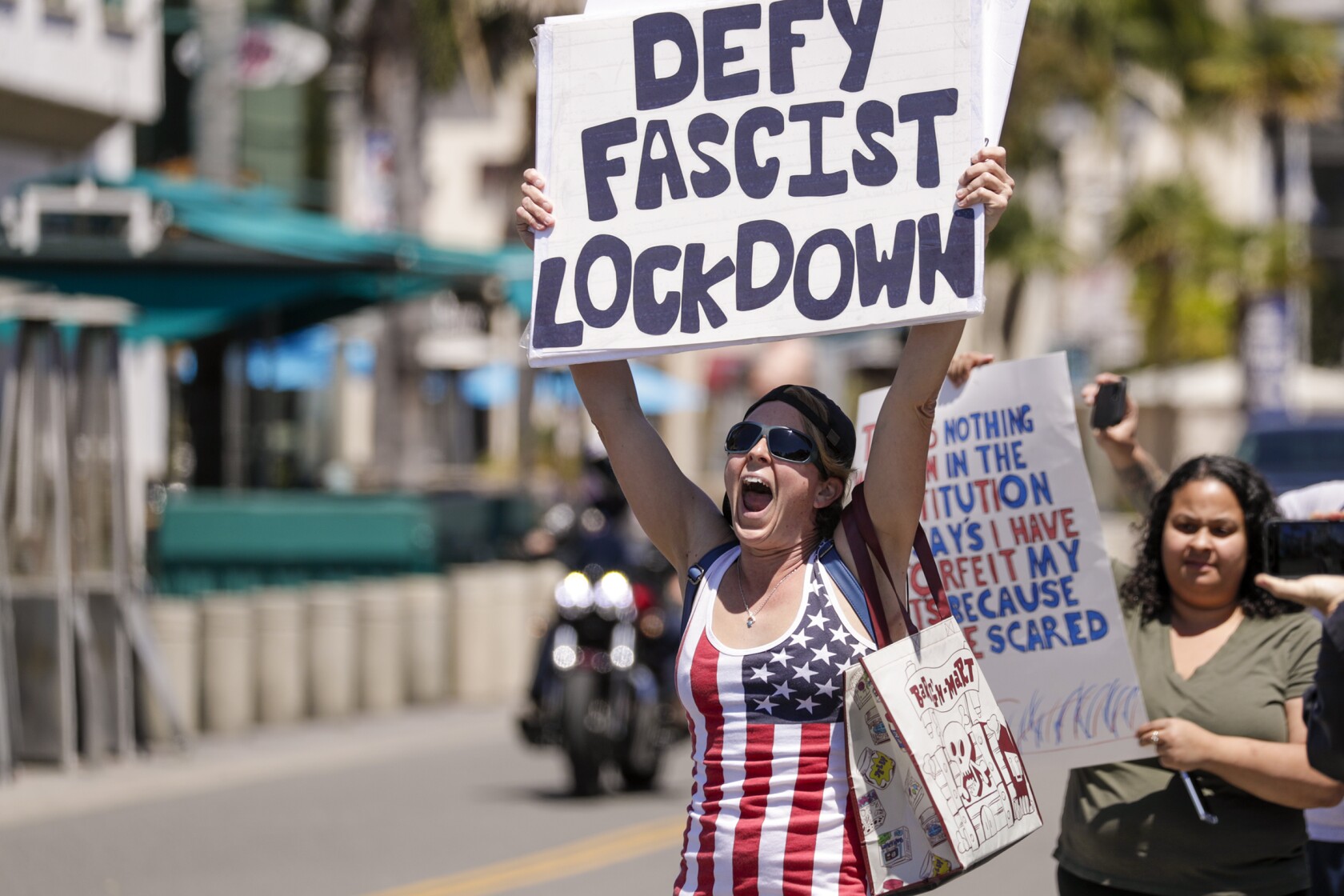
To lock down or not to lock down?

Since the start of the pandemic, I have been a supporter of lockdowns. It's a certain sign of the intellectual bubble I live in that for long I had thought it's just common wisdom. The bubble consists of mostly liberal news sources, but due to the lockdown itself, not many human contacts. Later when I had real conversations, I realized that whenever the topic came up, almost no one I was talking to shared my view completely. So I decided to sit down and try and articulate why I think lockdowns was a good idea and why the counter-arguments are wrong or unpersuasive.

My stance rests on three legs. Common sense, referring to experts, and caution. 

Let's start with common sense. Viruses spread from person to person. The less people mingle, the slower the spread is. Even if eventually everyone gets infected at some point, by slowing down the spread we can flatten the curve and prevent unbearable pressure on the health-care system. 

Referring to experts is a nice name for appealing to authority. This is admittedly the worst way to support an opinion, but it's also one we have to do every day. No one can be informed about everything, so you have to outsource your belief verifications to experts in almost every field of life. If epidemiologists and economists say lockdowns are a necessary evil, then I, being none of them, accept their word at face value.

Call me naive, but I also believe that politicians listen to experts. Call me cynical, but I also believe that they always keep their own interest in mind. Almost all Western governments have implemented some form of lockdown, and I don't think it can be fully ascribed to groupthink. Lockdowns cause severe economic damage which always hurts political leaders. If they chose to shut down their economies, they did it because they thought the alternative for them would be even worse. Groupthink is not a satisfying explanation for that, especially considering that no country followed the same pattern. Sweden has chosen not to implement lockdowns at all. Russia made a panicky U-turn after the short and typical strong-man stunt of disparaging the Western panic. Israel, whose people are not prone to public anxiety of imaginary dangers, locked down, too.

To address the caution part, every public measure either under- or overaddresses the problem it aims to solve. Shutting down the economy might be an overreaction, but with an unknown and deadly virus, that's exactly what I'd want the government to choose over the opposite. I prefer unnecessary economic damage to an unnecessary death toll. When the world-wide lockdowns were introduced, the mortality rate was estimated in the range of 0.5 and 6%. Italy had around 10%. It wasn't known which age groups are in danger, whether kids can contract the virus or spread it, what's the reproduction number, and many other factors. Today, as far as I know, the mortality rate is generally thought to be around 0.6% - which is still 6 times deadlier than the common flu -, and kids are not really at risk. These are good news, but they could have turned out very differently. If the mortality rate were around 10% among children and not among octogenarians, every family would live in their basement behind boarded-up windows. I would certainly do.

These are my arguments. Let's see the opposite side.

"This is an unacceptable invasion into our personal liberty"

Let's start with the libertarian argument which is the easiest to brush aside. Some oppose lockdowns on the ground of the perceived violation of personal liberty. This is nonsense. No one has the freedom to harm others, and that is exactly what a person infecting others does - even if unwittingly. If you subscribe to this reasoning, how would you make the case against anti-vaxxers?

The most common argument is that "the whole thing is blown waaay over, maaan". There are many sub-strains of this.

"This is just like a severe version of the flu"

Tens of thousands a year die in flu in America and no one thinks we should kill the economy because of it. That argument might have been worth considering months ago, but not anymore. The average yearly death toll of the seasonal flu is 10-60,000. COVID-19 has killed 180,000 so far and still counting. All of this while mandatory social distancing was put in place. The number would be much higher without it. The second wave has just started, and no one knows how long it will last or will there be another one.

"The numbers are unreliable, they count everything as COVID-death"

To invalidate the previous point, one has to put the numbers in question. So the next most popular argument is that the data are not reliable. Deaths are habitually ascribed to COVID even when the person would have died anyway from other causes (probably to serve the nefarious plans of...who actually?). That is surely true in many cases, but we have other statistics to look at that neatly eliminate the problem above. This is the number of excess deaths, that is, the increase in the number of deaths compared with the statistical average of the previous years. In America, it is over 200,000, which is even higher than the official number of COVID-related deaths. In the UK it's 65,000 against the official COVID fatalities of 40,000.

"The cure is worse than the disease"

Maybe the deaths are real. But I've heard from multiple sources that the self-inflicted economic damage leads to more misery in the long term than the virus would have done. This is something that's hard to argue both for or against. In ten years, when all the consequences have played out, we can have a pro- and con list, and even then we will need to resort to counterfactuals as the bases of comparison. As for now, many critics commit the mistake of comparing the grim reality to the normal state of affairs. The damage the shutdowns cause should be measured not against last year's GDP data, but against the alternative reality of COVID without mandatory social distancing. Sweden has shown what could happen without a lockdown. Its quarterly GDP fell by 8%. The EU average is 12%, Germany 10%, and Switzerland also 8%. They haven't avoided much of economic damage but lost 5-10 times as many lives per capita than Finland, Norway, or Denmark. Every country is unique in many relevant ways (population density, age distribution, cultural norms, international connectedness, the time and severity of the first outbreak, etc), but Sweden can't be that different from the average of its direct neighbors.

That was it. As a parting message, I offer my favorite line of reasoning, which is a kind of reversed argumentum ad verecundiam fallacy. Listening to people with a history of good judgment is a good strategy, but there is another useful one. It is listening to idiots and tyrants, and firmly taking the opposite view. Who were the loudest opponents of the mainstream reaction? First the Russians who never cared about their citizens' well-being. Then the Belarus dictator, Lukashenko, who claimed that the best cure for COVID is drinking vodka and driving tractor. The president of Turkmenistan who in his country simply banned even the discussion of the topic. The Brazil right-wing president, Bolsonaro, who said if he got infected, he would just shrug it off due to his athletic youth. Donald Trump - no explanation required. Right-wing media almost everywhere. Fox News treated it for weeks as a Democrat-hoax, then even now as the normal flu - so what's the fuss about? The UK government, which is neither malign nor completely moronic, but has shown that they prioritize their personal interests over their citizens'. 

It wouldn't survive strict scientific scrutiny, but as a rule of thumb, it is pretty reliable. When murderous dictators, crackpots, conspiracy theorists, plain morons, and well-known opportunists all tell you the same thing, it's a good sign to place your bets elsewhere.

,

Oil War 2020


It’s almost just a distraction from the coronavirus news, but a huge thing in its own right. I’ve started to lazily follow the recent oil war.
The unfolding events puzzle the layman reader, but judging by the contradicting opinions on CNN or Oilprice.com, it also do the experts - supposing they are impartial observers. Are Saudi Arabia and Russia waging a war against the United States? Or against each other? Who started it and why?
A brief summary of what seems to be the facts for me is the following. In the 2010s, America upended the oil industry (and concomitantly geopolitics) by inventing fracking. Between 2014 and 2016 the Saudis tried to kill the nascent industry by ramping up oil production and thus pushing down the prices. Robbing them of their revenues, this move destroyed a lot of smaller fracking companies, but also spurred industry-wide invention. After the cull, the surviving players adapted and proved that they can be profitable at much lower oil prices than it was thought before. Saudi Arabia burned a lot of its reserves and made its enemies stronger at the same time. What seemed like a Luddite attempt at the beginning proved to be a very expensive failure at the end. Fast forward 2020. Because of the pandemic, the demand for oil dropped. And the Saudis are again pumping like nobody’s business. The question is: Why?
And here is where the confusion and speculation start. Allegedly, the Saudis wanted to curb production of the OPEC+ countries to keep prices high, but the Russians didn’t want to go along with that. So the Saudis decided to force them back to the negotiating table by causing them some pain. This is, of course, the exact opposite of what they originally wanted, one can't help but notice.

Two competing narratives are on the market, but neither explains the contradiction above. According to one, the Russians are happy - some even claim they started the whole thing - because this will hurt the American shale industry — although it's not clear why another replay of the same battle plan would be more successful against a more advanced industry than the first one was 5 years ago. Unless, as some say, the fracking industry is not as healthy as it looks at all, and has been running on fumes already.
Other sources claim it’s an attrition game between Saudi and Russia — both are waiting for the other to blink, but it’s quite unpleasant for all participants.
The combined consequences of the oil war and the pandemic are huge. They could wipe out regimes that depend on their oil revenues and are already wobbly. Iran and Venezuela come to mind quickly. They could bankrupt the Saudi. They will certainly ravage not only the shale industry but the renewable energy industry as well.
How long can the suffer-fest last? Which party will be hurt more? What will be its effect on renewables? How can and will the USA retaliate? Will the pandemic eventually render the whole affair a petty game of myopic despots? How much of a cynical asshole one has to be to start this in the midst of the biggest global crisis in living memory? Apart from the last question, the devil is in the details of each. Turbulent times.
Update: the original of this article was written 3 days ago. Apart from minor amendments, it hasn't been updated based on recent news.