Do it with style

During our Christmas holiday in my hometown, I visited the dojo that played such a formative role in my teenage life. I don't have any intention to resume practicing Karate, but I always like to catch up with old friends whenever I'm back. Still, since I was already there, I thought I might as well join the training. It was like a trip to the past. But the reason for this post is not nostalgia, but that sometime after the training I experienced a gentle revelation. I think it just broke to me why people are attracted to traditional martial arts (never too late, eh?).

I wrote about the topic earlier, and before I get to my newfound insight, I want to briefly reiterate my previous arguments.

The main selling point of martial arts is of course is to become a self-defense expert the easy way. Everyone would be happy to be as tough as a boxer or a wrestler, but man, to get there is not a walk in the park. Years of hard training, running, skipping ropes, thousands of sit-ups, being punched in the face all the time, who likes that? And you can rarely see a small boxer beating a much bigger one, so why should I start it if I'm small in the first place? If only there was a way to be that good with tenth the effort. A more effective way, perhaps. Maybe through learning some exotic techniques developed by exotic people hundreds of years ago? Enter martial arts in Hollywood movies.

Then there is the traditions and rituals package for people who like traditions and rituals.

Then the moral code that purportedly comes with Eastern martial arts. I wrote earlier that I am skeptical of this because I think that being submitted by your training partners several times on the mat at every BJJ session teaches you more humility and the value of hard work than mandatory bowing and a strict hierarchy. But lately, thanks to a book on the history of BJJ, I had a bit of rethinking. UFC fighters have years of grappling practice behind them, and there are few more obnoxious sights than those guys (or gals) on a pre-fight press conference. From the aforementioned book, I learned that the grandmasters of the art (the whole Gracie-family, basically) were, in some respects and besides their other qualities, a bunch of thugs, who habitually bullied rival schools and provoked fights with their teachers and students on the street (it was true in both ways). Not to mention taking all the credit for developing the art by driving their juggernaut of a PR machine through BJJ's history. So, there is no silver bullet for character-building either, and I'm willing to accept that a traditional dojo can offer as much as any other institution. Even though stories like the one above are not unique to Brazilian Jiu-Jitsu.

Then, of course, the touch of the supernatural. Legends about superhuman feats of old masters, demonstrations of Shaolin monks, the application of internal energies ("chi"), the science of lethal pressure points... For those who are into those things. 

And with that detour, finally, I got back to describe my latest epiphany. From this point on, everything is armchair-psychology and it might reflect more on me than on the subject. Nevertheless. I think that traditional martial arts are appealing because people want dignity, even in physical struggles. Or, perhaps more precisely, we are afraid of losing it. Unlike gymnastics or figure skating, box, wrestling, or MMA don't possess some inherent aesthetic beauty obvious to a layman. Short spans in a fight can be beautiful in their own way, but very rarely, and only if someone really great can demonstrate his or her skills against someone who is not. Muhammad Ali could make a fistfight look amazing, a journeyman boxer can't. Full-contact brawls in general are sweaty, brutal, and chaotic. Violence is demeaning. The fighters are bleeding, sweating, panting, grimacing. Nothing like the smooth, refined choreography we are familiar with from the movies. 

So this is what traditional martial arts (and to be fair, Krav Maga and the like) promise by not actually practicing often undignifying sparring, but instead honing techniques executed either in the air against imaginary opponents, or against complying partners. Elegance and Dignity. Perhaps fencing and its etiquette emerged from medieval duels partly for similar reasons. If forced to resort to violence, which was often inevitable in bygone eras, gentlemen at least wanted to kill and even die with style.

The unintuitive Bayesian thinking

What do you think the answer is for the following question?

Let's assume that one in a hundred women have breast cancer. Suppose there is a test with 90% sensitivity (true-positive rate) and a 9% false-positive rate. That is, 90% of the women with cancer will test positive, but also 9% of those who don't have the disease.

A woman tests positive. What is the probability that she has cancer? Try to answer the question before reading further.

Almost everyone (including most doctors) would say with little hesitation that it's around 80-90%. By definition, isn't it? And everyone saying so would be wrong. The correct answer is just above 9%.

Here is the demonstration. Of 1,000 women, on average 10 have cancer and 990 have not (1%). Everyone tests. Of the 10 women with the disease, 9 get a positive result (90% true-positive rate). Of the 990 healthy women, 89 (9% false-positive rate).

Together, 98 women tested positive, even though there are statistically only 9 of them who have cancer. Therefore if a woman tests positive, her chances of being one of the unfortunates are 9/98=~9.17%.

This example is just one of the many Steven Pinker uses, in his new book, Rationality, to demonstrate how unreliable sometimes our intuitions are in measuring up reality. The book is a great reservoir of examples and explanations of human folly, but this particular instance impressed me the most. Because even after reading about it previously, and having been explained multiple times, I still find it hard to internalize.

"But we know that the test is 90% reliable?! What does that number mean then?" - screams a voice in my head.

This result seems so wrong intuitively that it's hard to shake off the incredulity, even after going through the numbers a couple of times. But there is no catch here. The numbers are right and our intuition is just wrong.

The reason for the stark mismatch between the real probabilities and our intuitive guesses is that humans are very bad at estimating probabilities. When facing problems like the one described, our mind latches onto the sensitivity rate (90%), refuses to let go, and completely ignores the base rate: the 1% prevalence rate of the disease among the population.

In the first draft of this post, I continued with a second example from Pinker's book, that dresses the same abstract problem in an intuitively more appealing narrative. But then, on the net, I stumbled across a much better one. One for me, Steven! Or maybe one for Judea Pearl, the computer scientist developing the mathematical framework for Bayesian networks, who used the example below. More about all things Bayesian later, first let's see the example.

Imagine that instead of the probability of having a disease, we want to calculate the probability of having rained the night before. Our test is checking whether the grass is wet. Its true-positive rate is 90% (10% of the cases the rain dries up before we wake up). The error of the cancer test (the 9% false-positive rate) is substituted with an unreliable sprinkler. Due to some electric malfunction, it goes off roughly once in ten nights (9%). 

So one day, we look out the window, see the grass is wet, and want to figure out what was the probable cause. Did it rain (parallel: does the individual has cancer) or was it just the sprinkler again (parallel: false-positive test result)? The answer to that question obviously depends on the frequency of rain in our area (parallel: the base rate = the prevalence of the disease) - because we already know the frequency of sprinkler misbehavior. If it rains usually once in 100 days (parallel: 1% of women has breast cancer) and the sprinkler goes off once in 10 days (parallel: 10% false-positive), then the probability of the rain having caused the wetness is roughly ten times smaller than that of the sprinkler.

What we grasp easily in the second example and fail to notice in the first one is the role of the sprinkler (parallel: test-error = false-positive rate). There are multiple ways to test positive (having the disease and the error in the test result), and the likelihood of each depends on their respective frequencies.

I'm not sure what makes the difference. Maybe false-positivity is just a trickier concept than the sprinkler - which is a mundane, material thing. The physical cause of the positive result in the former case is not tangible. Or maybe just the difficulty of filtering out relevant pieces of the data we get. Knowing only that of 100 women only 1 has the disease but 9 will test positive falsely would give us a good estimation, we don't even need to know the sensitivity of the test.

I mentioned Bayesian before, and it's time to give the theoretical formula for the kind of reasoning we followed above. This is called Bayesian inference, and it's captured by the following equation.


In plain English, it means that if we have a number of hypotheses (H1=rain, H1=sprinkler) to explain a certain event/evidence (e=wet grass), and we know the prior probability of each of those hypotheses (1% for rain, 10% for sprinkler), and also the probability of the event assuming the hypothesis to be true (if it rained, the probability of seeing wet grass in 90% - this can be the same for the sprinkler), then we can calculate the probability that a specific hypothesis (either the rain or the sprinkler) was the cause of the event - and not the others.

Applying the symbols to our first case, this is what they mean:

H - our hypothesis that one has the disease
e - positive test (evidence)
P(H) = probability of having the disease before testing = 0.01 (1%). Since one in a hundred women has it
P(e|H) = probability of testing positive if you have the disease = 0.9 (90%)
P(e) = probability of testing positive, whatever the reason is. 

P(e) = ∑ P(e|Hi) * P(Hi) = (probability of true-positive result) * (probability of having cancer)
+ (probability of false-positive result) * (probability of NOT having cancer)
= 0.9 * 0.01 + 0.09 * 0.99 = 0.0981 (9,8%)

The above formula gives us the probability that the person has the disease (our hypothesis is true) given the evidence of a positive test result

P(H|e) = 0.9 * 0.01 / 0.0981 = 0.0917, which is the same result we got by running the thought experiment at the beginning.


,

Democracy, liberalism, rule of law

Can a country be democratic without being liberal? When I first heard Viktor Orban daydreaming about an "illiberal" democracy, back in 2014, I thought it was just an oxymoron. But in recent years, hearing people constantly complaining about undemocratic processes and governments in very different situations (Brexit: pro-and-contra, the Biden-presidency, Turkey, Eastern-Europe, etc), and experiencing how the adjective "liberal" has gradually become a form of accusation, got me thinking. What do these words, "liberal" and "democracy" actually mean? 

So I started thinking about the political systems we live in the West and trying to figure out what makes them work. Meanwhile, I consciously avoided opening any book or even a Wiki page on political philosophy. That would have spoiled the blue-collar intellectual pedigree of the blog, wouldn't it? Consequently, skepticism is stongly advised for what comes next.

I think the three main components that uphold Western-style societies are the rule of law, liberalism, and democracy. These are related, but not interchangeable concepts which get conflated in the popular discourse quite a bit. A joke comes to mind: one day, an older fish swims by two younger ones and greets them: "Hey boys, how is the water today?" As he passes, one of the two turns to the other and asks: "What is water?" The joke illuminates the fact that it's hard to see what characterizes something that surrounds you and taken for granted if you have never encountered the alternatives. So, for figuring out what the relationship between the three concepts above is, I tried to think about how political systems would look like that only implemented a subset of them.

First, I give some rudimentary description of each of these three concepts, as I see them, then take a look at that in what combinations they can co-exist.

The rule of law

...deserves to come first, since, as explained later, this seems to me not only the most important of the three, but also that what undergirds the other two. The expression means that there are written rules that place boundaries on personal liberty and regulate conduct between parties in all fields of life. Laws are enforced by an effective and apolitical police force, and disputes are resolved before impartial courts also independent of the political influence. If a society possesses nothing of the blessings of modernity beyond this, it's already a vastly better place to live in than people had to put up with before our era. According to most social scientists who study the development of nations (I mean the 3-4 I read), the legal guarantee of private property is the most important prerequisite of prosperity.

Liberalism

...., in a nutshell, is built upon two core ideas. Everyone is born with the same value, rights, and dignity, and secondly, everyone is entitled to live her life whichever way she chooses, as long as it doesn't violate the freedom of others to do the same. These two principles are not interchangeable, and it's easy to imagine a society where the first is upheld, but the second isn't. An ideal Christian society would be like that. Everyone is born as equal (in sin, that is), but lifestyle choices are rather vehemently constrained. The reversed situation in which people are unequal by birth but have the same opportunities and freedom seems implausible. 

Democracy

...., as understood today, is representative democracy with universal suffrage. In democractic countries, political leaders are elected by the citizenry for limited terms of service. At the next election, the leaders can be peacefully voted out of office, which decision they accept and leave.

These three components, on the assumption that they are independent, can be combined in eight different ways. Which of these are viable?

System 0: weak rule of law, illiberal, undemocratic

Assigning the number zero to this combination is approprioate, because this has been the default for almost all states in human history. Historical examples are therefore are abundant and there are many countries even today that fit the bill: Russia, China, Third World countries, etc. They are fully or partially undemocratic, practically or proudly illiberal, and the courts and police are under the thumb of the holders of power.

System 1: illiberal, undemocratic, with the rule of law

Examples for societies that respect the rule of law, but are neither democracies nor liberal include most late-nineteenth-century countries in the West. The United Kingdom, the Austro-Hungarian Empire, Bismarckian Prussia, ...etc. The rulers weren't elected by universal suffrage (or elected at all), poor and rich people were not treated as equals, societal pressures were stifling, but an aristocrat at least couldn't just go and kick you out of your house without a legal pretext. Which you could challenge in court. Theoretically, at least. In practice, the rule of law was lousy by today's standards, but it was definitely a huge step forward from the earlier eras.

System 2-3: weak rule of law, democratic (liberal or illiberal)

Democracy without a strong legal foundation never existed - at least not in a larger society, and probably never will. It is built on the practice of peaceful transfer of power which only works if it's enforced by law. People don't give up power without the threat of punishment, and if one does, the next one won't.

System 4-5: undemocratic liberalism (with or without the rule of law)

Like democracy, liberalism on its own never existed, either. Non-democratic countries by definition violate the principle that everyone has the same rights, and in practice, personal freedom as well. Liberalism presupposes democracy, which presupposes the rule of law. Or to look only at the relationship between law and liberalism: small communities can live without a legal system, but in larger ones, nonconformism needs the protection of the law. High level of cultural tolerance is not natural for humans.

System 6: Democratic, lawful, illiberal

Back to the idea that initiated this post. Can a country be democratic without being liberal? When I first heard Orban's latest "revelation", I dismissed it immediately (mostly for the reason that what he had in mind was simply a kleptocracy, but even he felt the need to dress it up to sound somewhat better). But I wasn't entirely right. The 1920s United Kingdom wasn't very liberal in today's sense, even though universal suffrage was granted in 1923. The 50s America weren't much better either, with institutional racism, pervasive homophobia, laws against sodomy, oral sex, interracial marriage, etc. In theory, a truly Christian democracy would be an illiberal one, too. Access to political power for everyone, but strict social norms (very illiberal ones for gays, women, atheists, etc) for all.
So illiberal democracy is a viable form of government, for a time being, anyway. In a healthy democracy, different opinions tend to percolate up to the decision-makers, constantly pushing against the consensus, which would broaden the range of accepted norms. An illiberal democracy either turns ever more liberal (which happened in most Western countries after the Second World War) or ever less democratic (e.g. pre-war Germany and Italy, or contemporary Hungary, Poland, Turkey).

System 7: Liberal democracy founded on the rule of law

Back to the water.
, ,

The stupidest arguments against atheism

At its inception, this piece was meant to be titled "What is atheism", but then  very quickly realized that the topic would fill maybe a single paragraph, opening and end included. So instead, I decided to address some points religious apologists tend to raise in debates against atheists. There really aren't many of them and in one form another the same arguments are voiced by professional theologians and Bible-thumping yokels.

Let's define "atheism" first, which luckily can be done with very few words. Atheism, in the common usage of the word, simply means the lack of belief in God. Nothing more and nothing less. Further elaboration only paraphrases the above definition or deliberates either the reasons for or the consequences of it.

From an academic point of view, a distinction can be made between people who deny the existence of God (strong atheists) and those who simply don't believe in it while accepting that it's unprovable either way (agnostics). The first doesn't make much sense, as you can't disprove God the same way as you can't disprove unicorns. So in the following, I will use the word "atheist" in the sense as defined in the previous paragraph.

And now, let's get to those arguments!

Atheism is just another religion

"You make it sound as if it was a bad thing", one might respond. But the correct response is that it's just not. It's simply the lack of belief in gods. It doesn't tell what a person thinks about politics, art, economy, psychology, or anything but religion. "How does an atheist think about social justice?" is exactly as meaningless a question as asking what a non-firefighter thinks about social justice (as opposed to a firefighter). The word "atheist" in modern times should be considered as strange as "non-monarchist". It is a negation of something fewer and fewer people are today.

As Richard Dawkins said: “We are all atheists about most of the gods that humanity has ever believed in. Some of us just go one god further.”

This is not to say there are no people who put their atheism is at the center of their identities, for example, those who broke free from a very religious upbringing, but the number of such persons is insignificant compared to the masses of casual non-believers.


Atheists can't explain why the Universe exists

Absolutely true. But there is a great T-shirt inscription saying: "I Don't Know and You Don't Either". We don't know why we are here. Billions of people simply pretend they do, and this statement everyone who spends a moment to think about it must find true. Why? Because if you are a Christian, you "know" that all those Muslims, Hindus, Buddhists, etc. are wrong. If you are a Hindu, then...just replace a word.

Atheism is irrational because you can't prove there is no God

This is wrong in several ways. First, whoever says this, misunderstands who is expected to come up with some evidence in an argument. If I tell you I keep a gorilla at home (a schoolmate in first grade tried to sell this) and I want you to believe this, the burden of proof is on me. If I say nothing can travel faster than light and you disagree, the burden of proof is on you. Why, what is the difference between the two cases? The first example was about something very unlikely and therefore almost unheard of. Everyone can see what's wrong with it using common sense. Keeping a gorilla in a flat would be extremely inconvenient and probably against some laws, and would be newsworthy enough that you'd have heard of it already.
However, in the second example, I state a well-known scientific fact that has the backing of virtually all physicists in the world. Scientific theories get overturned sometimes, but that requires very strong arguments. Therefore, if you disagree with the commonly accepted limit of speed in our universe, it's you who has to come up with very strong evidence to the contrary.

Regarding the original statement, neither common sense nor evidence indicates that the world is created by any particular God. Few planetary scientists, physicists, or cosmologists are religious (and if they are, only in a liberal way) and everything we know about the origin of life flatly contradicts the Bible and all the other genesis myths.

The other problem with the statement is its assumption that the only alternative to atheism is my own God. Following this logic, since you can't prove that Odin doesn't exist, it's irrational to not believe in him.

Atheist are amoral

This asinine claim enjoys surprisingly wide support among simple-minded religious advocates and, even more surprisingly, in some vague form from Jordan Peterson (proving that a person can be brilliant in one field and very confused in another). According to the argument, the only thing keeping people from thieving, murdering, and raping is the fear of God. The statement tells more about the one who says it than about atheists.

A more philosophical version of this argument is that without God our moral values have no foundation. There is no objective right or wrong, and therefore the atheists live in the swamp of moral relativism, where the wrongness of even mass murder is only a matter of opinion. This is a question for philosophers, and whatever they have to say on the matter has little influence on how real people live their lives. Instead of speculation, we can just look at the empirical facts about whether the absence of faith make one depraved or not. They are plenty, and not supportive of the motion.

Children who have no concept of God don't go around bashing other kids on the head or stealing stuff. They do steal and hit sometimes, but they instinctively understand the concept of fairness, and quite often are nice and helpful with stranger kids. This applies to our closest relatives, the primates, and to other more intelligent species of the animal kingdom. There are both viciousness and kindness in nature, and the behavior of all sentient creatures seem to be tailored to, to varying degrees, reciprocity.

The most religious countries in the world are predominantly African, South-American, and Muslim, with crime rates through the roof or with outright state oppression. I don't think religion leads to depravity, it may well be that the miseries of life there or the iron fist of the state make people religious, but the numbers don't show that it makes people better either. If there is a genuine correlation between religiosity and crime, it's a positive one.

Or, someone who is reluctant to read up on history can just take a look at the Scandinavian countries of the present. They belong to the justest, most egalitarian societies of the world and the safest places to live. Also, they are the most atheist ones. According to surveys, only 5% of Norway's population think religion is an important part of life.

There have been many societies in history where the state religion didn't promise rewards in the afterlife (ironically one of them is the Jewish that gave birth to all monotheistic world religions) and they were not made up of rampaging lunatics. There has been no society on Earth where senseless murder, thieving, lying, or raping were condoned.  There seem to be universal moral laws that are wired into us, with or without the belief in supernatural sticks and carrots.

Atheism leads to the disintegration of society

This is the only popular claim that I think is defensible. Societies don't run on laws and policing only. They need forces of cohesion to keep them together (what the former states of the Soviet Union or Yugoslavia lacked), and one of those can be religion. 

But there is no evidence that religion is indispensable, especially if we look at modern European states.


Atheism led to Nazism and Communism

It's a very old, very tired, and very annoying argument, but it can give one a pause when first encountered. (It also contradicts the previous anti-atheism point - does atheism leads to tyrannies or total dissolution? Please, make up your mind)

The Nazis weren't antagonistic to Christianity, their 1920 manifesto even paid some lip service to it. Apart from the Jews, no one was persecuted for his belief in the Third Reich. Instead of rejecting faith wholesale, they channeled their society's spiritual energies into some pagan-flavored race-worship and the personal cult of the Fuhrer.

Communism, on the other hand, is an outspokenly anti-religious ideology. But there is no evidence that the terror regimes it bore had been any less monstrous if it had been neutral on the issue. And in fact, once one starts to think about it, Communism seems more and more like a religion (especially Catholicism) in surprisingly numerous aspects. It had its prophets and messiahs (Marx, Lenin), holy scriptures and dogmas (the writing of these men), heretics (Trotsky), popes blessed with infallibility (Stalin and Mao), sectarian wars (Tito vs Stalin, China vs USSR), martyrs (thousands), inquisition (show trials and purges), the ritual of confession (communist self-criticism), and finally, its followers believed to be part of something infinitely bigger and powerful than themselves. 

But we don't need to speculate because history actually tells us whether atheism leads to murderous tyrannies or not. It does the opposite, as discussed in the previous point. Modern Scandinavia probably has a much smaller proportion of believers than Nazi Germany or even the Soviet Union, where despite the aggressively antagonistic state around a third of its citizens claimed to be religious.


And here we reached the end of the list. I think it covers it all. Therefore I was briefly considering removing the "stupidest" adjective from the title because these seem to be not just the worst ones but the full list of anti-atheist arguments. But they are still stupid, so I just left it like that.


,

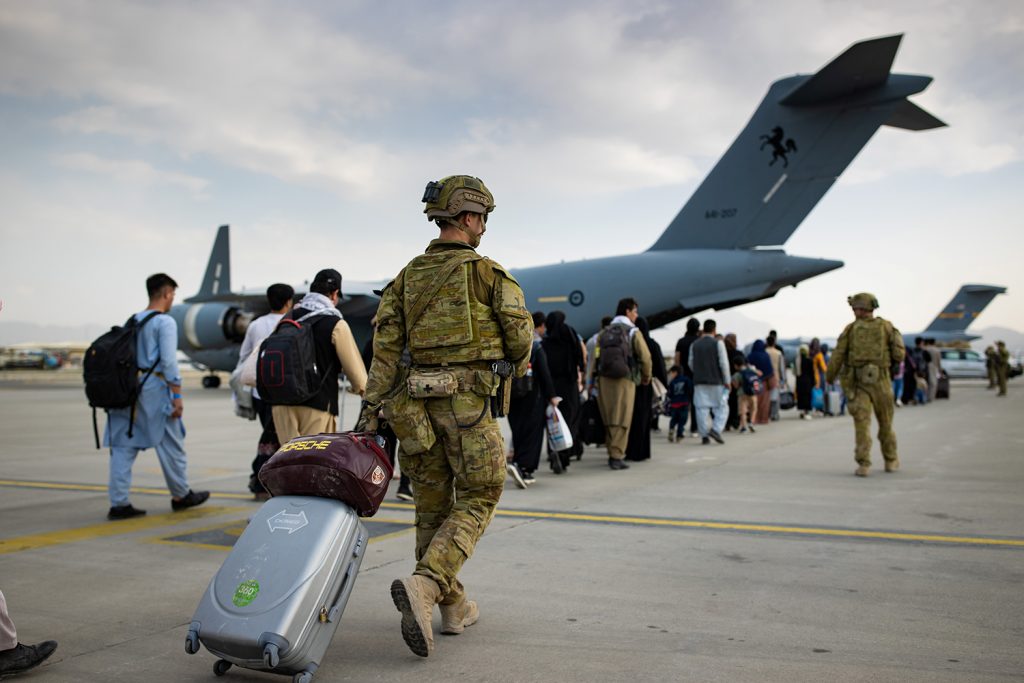
The US withdrawal from Afghanistan

I thought about writing a post about Afghanistan right when the news broke, but it took about 20 seconds to dismiss the idea. Just thinking about the amount of information I'd need to consume to even have a vague idea of the big picture was almost as depressing as the news themselves. Nevertheless, my guttural reaction was that Biden should consider resigning. Throwing half a country to a fascist regime of 8th-century ideas just because the Americans are bored of a "war" that hasn't even made the news in years? Is there anything to talk about at all? 

Since then I've read and listened to a fair amount of articles and podcasts. I haven't gotten much better informed, but at least I've learned to appreciate the complexity of the situation. And to marvel at how opinions of well-informed people can be so starkly different. The only thing everyone seems to agree on is that the execution of the withdrawal has been an unmitigated disaster surpassing the worst expectations (Biden said there won't be pictures like that of the helicopters rescuing Americans from the top of the US Embassy in Saigon - he was absolutely right, seeing Afghans trying to hold on to the wheels of American airplanes taking off, then falling to their death is even worse). Beyond that, half of the people I usually listen to say that regardless of the blunder, Biden made the right decision, and the other half claims that it was both stupid and immoral. I could rarely notice even the trace of doubt from either side. It's worth emphasizing that I'm referring to very intelligent and well-intentioned people, who do journalism for a living, not right-wing assholes or woke idiots. Everyone seems lost in the whirlwind of information, instinctively groping for their favorite tropes to find a vantage point.

As for my current vantage point, I can accept a wide range of opinions barring "the Americans should not have forced their culture on the Afghans" or "it is their (the Afghans) decision how to live, who are we to say that our ideology is better than the Taliban's" - which is exactly what I was told just a couple of days ago. Sure. So there are gay people in the world who prefer to be killed on sight. Our gays are just brainwashed by our Western liberal culture to think that staying alive is better. The same goes for atheists (or just secular-leaning people), or women who want education, or Muslims who have a different interpretation of the holy scripts. Stoning, burning, chopping off limbs for petty crimes are wrong only by our measures. Seriously, how braindead people can be? (the answer is: quite, see anti-vaxxers).

Ranting is over, back to the big picture. I decided that instead of giving an opinion, I try to collect the questions I think one should ask before forming one. I came up with the following list:

  • If we accept both that the Americans had reason to go to Afghanistan and that they should have left already, then when would it have been a better time to leave?
  • If the war was a failure, what objectives have the Americans failed to achieve?
  • How much responsibility do the Afghans bear for the failure?
  • What have the Afghans gained and lost in the past twenty years?
  • What is changing actually? How much of the country was under American control and how much of it will the Taliban take over?
  • How much did it cost for the US in money, energy, political capital, military resources to uphold the Afghan state?
  • How much will the withdrawal cost in intelligence, global prestige, counter-terrorism efforts for the US?
  • What will be the effects on America's enemies and allies?
  • What will be the effects on the people of Afghanistan?
  • How will the answers to these questions change in 5, 10, 20 years' time?
  • Could have the withdrawal been done sensibly?

Along these lines, here is what I think now.

Objectives and results

The Afghanistan war started as America's retaliation against Al-Queda for 9/11. The US aim was to kill Bin Laden and destroy his terror organization and prevent further attacks on American soil. Al-Qaeda resided at that time in Afghanistan in the terrorist haven of the Taliban (the relationship between them and their hosts wasn't frictionless, but the Talibs hated America much more than they would have been willing to hand over Bin Laden). Contrary to the public image of a war-mongering, imperialistic US trampling over international laws, the invasion enjoyed unanimous international and domestic support across the whole political spectrum. For the first time in its history, NATO invoked its fifth article, declaring that the attack on America was an attack on the whole alliance.

Toppling a regime of a Third World country was not a challenge for the world's sole superpower, and the US had the resources and resolve to hunt down its targets. But had the Americans left right after achieving that, the terrorist groups would have simply re-organized, and the Taliban would have returned. So they had to stay and try to prevent it from happening. Thus, in the following years, the US half-heartedly committed itself to a second objective, namely building up a democratic Afghan state as a bulwark against extremism. After twenty years, both objectives can be deemed as failures. Al-Qaeda is not rooted out, the Taliban controls more territories than before the invasion, and the withdrawal immediately pulled the plug on the incredibly corrupt and incompetent Afghan state. It looks all but certain that the Taliban will take over completely, and whatever advances the Afghans have made in human rights and freedom will be reversed.

However. Even if the Afghan democracy lasted only twenty years, and it was miserable by Western standards (and often disappointing for their own citizens), it still meant that a generation grew up where girls could go to school, women could take a role in public life, boys could play football or watch TV, theaters opened, people could live their lives free of religious fanatics. 

Just to quantify a few achievements:

  • Consumption of electricity rose tenfold.
  • The infant mortality rate fell from 145 per 1,000 to 104 per 1,000
  • Life expectancy for women rose from 45.5 years in 2001 to 54.4 years in 2019
  • The literacy rate for women rose by 300 percent

This is just the tip of the iceberg. This is not nothing, this is actually amazing. This is something everyone should cherish who gives a damn about other people.

At what costs was this all possible? Calling Afghanistan a "forever war" was a catchy and misleading political slogan. From the US point of view, it has hardly qualified as a war at all. The number of US troops on Afghan soil had been decreasing for years. In September 2017, the number was 14,000. At the start of the Biden administration, 2,500. The American casualties in the last two and the half years were 24 soldiers. 24. Just for comparison, 58,000 US soldiers fell in Vietnam. In Germany today, 34,000 US soldiers are stationed. In Japan, 55,0000.

The brunt of the sacrifices fell on Afghan soldiers, among them around 60-75,000 died in the last twenty years, fighting against the Taliban. The number of civilian casualties is comparable.

Can we say that the achievements above compensate for the 120,000 deaths? I really don't know, no one does, it's just not computable.

Was it worth it for the US? The war cost around 2 trillion dollars. This is a far greater amount than one could comprehend, so let's not try to calculate how many ICUs could have been built from it. Money on this scale doesn't work like this, anyway. It also cost around 6-7000 American lives. Was it worth it? I don't know.

The costs of leaving

I remember that shortly after 9/11, the most often heard wisdom from the experts was that the next attack is not an "if", but a "when". And yet, 20 years passed and no serious terrorist attack took place on US soil. Would it have been different if not for invasion? I don't know, but I find it likely.

Now the US completely loses the intelligence network it has built up in the past twenty years and also its ability to act on the ground. How much will it cost in money and lives to prevent another 9/11, continuously, with no end?

Dismantling everything they built there and not leaving even a single base where they could operate from seems just a bad decision regardless of the time horizon.

The effects on allies and enemies

It's good to remember, that the Afghanistan invasion and war weren't a US operation. It was a NATO operation. The American unilaterally pulling the plug on it won't foster trust and goodwill in the future among their allies. And what do the Taiwanese think now? Or Japan or South Korea or Ukraine or the Baltic states?

As for the enemies, China, Russia, or Iran just can't stop gloating over the American humiliation. But under the surface, things are less clear. Are they really happy to see the US beaten, or would have rather seen it staying mired in the Middle East with no end? Does China feel emboldened now (vis-à-vis Taiwan), or rather worried that America will turn its focus fully on her? Afghanistan's Muslim neighbors sound jubilant now, but I've just listened to a Pakistani journalist, who said that under that unified facade they are less than joyous, because contrary to how ignorant Westerners think, it's not all tolerance and camaraderie in Muslim-land.

Could the withdrawal have been done better?

The answer is undoubtedly an emphatic yes. The evacuation has been a horrific blunder. Thousands of Afghans who worked with the Americans are desperately trying to get out of the country under the threat of imminent execution. Seemingly everything that could have gone wrong, did.
On the other hand, the Biden administration had a very bad hand to play with. The speed of the collapse took them as a surprise, for which the blame is squarely on them. They should also have prepared for the worst scenario much better. Yet, what would have been the effect of them saying a month ago: "Guys, we are off in 4 weeks, and your corrupt, incompetent government will be the first to throw in the towel, so get out of the country right now while you can, because you won't believe the shitstorm that's coming" ? What would that have led to?

So it could have been done much better. But not very well.

Summary

To finish with a banality, this is complicated - even if too many seem to think it's dead simple. For me, the only honest attitude seems something like "This is hard. I am for/against the withdrawal, but I accept that the other side can pose legitimate questions I just don't have the answers for". Biden's decision - which I still think was a bad one - will have long-lasting consequences on counter-terrorism, geopolitics, regional politics, American domestic politics, human rights, and a bunch of other things. It will change some for the better, some for the worse, and some better in 2 years and worse in 10. As the Zen master Gust Avrakotos said, "we'll see".


 

,

Video games are not the menace you think

Have you heard the latest news about the violent kids inspired by that immoral video game? If not, just google it. He who seeks finds. Worrying about the younger generation is as old as mankind, and video games are but one of the new scares. Middle-age people, whose youth preceded the advent of commercial computers, are especially likely to express disapproval of or dire warnings over this new wave of teenager pastime. Even though the worries about the dangers of excessive consumption of video games are not unfounded, they are greatly exaggerated due to oversimplification and neophobia. 

To start with, anyone who thinks that getting lost alone in a fantasy world populated with violent people and questionable morals is something new should think again. The phenomenon has been around for centuries and it’s called books. Many traditional children's books, like the Grimm stories, are full of gore, wanton cruelty, and immoral characters. It’s hard to imagine a game, allowed to appear in public, that is more disturbing to a sensitive teenager – target group of both video games and worrying parents and politicians – than the reading of Bret Easton Ellis’ American Psycho. Lately, movies have made storytelling even more popular by adding visual aid, and there is no shortage of films depicting the darker sides of life. Many of them are highly acclaimed and represent the peak of the cultural achievement of the 20th century. There are new things under the sun, but video games – not technologically, but in the story-telling respect – are not one of them. 

Claims of the aggression-inducing nature of video games - often the main accusation leveled against them – should also be taken with a grain of salt. One can argue that the comparison with books is invalidated by the active nature of the games. One can read a book or watch a movie, but cannot actively live out her own worst impulses with them in a way that video games allow us to do. That is true. But first of all, the vast majority of the games out there – simulators, Super Mario clones, strategic games - have nothing to do with explicit violence. Second, the implicit assumption, that acting out in a fantasy world makes the person’s real-world behavior more violent, is not backed up by scientific consensus either. On the opposite, many psychologists support the claim that people, who blow the steam off this way, are less compelled to do so in real life. Much more research by experts needs to be conducted to convincingly support either side of the debate. Until the consensus is reached, the jury on video games’ unique violence-inducing effects is out. 

The second most frequent complaint, regarding the time one wastes while sitting in front of the computer, should be taken seriously, but with some caveats. Games indeed can be massively addictive, especially young males tend to become slaves of their computers. But an unhealthy level of attraction to something can develop in countless other areas – movies, card games, football teams, artistic endeavors come to mind –, and time-wasting is highly subjective. One can equally argue that reading detective novels doesn’t contribute to the well-being of the person or the society either. Additionally, some games do actually improve important skills of the player. Reflexes, strategic thinking, even gains in lexical knowledge can be the result of intensive gaming sessions. Whether it’s time wasted or well-spent, depends on the game and the person – much like with most activities in life. 

As with most broad topics, sweeping statements over the wide variety of video games are largely meaningless, and the critic should narrow her aim. Games range from hyper-violent hitman adventures to tools of modern time education. First-person shooters, strategic games, car races, Tetris, city-builder simulations are but a very few examples of the plethora of the genres out there. They attract, influence, develop in very different ways. Criticism – or support – should target specifics if it wants to be of any meaning. 

In conclusion, as a form of human activity, the video games phenomenon is neither entirely new nor very meaningful as a single concept. Some genres will be indispensable parts of 21st-century education, some are just trash no one should take a look at – just like books, movies or theatre plays. Anyone wishing to express a strong opinion about them should, first of all, get her facts straight, and second, be specific.

Disclaimer: this is a reprinted essay of the author from 2019

The Kominsky Method (2018-2021)

TV shows used to give work for actors at the beginning or at end of their careers. Jumping board for young unknowns, retirement shelter for washed-up has-beens. Their entertainment value was accordingly measured. That has shifted (to realize how much, check how many of the first X-files episodes you can watch and compare the experience with what you get from a just below-average show of today). Although it's old news that TV shows have caught up with feature films in prestige and surpassed them in quality, it's still quite rare, and therefore feels special, when an A-movie actor appears in one