,

A very bad day for the Right

On Monday, June 15, the American social conservatives suffered multiple, massive blows, and a near knockout sucker punch by the hands of their own chosen champion, Neil Gorsuch. They are in a state of severe concussion now.

The American Supreme court made the 6-3 decision that firing employees on the basis of their sexual orientation is against the law. Gorsuch wrote the majority opinion, in which he justified the decision on the grounds that discrimination over sexual orientation is implicit sex discrimination, which is illegal since the 1964 Civil Rights Act. In plain English, if a woman can't be fired for an act, then a man can't be either for doing the same. E.g. bringing a boyfriend to a company party. As the sole difference between these two cases were the sex of the subject, this would be sexual discrimination.

That the social conservatives are enraged is an understatement. Trump himself briefly mentioned the decision, then moved on. For all his faults, he is not a bigot or a homophobe - and for once, in one aspect, he appears to be a better human being than his voters. Religious pundits, on the other hand, even those who hate Trump with a passion, are through the roof. In their fevered mind, the nihilistic secularist has launched another merciless attack against religious liberty. That is, one's liberty to fire her employees for their sexual orientation based on religious beliefs. The Supreme Court's decision explicitly exempts religious institutions from the rule, but when tyranny starts to stretch out, eventually it creeps into everything.

I think I fail to be sarcastic enough.

On the other hand, I really try to find a less damning reading of their reaction. If I were a devout Christian who took the Bible close to literally, I'd find homosexuality abhorrent. The scripture is explicit about this. Many of these peoples are not morons. They just have a belief system the rest of the world left behind. So for them, this is as bad as it is important. But appealing to religious liberty? To constrain other people's liberty? On what grounds would they then condemn the discrimination against blacks in the Mormon Church before 1978?

This is one of those moral questions that have two possible answers: a very simple or a very complicated one.

One thing is sure, though. The hammer came down on the "but Gorsuch"-argument with a thunder.
,

Michael Shermer: Giving the Devil His Due: Reflections of a Scientific Humanist (2019)

Should Intelligent Design be taught alongside evolution in public schools? What sort of government should we set up on future Mars colonies? Should Nazi speech be banned? What's the story with Jordan Peterson? Does the scientific community stifle dissenting voices of mavericks? Could the monuments at Göbekli Tepe be the legacy of a great civilization predating every other we currently know about? Would the ban on assault weapons decrease the number of mass murders in America?

Michael Shermer's new book is a collection of 27 of his essays...

The many faces of Donald Trump

I've been postponing writing about Trump for a long time. But it looks like the Götterdämmerung is finally coming for him and I might not have much time left. How he got to power, why his base keeps him there, and what kind of person he is exactly, will be a topic of many doctoral dissertations to come, and every self-respecting journalist should contribute to the search for the truth. This is my take.

I don't think I'm up to a deep analysis, but this particular topic lends itself to harvest the low-hanging fruits. Let's scratch the surface by looking at how Trump is viewed by different groups of people.

The chess player

According to his most ardent supporters, Trump plays 4-dimensional chess with the clueless world. If some move seems idiotic, it's because his critics (and admirers - but hey, that's why they admire him) just can't see 5 steps ahead, unlike this "very stable genius". I would have two questions for these people. One, what has he achieved in almost 4 years with his extremely subtle game? Has China backed off? Has North-Korea denuclearized? Has the grand peace of the Middle-East been architected? Or for that matter, has the Wall been built and coal mines brought back? Where's the omelet? Second, how come his approval rating is so abysmally low - is it part of a long-term game?

The shrewd businessman

The aforementioned people I think are few in numbers and getting fewer. But there are more who think he might be a bad man, maybe even ignorant about politics and economics, but he's undeniably smart, who "has survived a lot of things". And idiots don't get to be billionaires, anyway. The most prominent holder of this view is maybe Piers Morgan, Trump's former friend (the relationship turned sour recently when Morgan started to criticize Trump's handling of the pandemic). The point on billionaires and idiots is a strong one. But people sometimes are very smart in some things and complete idiots in other fields of life. Trump started off on an inheritance of half a billion dollars. He went bankrupt half a dozen times. In the real-estate mogul circles, he was called "The Donald", which didn't sound like a reference borne out of admiration. His refusal to publish his tax reports suggests that he doesn't really want the public to know how rich he exactly is.

The reputation of his personal intelligence suffers a heavy blow whenever he opens his mouth. The word salads coming out of his mouth make Joe Biden sound like a master rhetorician. He often starts a sentence, meanders halfway, then apparently having forgotten the original thought, he just finishes with something unrelatedly nonsensical.

To cynics, the fact that he has managed to amass a firm base from nothing is a testament to his skills as a master manipulator. And he is a manipulator, indeed. But it looks like that getting the unswerving support of white Evangelicals takes only saying the "that Bible is my favorite book", and that tells more about those supporters than about the skills of the man. Getting the support of every racist in the country requires even less. Just say that they are "very fine people" and refuse to condemn them as long as its politically feasible. You don't need skills for that. You just have to sink.

My personal opinion is that Trump is an imbecile, who clearly has some talent, but I'm not quite sure what it is. I'd describe it as some kind of reality-warping power - more of that later. He undeniably has some crude charm - resembling that of a second-hand car dealer - that works on some people. This, combined with ridiculous overconfidence, some luck, and hundreds of millions of dollars can get one very far.

The fighter

Ok, maybe he is not a nice guy. Maybe he isn't even a good president. But at least he fights back! He doesn't take an insult from the libs and he hits back ten times harder! Well, he is not a fighter. He is a bully and a name caller. Shouting on Twitter doesn't require courage. Whenever he met a real tough guy, like Xi Xinping or Putin, we saw nothing of that bravado. As George Will, the renowned conservative thinker and former Republican, put it, "he is a weak man idea of a strong man".

The man of God

The most ridiculous picture of him (perfectly enacted by himself as he stood and gazed in the face of chaos with steely determination holding up a bible) mostly held by white Evangelical Christians, is that this flawed man is, like David or Saul or Cyrus before, the vehicle of God's will. A staggering 85% of them support the least Christian incumbent of the Oval Office, ever. A man with 3 marriages, who was fucking a porn star when his wife was pregnant and then paid 130 grand in hush money. Who couldn't cite a verse from the Bible. In 2019, among practicing white Protestants, 30 percent believed Trump was anointed by God. By March 2020, the figure had climbed to 49 percent. Some justification for this view reads like a satire. This point really doesn't to be belabored any further. Although it is certainly a curious fact that religious voters chose Trump over the truly devout Ted Cruz.

The Common Man's hero

The idea that a New York billionaire, born with a golden spoon in his mouth, who graduated from a private Ivy League university and has been fucking porn stars and models in the last 50 years, speaks for the common man against the elites, is a very funny one. But actually, there is some truth to it. Trump represents what some of the common people are and what they want to be. He dislikes intellectuals, disparages political correctness, gorges on junk food, watches Fox News and he's a fan of American wrestling. In wealth and status, he is at the top of the elite. In culture, he is anything but.

A lot of people who find his low-brow quality unappealing nevertheless see him positively as a wrecking ball swung against the corrupt establishment and the "status quo". It's great to sound sophisticated by throwing around expressions like those, but what they think they mean exactly? And what has Trump destroyed of them?

At least not a Democrat

Many on the Right are disgusted with Trump, but they think the Democrats are even worse. The reasons vary from the Dem's alleged intention to curb religious freedom (why the fuck would they want to do that?!) or to introduce socialism. The roots of the sentiment of the "Flight 93 Election" - that is, Americans are in the very last moment to stop the irreversible destruction of their country - predates Trump. Even otherwise intelligent people living on a strict Fox News diet genuinely think the Russia-investigation was a total hoax and it's proof that there is no depth the Democrats wouldn't sink to grab power. The Ukraine-scandal they never even heard of. Trump is very bad, true enough, but he has to be put up with to avoid something even worse.

The main Republican argument for Trump in a similar line was that repulsive he is, at the end of the day he would push the Republican agenda. Tax cuts and Supreme Court nominations. The "but Gorsuch" argument is now a joke even among them. Risking at least 8 years of Democrat domination - with a free hand in their own nominations and tax policy - for this, maybe, maybe pays off, but it doesn't sound like a master plan.


The victim of left-wing media

Republicans and other supporters blame the liberal media for ignoring the President's achievements and magnifying his errors. And that's what their moderates say. If they want to mount a credible defense, they should try harder. Jim Mattis or John Kelly are not left-wing ideologues. George Will recently called for the removal of not only Trump but of his enablers as well. George W. Bush, Mitt Romney, and Colin Powel publicly confirmed that they won't support him in 2020. The most anti-Trump magazine online, The Bulwark, is run by former Republicans. The National Review's portrayal of Trump is devastating (which they balance with constant broadsides against the Left to stay palatable to their readers and donors). The New York Times and CNN have a political bias, and they are sometimes very annoying. But one, they are the paragons of objectivity compared to their equivalents on the Right, and two, the contribution of their bias to the state of things is in the noise margin.

His defenders take the story of Trump ordering security forces to disperse peaceful protesters so he can have a photo op, and the element they find most outrageous in it is that the media reported about tear gas whereas, in reality, it was "just" smoke canisters and pepper balls. The days for assuming good faith here are long gone.


Let's see some of the pictures of Trump that live in the heads of his critics.

Russian stooge

Many on the Left think that Trump is secretly, but obviously is Putin's pawn. I disagree. I always felt that Hanlon's razor applies here perfectly. "Never attribute to malice that which is adequately explained by stupidity". Putin probably wonders what he did in his previous life to deserve all the good he gets now, but I don't think he needs to do anything for it. Trump is damaging America not because he's a foreign agent, but because 1. he reliably puts his personal interest before the country 2. he has no idea what he's doing.

The racist

If the far-right and the everyone else left from the center agree in one thing it is, to the former's pleasure and the latter's horror, that the occupant of the White House is a racist. It's probably a fair generalization that not every Trump supporter is racist, but every racist supports him.

Trump has said a lot of inflammatory things about Mexicans, Latino judges, black congresswomen, and "shithole" African countries. He refused to decline the endorsement of David Duke. He pushed the birther conspiracy. Still, I'm not convinced. I think most of these are rather involuntary blurts of a buffoon, or shameless appeasement of his base who, he clearly thinks, are racists. And more decisively, I'm yet to see a racist who is not also an anti-semite. Trump's beloved son-in-law, Jared Kushner, is a practicing Jew, and even his wife Ivanka, Trump's favorite child, has converted to Judaism. Trump is also obviously pro-Israel. It's not beneath Trump (well, nothing is) to pent up racial hatred if he thinks it's good for him, but I don't think he gives much thought to such matters.

The fascist

The next adjective many of his critics too easily grope for is "fascist". There are some reasons for that. Trump loves military parades and surrounds himself with generals - until they resign or get fired or criminally indicted. He visibly salivates when he talks about dictators. "I have total authority" - he babbled on a recent press conference. But it's all bluster.

Mussolini and Hitler were horrible human beings, but they weren't ignoramuses. They regrettably read a lot of crackpot philosophers and built up some grand ideology they dedicated their lives to. Trump isn't interested in anything related to philosophy or ideology, or seemingly anything but himself. He doesn't even seem to be that much interested in power. Power entails responsibility, and this is the last thing he wants. He made the usual incoherent and contradictory noises during the pandemic when the perfect opportunity opened for a wannabe-dictator, and that was the end of it. "I accept no responsibility at all" could be his political epitaph. Trump just wants to be popular. At the end of the day, his shallowness applies even to his authoritarian instincts.

The con man

This is spot on, no caveats here.

The Troll

I left this to end, for multiple reasons. First and foremost it's obviously true. Being a troll is hurled against him both as an accusation and an excuse, even praise. Secondly, this view provides the most credible excuse for many of his actions. If I wanted to defend Trump, this would be the strategy I'd use.

My own brother holds the view that for Trump, this whole thing is a stand-up comedy. He says outrageous things to "own the libs", to distract attention, and most of all, just for the sheer fun of it. This view gives a lot of fans a tool to justify actions that would otherwise be a clear sign of idiocy, personality disorder, or just general ugliness (this last they don't mind). Since the time I heard this opinion, I started to consciously apply this lens to view Trump's actions. But it cracked quickly and repeatedly.

Claiming out of the blue that your father was born in Germany when he was not, for absolutely no reason at all, is either a sign of glitch in one's mental capacities or ... what? It's not funny, it has no consequence at all, the best positive explanation for this that it was to distract the media from something else.

If the Sharpiegate was meant to be a stand-up, it put people's lives in danger without being funny at all. Encouraging taking an untested drug and publicly musing about the efficacy of sunlight and disinfectants is only amusing for someone who is even more depraved than even Trump's most fiery opponents claim him to be.

And last, when George W. Bush released an almost perfect message on Twitter calling for unity in times of the pandemic, Trump responded by attacking Bush for not standing up for him when he needed it. 100,000 people died, the economy is in a coma. And this is the answer? It's not the message of a troll. It's of someone who doesn't have a modicum of empathy, who doesn't care anyone but himself. Who can't even see how much damage it will cause to him (this was the first time even his Evangelical base stirred uncomfortably).

For a short time, I thought that was the nadir. But a couple of days ago Trump just said on TV that George Floyd must look down happily from heaven when he sees how the American economy is booming. It's something beyond grotesque.

The examples could really go on with no end, and no moral bottom.

The verdict

When one sets off to argue against Trump, the first obstacle to overcome is the shocking realization and acceptance that the case has to be made at all. This feeling never gets old. The incompetence and depravity of Trump are so obvious, his missteps are so egregious that it's almost beyond comprehension how other people can not see it. As Sam Harris said, "With Trump, there are secrets, but there are no mysteries. What you see is what you get." Every time he opens his mouth, it puts a constant strain on the mental muscles to find a favorable interpretation of them. Charles Murray, a Never Trumper Republican, warned against this before the 2016 presidential election.

"But I cannot end without urging you to resist that sin to which people with high IQs (which most of you have) are unusually prone: Using your intellectual powers to convince yourself of something despite the evidence plainly before you. Just watch and listen to the man. Don’t concoct elaborate rationalizations. Just watch and listen."

This entails a sense of hopelessness. As if all the norms on which one could set his foot on before 2016 had eroded. There are hundreds of utterances of Trump, any of which would have meant the end of a political career of anyone. For Obama, one reference in a conversation to his "perfect call" with the Ukrainian president would close the debate. If George W. Bush had said "the Kurds didn't help us in Normandy" as a justification for abandoning them, or if had assessed the Syrian situation as "there is a lot of sand to play with for everyone", the Republicans themselves would have sent in the paramedics immediately.

My own antipathy towards Trump makes it hard to find positives in him. But there is one thing I cannot deny. He has something that seems to be some kind of reality-warping power. Everyone knows incompetent buffoons who somehow always crawl higher and higher, who have the air of importance around them, and no one really can explain why and how. Trump is the Superman of them. His winning of the elections against all odds and predictions was almost miraculous. As a billionaire, he sold himself as the savior of the poor. He made fundamentalist Christians, of all people, his strongest supporters. And without any of the threats available to real dictators, he destroyed and remade a whole political party in his image. More people stood up to Hitler, risking their lives than Republicans to him, risking...what exactly?

Rudy Guliani went to extreme lengths to avoid going down in history as an almost heroic figure leading New York through the storm of 9/11. Watching an interview with him today is a joyride for masochists. The man is barking mad. There are dozens of renowned public figures and intellectuals like him. People with real achievement behind them, with a reputation of a life lived with honesty and integrity, and they abase themselves with single-minded devotion to stay in Trump's good graces. Incomprehensible.

Trump is a pathologically narcissistic person almost incapable of empathy. He is petty, vindictive, thin-skinned. He doesn't know much about anything and doesn't care for them. He is a despicable human being. Not like Stalin or Hitler, but in a shallow, small-time way. And yet, he has mounted the fiercest attack on America, since...maybe ever. Whether he's wrought lasting damage on the American society or provided a hardest-ever stress test to it, from which it will recover being stronger, I don't know.  Maybe Sam Harris is wrong, after all. Trump is a mystery.

The Gadfather

I encountered Dr. Saad the first time on Dave Rubin's once-recommendable talk show (which had started as a former left-winger presenting interesting characters from the Right and gradually has slid into presenting anyone who has either something nice to say about Trump or something ugly about progressives), and I was immediately captured by the charisma oozing from the man. He conjured up the image of a gregarious, beguiling, and nefarious wizard from the Arabian Nights. The one who shares his tainted wisdom with kings and, with his oily tongue and enchanting tales, lures the young and curious onto dark paths.

I've come to believe this strange first impression was not completely inaccurate, but the real man is of course more interesting than his fantasy alter-ego. Gad Saad was born into an Arabic-speaking Jewish community in Lebanon, 1964. During the civil war, his people had few friends, and eventually his family was forced to run for their lives. He arrived in Montreal, Canada at the age of 11. He reveled in the new-found freedom and opportunities, and in his youth he had two contradicting aspirations. He wanted to be an academic and a soccer player. As it happens, an injury decided the question, and Saad went to study mathematics and computer science, then marketing, and finally evolutionary psychology. In his first book, The Evolutionary Bases of Consumption, he paved the way for applying tools from evolutionary psychology to study consumer behavior.

He is a popular lecturer, a prolific academic writer, and the recipient of multiple awards, but he started gaining wider attention after he testified in front of the Canadian senate against Bill C-16. He appears frequently on the internet, wreaks havoc on Twitter, and runs his own podcast, The Saad Truth. Saad is a vehement defender of Western values, freedom of speech, and scientific truth, against what he perceives is a full-scale assault of radical left-wing ideas. He takes issues with the usual SJW talking points: race and gender are social constructs, the white patriarchy is the oppressor, criticism of Islam is Islamophobia, etc... As a former refugee from a war-ravaged country, he caustically mocks Western snowflakes wallowing in victimhood, and as a Jew, he demands free speech for even Holocaust-deniers. But as a scientist, he is particularly incensed by the claim of postmodern philosophy, that is, science is just a tool of oppression and there are no objective facts. Postmodernism has already consumed Academia, and the society's defenses are eroding under its relentless attack.

The "vehement defender" qualifier is an understatement. Even though Dr. Saad possesses many noble character traits worthy of a fictitious antagonist - charisma, gregariousness, eloquence, wit -, magnanimity is not one of them. When challenged, the rotund and affable professor turns into a bloodhound. When he viciously and relentlessly goes after someone, the words "lobotomized", "moron", "imbecile", or "castrati" fly with abandon. If someone attacks him, he hits back ten times harder - as he proudly confirms.

To reach into fiction for analogies again, this time in the Victorian-era, he is both the criminal mastermind and the henchman.

His trademark combination of swagger and eloquence (or the warm joviality juxtaposed by a predilection for mischief and ruthlessness) makes Gad Saad a very entertaining performer. Like many characters on the Right (although the good professor is hard to pigeonhole in the political spectrum), he loves the sound of his own voice and is visibly comfortable in his own skin. And like many of them, he flies close to the sun. As expected from one who enjoys being a contrarian, he is not very concerned about associating with characters who live in the intellectual gray zones touching the far right. And, tripping off my personal alarm, he finds anti-Trumpism much more problematic than Trump himself, to the extent that he often seems to think that anyone very critical to Trump is an LGBTQ* propagandist. His own critics get lumped in the same category as well. Thin-skinned-ness and preference for passion over nuance might be the weaknesses not only of Social Justice Warriors, which in the case of their most ardent adversary is, mildly speaking, ironic.

In the Culture War raging today, he is a warrior-scholar who is admired as the champion of freedom on one side and passionately hated as the enabler of patriarchy on the other. Ideological wars are complex and messy businesses and their fighters come in all shades of gray. The line between the forces of good and of evil will be drawn only after the dust has settled. On which side the indomitable, vain, and fiercely independent academic will go down in history, is yet to be seen. Until then, there is a lot to learn from Professor Saad. And perhaps a lot be cautious of.
,

The Regressives - problems with the Left - Part IV

In 1948 the UN adopted the Universal Declaration of Human Rights. The document guarantees the individual the protection of the law, freedom of expression, and economic, social, and cultural liberty. It applies to all people irrespectively of their race, gender, and nationality. It didn't describe the world as it was, but it meant to be the guideline for international conduct, the ideal for humanity to aspire to. Not everyone agreed, though. Resistance from dictators or religious zealots wouldn't have been surprising, but one objection came from an unexpected place. The American Anthropological Association refused to endorse the declaration, claiming that it is an ethnocentric document projecting First World values to the rest of the world.

The affair captures what is wrong with the excessively liberal worldview. A total absence of faith in their own values combined with the knee-jerk objection to any assertive geopolitical action initiated by the West. This attitude is the luxury of security. It's relatively harmless as long as neither liberal democracy as a form of government, nor the supremacy of Western hard power faces serious challenges. With the rise of China and the decline in the popularity of liberal democracy, this is about to change.

The aggressive self-criticism of the West is a relatively new phenomenon with long roots in history. Western civilization has always looked for ideals outside its borders and time. The Romans admired the Greeks. The renaissance Europe idolized Roman times. The twentieth-century intelligentsia was enamored by the Soviet experiment. Since the 19th century to this day, spiritual wisdom is sought in the Far-East. As opposed to the inward-looking Asian empires, the West was always dissatisfied with itself and was always searching for meaning and answers elsewhere. This old tradition of self-doubt is reinvigorated by the very real crimes of the recent colonialist past.
Another factor might lie in the flawed human intuition on how economics works. The real economy is not a zero-sum game. Humanity collectively lives on a much higher standard than even a hundred years ago. But our instincts make us think that if we in the West have it so good - and we have it really-really good compared to our ancestors -, the price for it must be paid by someone else, and the reckoning is long overdue. Justice demands that the tables turn.

Let's examine what its critics level against Western civilization - as a geopolitical power and as a representation of a set of values.


The never-ending imperialism

According to Noam Chomsky, the intellectual lodestar of the Left, the greatest forces of terrorism in the world are the US and the UK. As Christopher Hitchens, himself a former hard-leftist and very harsh critic of American conduct in the Cold War, once said "... with little oversimplification, in Chomsky's view the American history is one genocide after another". Chomsky also suggested that all things considered, the Soviet Union was morally superior to its adversary (maybe the Gulags weren't considered).

Chomsky is at the left end of the spectrum, but he is definitely not fringe. For millions, he is a widely respected moral authority. He has an incredible body of academic work behind him, and a record of sixty years of consistent criticism of the USA. In the view of his followers, the West has been oppressing and exploiting the rest of the world since colonial times. Its methods might have become more subtle but the outcome is the same. It financially enslaves economically weaker countries (like the Germans do to the Greek), ruthlessly forces Third World populations into sweatshops to satisfy its consumerism (Asia and Africa), and when the situation requires, it uses its military might to destroy any attempt to challenge the supremacy of capitalism (Milosevic's Serbia), or to topple legitimate socialist governments and put America-friendly dictators in their place (Iran, South-America).

Attempts for nuance are brushed off as old imperialist reflexes (or excuses for racism) in the world where every problem can be traced back to the West. The Russians would not behave like malign, paranoid bullies if NATO hadn't expanded into the East. The Middle-East would be a land of peace and tolerance if not for the Balfour Declaration and our hunger for oil. Africa would be flourishing if the West hadn't colonized it - or maybe if it hadn't left it abruptly. Asian countries would thrive if they were not enslaved by Western greed for cheap material. Islamist terrorism is just a reaction to Western oppression.


War, colonization, and slavery

Western countries have committed their fair share of crimes against humanity. But believing as if they were the only ones requires willfully ignoring the whole human history. Genocides occurred left and right in ancient times. Civil wars of today in Africa are savage beyond the normal vocabulary for wars. The Japanese war crimes in China during the Second World War make the Nazis look good.
Even more than by its war crimes, the West is burdened with its stained and painfully recent history with slavery. But the proximity in time distorts the real picture of history. America or the UK didn't invent slavery. It has been the feature, in one form or another, of almost every civilization of every age on every continent up until modern times. Our era is a historical anomaly, and exactly these countries started it.

In comparison to the mid-twentieth century, we now live in a time of peace and prosperity. But many think it's just the facade. I have talked with otherwise intelligent people who entertain the view that the Greek debts to Germany is the literal continuation of the Second World War. Conquering by finance. As if borrowing money and expect (part of) it back were the moral equivalent of an invasion by the Wehrmacht, and IMF delegations were reminiscent of Luftwaffe visits.

Even more claim that the colonization of the Third World has never ended. Criticizing globalism is the focus of populists of every color. But according to the Left, globalism is bad not only because it only benefits the upper-class in the West but also because the West exploits the poor countries by forcing them to be the world's assembly factories of low-value products. Like it exploited Japan, China, Taiwan, South-Korea, Bangladesh, or Vietnam. Ahem..,.yes. Never mind that most of these countries catapulted from the Third World into the First in 2 generations. Where would they be if we didn't pull them down?
When a discussion turns to the relationship between rich and poor countries, the word "sweatshops" rarely fails to come up. Rich people wear Nike shoes that were sawn in some hellhole by miserably abused factory workers dragging 60 hours a week. And it's often true, and the powerful mega-companies are rightly taken to task for condoning inhuman conditions. But why people choose to work in such places is equally rarely mentioned. The reason is that the alternatives are often worse. When Western liberals, who have some romanticized idea of how traditional work on rice fields looks like, campaign for the closure of Asian sweatshops, they have no idea what the workers themselves think of it and what other opportunities they have.

Islamist terror attacks reliably stir up the voice of Western conscience. 9/11 was a just retaliation for America's atrocities in the Middle-East (unless it was an insider job of our own insidious leaders). Liberal journalists in Europe bent over backwards to express that, even though the murders were abhorrent, how insensitive and low-brow a magazine Charlie Hebdo was. Pym Fortoun and Theo Van Gogh were Islamophobes who brought their fate upon themselves. That is, they had an irrational fear of Islam (this is what "Islamophobe" means) before they were murdered in the name of that very religion. The causes of Islamic radicalism are invariable poverty, lack of education, and last but not least, Western antagonism. Poverty and the lack of education is a fertile ground for resentment and radical ideas. But the 9/11 terrorists, especially Bin Laden himself, were neither poor or illiterate.
Salman Rushdie was sentenced to death by the Ayatollah of Iran for a book. The story of Asia Bibi is even more heart-wrenching and infuriating. The bleak life under the Taliban is the story of misery for thousands. Public caning or death is the reward of blasphemers in Saudi Arabia. Hundreds of thousands of girls go under genital mutilation in Muslim Africa. None of these above has a Western hand in it.

But according to Chomsky, Jeremy Corbyn, and their fellow thinkers (in the latter case, I'm impoverishing the word "thinker"), there is. Every geopolitical problem is directly or indirectly caused by the US military-industrial complex or its satraps, mainly the UK. Obviously, the people inhabiting the rest of the world are so simple they can't even screw up things without our help. If there is a view that reeks of superiority complex, this is it. It deprives 90% of the world of any agency and treats them as benevolent but clueless morons; while depicting the Western states as greedy and immoral master manipulators. While in fact, the "clueless morons" would be apter quite frequently. Most countries have historically been quite immoral and greedy, and they couldn't even sort themselves out, much less manipulate others.


Useful idiots

Speaking of morons, the term "useful idiot" was invented in the Cold War for Westerners who propagandized Communist ideas without comprehending the real goals of the movement. Despite the fact that that war ended in 1991, old habits from a bygone era still steer leftish opinion. Jeremy Corbyn was so used to looking towards the Soviet Union that he can't stop doing it even though Russia left behind any pretense of propagating world peace and socialism 30 years ago. When Russian agents attempted to murder a defector on British soil in Salisbury, 2018, they accidentally killed a British woman, who got in contact with the poison they carelessly had thrown away, and almost killed the police officer who found the victims. The Russian's reaction was a smirky "prove it if you can". Corbyn, as the leader of the opposition, immediately rose to the occasion and demanded to withhold judgment until the facts are crystal clear and, ...that's the burlesque part... to involve Russia in the investigation. A useful idiot if ever was one.

Corbyn is also one of the many voices who urge unilateral nuclear disarmament. The only rational explanation for it is that he expects that Russia, China, Iran, and the like would get ashamed by this act of magnanimity, realize the error of their ways, and follow suit.

The only coherent idea that Jeremy Corbyn and the likes of his hold is the animosity towards the West. Corbyn never met a terrorist or dictator he didn't like as long as they were the enemies of the USA or the UK. He called the leaders of the Hamas "friends", and has been extremely understanding to Russia, Venezuela, Islamists, or the IRA.

Excessive tolerance toward adversaries originates from the Left but has taken over the center. The idea that Russian belligerence is the consequence of Western insensitivity and the expansion of NATO is mainstream. The Warsaw Pact and NATO were both military alliances but the shared definition seems to create the illusion that they were of the same stuff. They were not. Countries were forced under the Russian sphere and any attempt to leave was crushed by Soviet tanks (1956  Hungary, 1968 Prague). In contrast, NATO expands by countries applying for membership (and spending years in the queue) - in the hope of protection from Russian aggression.

China is viewed through similar lens. Following the often voiced argument, it rightfully demands the change of the international system because it had no say in its creation. The argument always stops short of explaining how an updated version would look like and how it would be fairer than the current one. China is already a member of the UN, WTO, WHO, IMF, and World Bank. From every single one of them it forces the exclusion of its peaceful and democratic neighbor, Taiwan. It doesn't look very fair.

Every incoming American administration makes a public commitment to "reset", or at least improve, the relationship with Russia (and ends up leaving with worse). This is in accordance with the Western habit of looking for problems on our side first, and assuming that international conflicts are mostly the results of misunderstandings.
But in the eyes of China, and especially Russia, compromise is not an act of generosity but a sign of weakness. It is also wishful thinking. If we caused the problem, we ourselves can fix it. A solvable problem is much more preferable to an honestly malign adversary.


Asymmetric warfare

The critics of the modern world largely focus on the West, and there are plenty of sins and mistakes to point out. Consequently, they less frequently raise attention to those of the other contenders. Free speech and vigorous opposition are the tenets of liberal democracies, and of theirs only. Criticizing the government and the nation alike is an important part of our culture (Hollywood is partially built upon it) and it creates an open and self-conscious society. But it also means that the misdeeds are amplified, and due to the world-wide dominance of the Western culture, they receive disproportional visibility. Everyone knows about the Vietnam War. Much fewer about the many wars between Vietnam and China. African and Middle-Eastern conflicts with no Western participation have been under the radar for most.

Guantanamo is the shame of the USA. How many facilities for torturing prisoners Russia or China has? What happens with their journalists who ask these questions?


"We've been kicking other peoples asses for so long I figured it's time we got ours kicked."
- Elias Grodin in Platoon

Kicked by whom?  Let's assume the critics are right, and the Western influence on the world is a net negative. There are other powers in the world, so the result of unilateral withdrawal from the stage wouldn't be a utopia but a power vacuum. Who should step up to fill it?

How the Russian policeman of the world would look like, we got a long, unpleasant glimpse of in the Cold War. The Russia of the 21st century finances far-right parties all over the world, interferes with foreign elections, launches cyber-attacks against its tiny neighbors, regularly violates the airspaces of other countries, conducts assassinations on foreign soil, ... have I left out something? Ah, yes, invades and occupies sovereign countries. And that is the civilized face of her. To see how it behaves when it's nasty, take a look at Chechnya, where there are no gays, no torture chambers, and critics of its brutish caricature of a leader, Ramzan Kadyrov, definitely don't disappear.

What about China?

China is just building up the most Orwellian surveillance system imaginable over its own citizens, and if it doesn't frighten you, you don't pay attention. It routinely kidnaps Chinese citizens on foreign soil and takes foreigners hostage. It throws a tantrum if someone merely quotes the Dalai Lama and demands kowtow (which, to their shame, Mercedes and Daimler duly did).  Through incompetence and carelessness, it just unleashed a worldwide pandemic. Those who think racism is the privilege of the whites would better read about how people of color are treated in China. And finally, it herds the men of a whole ethnic group into concentration camps and assigns Chinese officials to the families they leave behind. It separates children from parents. Its ghoulish organ harvesting business stretches credulity. They make the Soviets look humane.
A taste of Chinese diplomacy was, yet again, offered recently. One of the Communist Party's newspapers called Australia a "chewing gum stuck on the sole of our shoes" and the Party threatened with tariffs on its small neighbor's exports as retaliation for Australia's call for an independent coronavirus investigation.


Whether America is an overbearing bully should be asked from not Western liberals, but the neighbors of China and Russia. For the Baltic states, the dissolution of NATO would be terrifying. But for South-Korea, India, Japan, Vietnam, Australia, Singapur, Taiwan, or the Phillippines the prospect of American withdrawal from the Pacific is equally the stuff of nightmares.


Who are we to judge?

The root of the problem leads back to the anthropologists' statement in 1948. The foundations of Western values are the faith in reason and science, and in the dignity of the individual. Everything else is the logical consequence of these. Equality before the law regardless of sex, status, ethnicity, and creed; separation of church and state; free speech; religious and economic freedom, tolerance.

The pendulum has swung far back since the Victorian age when the inferiority of other cultures was accepted as a matter of fact. In the last couple of decades anthropologists and public intellectuals have bent over backwards to avoid passing any judgment over non-Western customs and practices of everyday life. Every culture is relative, none is superior to the other. Who are we to say that the way the Taliban treats women is bad?

Boris Johnson's comment about the burkas making women look like letterboxes sparked a predictable fury. One wonders why the habit of forcing women to wear a bag, through which they can barely see the world, didn't. Oh right, that's a different culture, they must like it that way. Shouldn't we ask the women's opinion about it? Probably when the husband and the imam are not around? It's possible that Johnson was just pandering to the far right, but that doesn't negate that the heated concern over women's rights and well-being suddenly cools down where it happens somewhere else.

The opposition to spreading democracy is based on similar notions. There are very good arguments against forceful nation-building abroad. First is that it mostly fails and leaves wreckages behind (Iraq, Libya). The second is that many countries lack the institutions that could maintain a democracy. But the often-heard claim that "theirs is a different culture, we have no right and understanding to impose our values on them" is just sanctimonious bullshit. Is there any country in the world where people wish to be imprisoned, and often tortured and killed if they dissent? Where they prefer corruption and intolerance? That is how most non-democratic societies look like. One Singapore doesn't disprove the rest of the world and history.


Why is so hard to step up

I mentioned three obstacles to a strong, shared Western ethos. These are "white guilt", the tradition of looking for answers elsewhere, and the flawed economic instincts. But I think there is another one. Fascism, nationalism, communism, or religion are radical, "pure" and uplifting ideas. Their worldview is simple and clear. They inspire people to the point that many have thrown away their lives happily for the cause. Advocating science, the rule of law, tolerance and personal freedom, and accepting the complexity of life makes a comparatively anemic "life philosophy". There is nothing heroic about it. And there is not an abundance of ideas around how to make it so. The opposite of "white guilt" is "white pride", and we already saw where it leads. Going back to Christianity is only good if a bad solution is better than no solution. Finally, it's very hard to build up a "philosophy" to serve as a force of cohesion for a billion people, based on the ideas of "live and let live" and rationality.

Today, for fear of sounding racist, war-mongering, or just condescending, liberals demand Enlightenment for themselves and their children, but not for others and their children. This is cowardice and hypocrisy. People on the Right are the only ones who proudly step up for Western values and they all too often equate them with Christianity, untroubled by the fact that before the 18th century, Christianity failed to produce anything resembling modern societies, and the progress was proportional to the withdrawal of religion.

The leaders of China or Russia don't have these inhibitions, neither do religious zealots or far-right movements. The West has to figure out how to believe in itself again. And if anyone does, she should first let the EU know urgently.


Conclusion

And we reached the end of my long and meandering anti-liberal diatribe. To summarize it in once sentence, the problems ailing the West most are the political correctness running amok, the flirting with socialism, and the lack of belief in its own values. The first one is annoying, but the pendulum tends to swing back. The second one is incomprehensible, but the welfare states already diffused the danger of its return. The third one is a problem.
,

The Regressives - problems with the Left - Part III

This series has reached the point when some serious naval-gazing is due. Political correctness is when society does it. Since sometime around 2015, PC has been on a steroid treatment. The cure is far less dangerous than the disease, but there are side-effects.


Generation Snowflake - safe spaces, microaggression, and Social Justice Warriors

In October that year, 13 administrators at Yale issued a guideline on Halloween costumes for undergraduates to prevent insulting the sensitivities of their fellow students - advising against turbans or face paints, for example. Erika Christakis, a lecturer, responded with an email in which she argued that it could be left to the students to decide in these matters themselves. Some of the students vehemently disagreed and took Christakis's husband, a fellow academic, to task for the suggestion. Or rather screamed at him for 10 minutes at the top of their lungs, demanding "safe space".

To which demand Richard Dawkins replied on Twitter: "A university is not a "safe space". If you need a safe space, leave, go home, hug your teddy & suck your thumb until ready for university." 

After the incident, both Nicholas and Erica Christakis resigned from Yale.

In 2016, Jordan Peterson, a professor of psychology at the University of Toronto, publicly refused to accept government-imposed rules on the use of gender pronouns. As a charismatic and extremely articulate person, he divided starkly students and the public alike. Some protests against him got particularly ugly. At one surreal event, he sits on a chair and delivers a speech in a low and calm voice while students around him are chanting "Transphobic piece of shit" in endless repetition.

In March 2017 Evergreen State College was preparing for its annual Day of Absence. Traditionally, that day the minority students and staff absent themselves from the campus to demonstrate what the effect on society would be if those people withheld their contribution. This year, however, a spin was proposed, such as to ask white people instead to stay away. Bret Weinstein, a professor of evolutionary biology, sent a letter to the faculty, in which he heavily criticized the idea. He argued that there is a fundamental difference between a group voluntarily staying away from a community and encouraging another group to do so. The response was even more furious than in Christakis' case and eventually Weinstein needed police protection. Later both he and his wife left Evergreen.

In March 2017 the middle-aged social scientist Charles Murray, whose work on IQ and some very cautious remarks on its relation to race 20 years ago made him radioactive, tried to give a lecture at Middlebury College. A protest erupted and Murray had to be escorted out by the security, but not before the moderator, a female professor, was injured (and later hospitalized).

In September 2017 Ben Shapiro, a conservative political commentator, held a speech at UC Berkely. Shapiro is not even a Trump supporter, he is an as mainstream Republican as it gets - or rather what mainstream meant before 2016. There is a lot to disagree with him, but he is a fairly decent and very rational guy, even if intimidatingly sharp. Before the speech, the university announced that counsel is offered to those students who would feel uncomfortable by what Shapiro has to say. The event also cost an estimated $600k for security.

In July 2017 (yes, that was a tumultuous year) Google Engineer James Damore authored an internal memo in which he argued that in contrast with what Google's diversity and inclusion training advocate, the underrepresentation of women in tech probably has more to do with women's different preferences than with discrimination. Although Google had earlier encouraged dialogue and expressing different opinions, Damore was summarily fired. The outrage this time erupted on Twitter (not over the firing). More than anything, the affair proved that for the highly intelligent and educated people of today 10 minutes of continuous reading has become too much.

In 2016, Douglas Crockford, the world's number one Javascript guy, was removed as a keynote speaker from a technological conference. The reason for this step was that he "slut-shamed" the... Web! In an earlier a speech he made a lame joke about "weak maps" - a technical term -, then called the web "promiscuous" in the technical sense of the word. His, at worst off-color, remarks were taken as sexist jokes.

The common theme running through these incidents is the outrage at acts or the lack of them that just very recently used to be shrugged off as trifles. The fury is not triggered by active threats or bullying, but by perceived cultural insensitivity which is interpreted as an act of real violence. More worryingly, in the case of Shapiro, merely by a different opinion.

There are two concepts that have emerged in tandem in the last half-decade, "safe space" and "microaggressions". Safe space is basically the idea that one has the right not to be offended - and the definition of offense is determined by the subject. Microaggressions are verbal, behavioral, or environmental indignities. According to the microaggression-list of the University of California, asking "Where are you from" or failing to learn the proper pronunciation of a non-English based name are forms of violence. Students are encouraged to report them.

Why is it happening now?

Where does the hypersensitivity come from? At least three plausible explanations have emerged. Our growing distaste for violence, the big swing in childraising behavior in the last three decades, and the old anti-West sentiment of the Left.

Michael Shermer jokingly remarked that the phenomenon may be the testament of progress. Where previous generations had to face racial segregation and criminal persecution of gays, now we have it so good that we need to invent problems to solve. The youth wants to leave its mark on the world and looks back longingly on the era of the civil rights movement, but the world has already run out of dragons to slay. This was represented best in 2016 by some student leaders at the University of Oregon who considered removing Martin Luther King's famous quote, "I have a dream that my four little children will one day live in a nation where they will not be judged by the color of their skin but by the content of their character", from one of the walls. King failed to embrace multiple gender identities.

The recent books of Steven Pinker demonstrate that our tolerance for violence has radically decreased. Capital punishment, with the notable exception of the US, is almost eradicated in the Western world. Corporal punishment, either at the hands of schoolmasters, police officers, or parents, instead of being the norm, can draw lawsuits immediately. War has such a terrible image that the Vietnam-draft would be inconceivable today. As a consequence of changing the norms, former trivialities trip our sensibilities. An un-PC joke, a spicy compliment on a woman's appearance, a Mexican hat on Halloween, or just some un-sugarcoated criticism is found suddenly outside the window of discourse.

The social scientist Jonathan Haidt, author of The Coddling of the American Mind, argues that the helicopter parenting starting the '90s, combined with the omnipresence of social media, produced a fragile, anxious, and insecure generation that never learned to cope with the unpleasant realities of life.

'Hey, hey, ho, ho, Western Civ has got to go!''
- student protesters at Stanford University, 1987

Besides the over-charged moralism, there is a pronounced anti-West sentiment in the air. The offender is always white, heterosexual, and almost invariably male. Students at Ivy League universities demand the partial removal of Dead White Males (that is, Shakespeare, Dante, Tolstoy, ...) from the curriculum. White males have done a lot of bad things, but even being dead is a transgression now?

In the reigning narrative of Social Justice Warrior activists, Western society is patriarchal, homophobic, misogynistic, and systematically racist. White heterosexual males are the privileged class that oppresses and exploits women, racial minorities, and gays.

This is not a new idea. It is the line of criticism left-leaning liberals have always leveled against society, but the volume has suddenly turned up to 11.

As recently as a couple of decades ago, the criticism was broadly justified. But is it still? And compared to what other societies has the West it so bad?

The liberation of women from ossified gender roles has been afoot for generations. Today there are more women in higher education than men and they occupy all the jobs, including leading whole nations, that used to be male territory. Sexist attitudes are fading visibly. Heads of states get removed for sexual harassment.

The tidal turn on racist attitudes was similarly slow and steady but the change even greater. In the '50s American blacks were segregated from whites on the bus, in the restaurant, and in the classroom. In less than 3 generations later the same America elected a black president.

The progress in gay-rights has been gradual, then sudden. In Biblical times homosexuals used to be put to death with divine sanction. In 1954 Alan Turing was driven to suicide by the British government. After the sexual revolution being gay became tolerated but still remained a stigma. Sodomy laws were in effect in 14 states of the US until 2003. Even Obama was against gay marriage in 2006. Fast forward 10 years and we have openly gay prime ministers and political leaders all around the Western world, and any remark that can be interpreted as even slight homophobia is called out instantly. It's not clear at all why the dam of resistance to gay rights broke so suddenly and completely. But break it did.


Check your privilege!

As for the allegedly privileged class in America, white heterosexual males, they don't do so well. You'd expect the rulers to be at the top in health, wealth, and education. But they are not the ones earning the highest wages; the honor goes to Asian males, and now even gays have a slight advantage over heterosexuals. In education, men are behind women, and whites behind Asians. In longevity, women beat men across the racial spectrum, and Asians are again ahead of whites.

Being habitually outraged by the injustices against blacks, gays, and transexuals is, surprisingly for some and not at all for others, the pastime of the educated white middle-class - which is exactly the cohort Jonathan Haidt identifies. Recently a poll was conducted to measure how people would feel about voting for an old white man (in the frail shape of Joe Biden). It's telling that 49% of whites were bothered by it, in contrast to only 28-30% of blacks and Hispanics. The level of education was also proportional to the degree of disapproval.

In a 2014 interview on CNN Morgan Freeman visibly surprised Don Lemon by answering the question "Do you think race plays a part in wealth distribution?" with "Today? No...You and I. We are proof ... Why would race have anything to do with it?... It's like religion to me. It's a good excuse."

The Economist frequently refers to the refuted pay-gap myth or the one about one in four women getting sexually assaulted in college. In a lengthy article discussing the Damore-case, the author churned out a strangely revealing sentence. It was something like "Despite recent progress in diversity, the leaders in the US tech industry are still predominantly white and Asian". Highlight from me. It was as if the writer had kicked off the sentence with the intention of building up the argument for rampant racial discrimination, but upon reaching the end - it is the Economist, after all  - he couldn't leave out the fact that many of those leaders are of Asian origin. And that flatly contradicted the assumption the statement had been going to be built upon.

It's a joke. Until it's not.

The movement and incidents mentioned above are dismissed by many as fringe occurrences, with more smoke than fire. But they creep into the center. Yale, Standford, Cambridge, UC Berkely are the cream of education. Across Academia, social science professors lean heavily to the Left and the diversity of viewpoints on social and political topics is disappearing. As the joke goes "“What's the difference between a Communist and a Nazi?”... “Tenure.”". 

The crude barometer of the public mood, Twitter, has been overtaken by Trumpist trolls on the Right and the virtue-signaling liberal mob on the Left (and Russian agents posing as both).

Magazines like The New York Times or The Economist both represent and sway the liberal zeitgeist, and when they shift in any direction, they pull half the world with them. When individuals and companies start to realize that bad things happen to people who dissent, they react by censoring themselves and their employees to be on the safe side. Do you think the British legacy in India had some positives (law, schools, railways?), I challenge you to say it on Facebook.

It's much more likely that Google wanted to protect its image than that the leadership seriously thought Damore was a right-wing misogynist.

The New York Times' decision to hire Sarah Jeong despite the scandal seemed to be supported by similar reasons. This story is maybe not as widely known as it would deserve, so let's visit it briefly.

In 2018, shortly after Sarah Jeong was hired by The New York Times to join its editorial board, ugly tweets from her past surfaced.

"Oh man it's kind of sick how much joy I get out of being cruel to old white men."

Or "Are white people genetically predisposed to burn faster in the sun, thus logically being only fit to live underground like groveling goblins,".

Or “Dumbass fucking white people marking up the internet with their opinions like dogs pissing on fire hydrants.” 

If in any of these tweets the world "white" had been swapped for "black", Jeong would not have a job again in her life, not even at Breitbart. The NYT defended its decision by tortuously explaining that these tweets have to be understood in context, and her views have somewhat softened since. Ah, right. Let's extend this courtesy next time to KKK-members coming from disadvantaged backgrounds, too?

Sometimes the self-censorship goes to ridiculous lengths.

In 2018, during an internal meeting Jonathan Friedland, Netflix Communication Chief, raised the attention to the problem with using the word "retarded", referring to a stand-up comedy on Netflix. His argument was that parents of children with disabilities can find it as insulting as the N-word. But he uttered the latter fully and got fired for it.

In October 2019, a black security guard at a US school got into a spat with an unruly black student. He told the teenager to stop calling him the N-word. The school's decision was swift. The guard was fired - then, after sensing the change in the wind, reinstated.


Free speech for me but not for Thee

It used to be conservatives who liked to tell others what and what not be said in public, and liberals rebelled against them. The tables have turned. In 2017 Richard Dawkins was disinvited to an event in Berkeley, once the beacon of free thought. The reason was his ostensible "Islamophobia". Why they took offense on behalf of Muslims in particular, is a mystery, considering that Dawkins has a well-documented and well-justified phobia to every religion and has spent the last 30 years bashing Christianity. In 2014 Bill Maher's invitation to UC Berkely was canceled for the same reason. In March 2019 Cambridge University rescinded its earlier invitation of Jordan Peterson.

Disagreeing is not enough anymore. The general pattern is to equate someone with the worst of his or her views or public statements and deny them the venue for conversation. Not that there is a desire for nuanced conversation. Who disagrees with Black Lives Matters is a racist. Who says men and women are different is misogynist. Who supports Brexit or Trump is a fascist (can't people be simply idiots nowadays?).

This is just dogmatic, sanctimonious, self-righteous bullshit. Relatively few people got fired because of it. Some of them deserved it. But the damage to public discourse is wide and substantial.


Your Rights end where my Feelings begin

Once hurting one's feelings is equated to physical aggression, it opens the gates of the mental asylum. And in the age of Twitter, the outrage-addicts are having the time of their lives. It seems like there is a substantial number of people whose main daily occupation is to sieve through the news to find something to be upset about.

Avenger's Endgame's portrayal of the self-pitying, overweight Thor was decried as "fat-shaming".

When Pete Buttigieg talked about his early-twenties struggles with his sexual identity he said "If there was a pill, a pill that I could take and not be gay anymore, then I would’ve jumped on it. And thank God I didn’t." He didn't receive much sympathy from Twitter critics. His words were called “the most evil shit”, and they are “absolutely going to do damage” to thousands of “vulnerable LGBTQ youth.”

In 2017, the Independent took the leader of the Scottish Conservative Party to task for her sexism. Ruth Davison had said that the Conservative Party should "man up". The fact that Davidson is a woman and a lesbian was no excuse.


What goes around comes around

Those who think that political correctness has achieved something that is worth this price - and I'm still among them - would better keep in mind that radical changes in society always invoke backlash. And these have already had.

It doesn't require much empathy to guess how a white manual laborer somewhere from flyover country feels when urbane middle-class pundits from New York or San Francisco tell him to check his privilege and rather shut up. "My what?" he might think while walking to the voting booth and pulling one for Trump.

Most voters never visited a University Campus. Most of them don't follow daily politics. Trans-right disputes barely coincide with their daily lives (and watching male-born self-identified women MMA fighters beating the shit out of biological females certainly won't make them sympathetic to the ideas). And they definitely don't feel privileged. They are not necessarily right, but they have to be won over, and what's happening now is the exact opposite.


Conclusion

All things considered, political correctness does a fraction of the damage its opposite would. At one time the West really was (and a large part of the world still is) racist and oppressive and homophobic, and it was a bad place. But the excesses of PC deny and ignore the facts of history and reduce the public discourse to a shouting contest based on a black and white moralistic worldview. Wokeness is a dogmatic and humorless mess of ideology that treats any attempt for nuance as a sign of racism or homophobia to be nipped in the bud.

For the more practically minded, let's just state that this is the strongest force in upholding Donald Trump's presidency.

And for everyone, listen to what the inimitable Stephen Fry has to say in the matter.
,

The Regressives - problems with the Left - Part II


"Socialism in general has a record of failure so blatant that only an intellectual could ignore or evade it." - Thomas Sowell

Let's turn our blazing guns on the Ur-Left.

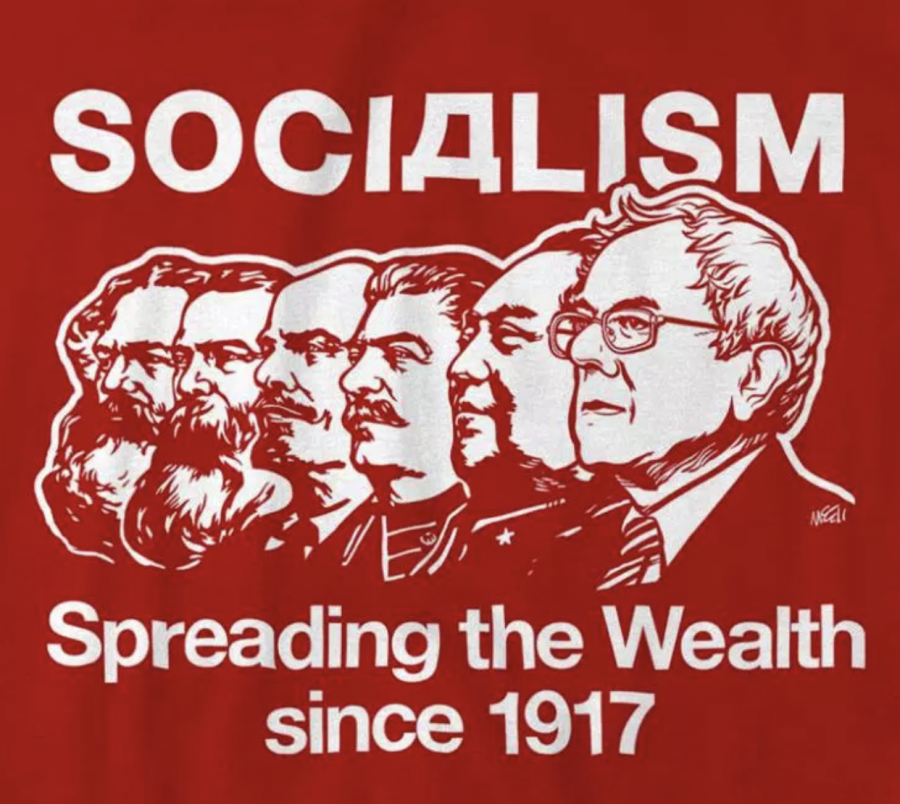
Socialism is in the vogue again, at least among those who never had to try it. According to polls, half of the young adults in America look favorable on socialism and accordingly half of them view capitalism negatively. In 2015 the 65 years old hard-left Jeremy Corbyn emerged from his 40 year-long, well-deserved obscurity and, until his very recent fall from grace, has become the unlikely hero of Britain's Millenials and Generation Z.

It doesn't seem to matter that everywhere socialism was introduced, it produced poverty and a police state at best, and mass murders all too often. A huge body of scholarly work has been written on why the simple idea of central planning causes this. They will be completely ignored here. My aim is to convey what I imagine the impression an extra-terrestrial with a cursory view of human history would get by looking at our last hundred years. 


The Grisly Past

The socialist experiment was aided by liberal sympathy from the get-go. G.B. Shaw defended Stalin at the time of the Great Purge that killed a million citizen of the Soviet Union. Between 1930 and 1953, almost 2 million people died in the Gulags. Including deaths of deportation, hunger, ethnic cleansing, and purges, the total death toll of Stalinism is between 6 and 20 million. When confronted with the contrast between Soviet propaganda and reality, Western apologists were often quoted to say: "You can't make an omelet without breaking eggs". To which, George Orwell replied: "Where's the omelet?"

The famine caused by Mao Zedong's Great Leap Forward killed around 30 million Chinese between 1958 and 1962. No one can say confidently how many people perished during the ten years of madness called the Cultural Revolution, but the estimations range from a couple of hundreds of thousands to 20 million. Mao more than once expressed the opinion, scaring the sh... out even of European communist dictators, that he would welcome a nuclear war if it destroyed the imperialists. Half of humanity might expire, but they would be replaced soon anyway in a fully socialist world.

The Khmer Rouge in Cambodia, whose irrational bloodlust surpassed even Mao's, killed 2 million people from a population of barely 8 million. Noam Chomsky, the giant of the Left, defended the Khmer Rouge until it was impossible, claiming that the genocide was the result of American intervention. Later, instead of admitting his mistake, he said he had been right by the data available at that time.

Around 100 million people were killed in the 20th century by communist dictatorships. They were most apt at killing their own citizens. The numbers are debated and most studies place them between 60 and 110 million, but where the error margin is in the tens of millions, the point is already made.


The Present

But let's leave the horrible past behind. A decade ago leftish parties all around the Western world praised Hugo Chavez, the poster boy of 21st-century Socialism. Today Venezuela, the country sitting on the largest oil reserves in the world, is wreckage. Her people are ruled over by a maffia-like regime backed by China and Russia. The response of Chavez's erstwhile fans wasn't exactly a loud apology.

In 2019, when the USA, in concert with a number of South American countries, recognized Juan Guaidó as the legitimate president of Venezuela, 70 scholars, experts, and politicians of the Left signed an open letter condemning the USA for interfering with Venezuela's internal politics. By that time the country was in ruins. It had the highest inflation in the world. 4 million of its citizens fled. Venezuelans reported losing on average 11 kilograms in 2017. Luckily, the Left has found who to blame. The USA.

The sad affaire seems to prove the old adage. Socialists don't love the poor, they just hate the rich.


No true Scotsman

The defenders of socialism often say that the previous versions weren't "real socialism", or good plans were derailed by basic mistakes and power-hungry leaders. But every single one of them? Correlation is not causation, and in the messy affairs of politics and economics, things can go wrong for an infinite number of reasons. But the fact that every single country ended up worse off by adopting it is supposed to give the supporters a pause. History even offers examples that could pass as controlled experiments. South vs North-Korea, East Germany vs West Germany, Taiwan vs China. Same people, same culture, similar geographical locations, and gaping differences in economic outcomes. And that doesn't even count the terror.

Explaining this away requires many years of higher education to suppress common sense.


In search of new heroes

The Nordic countries are the boogeymen of the Right and the heroes of the Left. But despite what Bernie Sanders preaches, these countries are the examples of Socialism only as much as the USA is of laissez-faire capitalism. Neither of the two exists in the Western hemisphere. Liberal democracies are welfare states, each combines regulated capitalism with various levels of social safety nets.

For the less squeamish, China is the newfound champion of Communism. It unquestionably executed the greatest humanitarian achievement in history by pulling 500 million people out of poverty. Its break-neck growth is unbroken for three decades. The size of its economy is bound to surpass the USA's soon. But China started to rise when it abandoned the idea of fully centralized control over its economy. It's the greatest polluter in the world; its human-rights record is abysmal; its surveillance system on its own citizens would turn Orwell's Big Brother green of envy. There is no reason to assume that its glorious run will go indefinitely after it has caught up with the West and run out of ideas to copy. The illusion of the much-praised effectiveness of its government is shattered by its bungle of the COVID-19 situation and unleashing the virus on the world. To its neighbors, it's an insecure, xenophobic bully.

And why are we celebrating China and not Taiwan, anyway? Again, an almost-controlled experiment where a homogenous population has been split and put under different systems for three generations. Taiwan is a pluralistic liberal democracy with environmental protection, gay rights, rule of law, and freedom of speech. It has the GDP per capita of France. China is a dictatorship with GDP per capita on par with Mexico.


Poverty

More than anything else, the fight against poverty is what animates socialist idealists.

My grandmothers' generation grew up in conditions that would seem horrible by today's standards. I have urban, low-level working-class ancestors on one side, poor rural laborers on the other. As children, my circa 30 great-aunts and -uncles, were often hungry, they lacked warm clothes, a bed of their own, and started working at the age of 12 at the latest. The third of them died in childhood due to accidents or diseases exacerbated by inadequate medical care and malnourishment. They were poor even by the standards of their time, but by no means were they exceptional.

Today, the poverty line in the UK is defined as a household income below 60% of the average. Using this definition there are over 3 million children living in poverty. Apart from very few of them, they have shelter, clothes, food, medical care, access to the internet. Not to mention electricity, running water, antibiotics, vaccines, anesthesia, and many other things we take for granted now, but none of them was available to the Rothschilds a hundred a fifty years ago. They never have to starve or feel cold.  Among men, life expectancy for those in the most deprived parts of England is 74 years, compared with 83.3 years in the least deprived areas. In 1940, the national average was 62.

Being poorer than others around you hurts and inflicts long term damage, but this poverty is very far from what the word meant just 2-3 generations ago. We live in the first era in history where the poor is obese. Acknowledging this (the general gist, not the obesity part) is not being indifferent to the problems of low-income families. But it helps to focus on the real problem of today, inequality.


Inequality

According to most economists, all on the Left and some on the Right, real wages of working-class Americans are stagnating since the '70s. Automation made many low- and middle-level jobs obsolete, whole industries have been outsourced to Third World countries, and the influx of immigrants are pushing down the wages of manual laborers. The benefits of globalization and technological progress are distributed unevenly. 

On the other hand, due to the same technological progress, an average worker has better TVs, more fuel-efficient cars, better medical care, a greater variety of goods, and greater comfort in almost every area of life. They also work less. It's very hard to decide which direction the scale tips.

A frequent mistake in measuring inequality arises from confusing income cohorts with individuals. It's true that the gap between the lowest and the highest 20% has grown in the last 30 years. But it doesn't mean that the same individuals compose those groups as 30 years ago. Most people start with a relatively low-income job - for example, a student doing hours at McDonald's or even a freshly graduated doctor - and their earnings grow at a varied pace until retirement

Inequality is inversely proportional to social mobility. Even in America, that has always prided itself, perhaps hypocritically, as a classless society, kids don't start off from the same baseline. Socialist countries, not entirely without classes though, by definition eliminated the problem, but at the price of making everyone poorer - and even that they could only maintain by sinking ever deeper in debt. As Margaret Thatcher said: "The trouble with Socialism is that eventually you run out of other people's money."

As the last piece of food for thought. Warren Buffet, Mark Zuckerberg, Jeff Bezos, Bill Gates, Steve Jobs. They are among the richest and most influential men in the world. With Bezos and Zuckerberg the "among" could have been just left out. Every single one of them was born into a plain middle-class family. 

Inequality has an eroding effect on society, and unregulated capitalism exacerbates the problem. But the socialist cure is worse than the disease.


Low standards

The critics of Socialism usually focus on its dismal economic performance and political suppression, with good reason. But there is another aspect of socialist systems that is overshadowed by the graver problems. The depressingly low standards in almost everything. Terrible customer service, plain moronic leaders, ugly buildings, clothes, and cars, empty bromides, the banality of public debate. This feeds a bunch of other problems plaguing Socialist countries. Parochialism, inferiority complex, and constant paranoia. Corruption and nepotism as a part of everyday life.
Everything joyful in life is sucked out or tainted by the stale ideology. Life under those regimes was grey - when it was safe.


Environmental damage

Capitalism is often accused of treating the planet like a rental car and squandering resources as if they were inexhaustible. And the blame is sometimes deserved. The free market doesn't handle well negative externalities, and its excesses need to be curved by legislation. But if the price of damaging the environment is financially materialized, like in the form of carbon credits, the market adapts much more efficiently than a central planning authority would. The Soviet Union generated nearly twice as much pollution per unit of GNP as the United States, besides deforesting, polluting its air and water, and nearly exterminating animal species. The greatest polluter in the world today is China. Plastic waste floods the oceans from Asia. The richer the countries are, the better they are in controlling their environmental impact.


Conclusion

If the 20th century didn't disabuse people of their belief in Socialism, nothing ever will. But hardcore leftists are a small minority and most sympathizers could probably be shaken up by some history lessons. Capitalism, with its current problems of stagnation, inequality, and housing shortage, comes up short against a utopia. But like democracy, it shines against its tried and tested alternatives.