, ,

On Cryptocurrencies

I'm late to the party. I've been continuously postponing writing about my take on Bitcoin for years, and now, with the whole crypto-market crashing through the floor, it will look like I'm just projecting hindsight wisdom back in the past.

But on second thought, religions never really die out. And Bitcoin has had crashes before and always bounced back stronger. It might not be the end yet.

So, why do I think that when the end comes, it won't be pretty?

I owe my antipathy towards Bitcoin at least as much to gutfeel as to rational argument. The former can be summarized quickly. Every second crypto-advocate I stumbled into on Youtube or in real life came across either as a second-hand car dealer, or a fresh convert to a cult - where the leader is an ex-second-hand car dealer. With all the unbearably irritating mixture of smugness and ignorance.

That was the gutfeel part. On the rational side, I never understood what exactly cryptocurrencies are good for. What problems do they solve? They are inferior substitutions to fiat money in almost every respect. According to Economics 101, money has three functions. Medium of exchange, store of value, and unit of account.

A bitcoin is a unit of account, that's alright, but as a medium of exchange, cryptos have very limited use. With Bitcoin, I could buy almost nothing I need on a daily basis. Food, books, petrol, clothes, paying the bills - I need local currency for all of these. As a store of value cryptos would need to be stable. They are anything but. If I had converted my savings to Bitcoin half a year ago, I would have lost half of them. If to Terra, they would have been just wiped out.

I've heard two main arguments from crypto fans. One, cryptos are anti-cyclical, two, their built-in scarcity prevents inflation. 

Anti-cyclical means that in times of financial turmoil, cryptos would be safe havens - like traditionally gold has always been. That theory has been just crushed, along with the markets. Everything is in free fall now, but nothing falls faster than cryptos. I have no idea why, but even if I knew it wouldn't make me feel better, had I invested my wealth in them.

The scarcity argument is not convincing either. Whenever I heard someone extolling Bitcoin's virtues, they were always depicted against an apocalyptic view of today's financial world. "Governments will start printing money any day now and we are accelerating toward a new Weimar!" Yeah, sure. 

One, governments don't print money, central banks do. 

Two, independent central banks and fiat money are actually two of the great inventions of humankind. The amount of money in circulation has to be aligned with the size of the economy. The ability of central bankers to control the money supply can be misused, but that possibility doesn't automatically turn a country into Zimbabwe. Rather, it provides tools to mitigate economic turmoils, which central bankers have used quite effectively during both the Great Recession and the pandemic. And didn't use during the Great Depression - hence there was a Great Depression.

So, contrary to libertarian fanatics, who see crypto as a way to freedom from government tyranny, central bankers are not bloodsucking monsters whose only purpose in life is to rid you of all your savings, but professionals whose job is to keep the economy running. They make mistakes, but the last 70 years were, by and large, the most stable and prosperous period in human history. 

Three, the general wisdom is that deflation is even worse than inflation. I'm really out of my wheelhouse here, but if the money supply was constrained and in the growing economy constant amount of money chased a growing number of things, that would lead to deflation. I guess.

But leaving all theory aside, babbling about the inflation-resistance of an asset that loses 10% of its value in a day of its value whenever Elon Mask wakes up on the wrong side of the bed? If a South-American country's currency had this kind of volatility, it would be a laughing stock even in the region. Who are these guys kidding?

Even if cryptos didn't have these shortcomings, I'd have a long list of doubts. What if I invest my savings in Bitcoin, then it falls out of vogue, and another crypto takes its place (which might allow for more than 3-7 transactions per second - just for comparison, for Visa, the number is 1,700)? What if I forget my master password? Normal banks will never seize my money even if I lose all my papers. Speaking of safety, is my money insured by the state? Who I go to complain if I'm the victim of fraud? If I accidentally sent money to the wrong place? What about the unknown unknowns that would manifest only once we moved to a crypto-based financial world? 

Long story short, I think cryptos are Ponzi schemes. You make a profit if more people buy into it after you than the ones before you. The rest is techno blah-blah, hype, FOMO, and libertarian fever dreams.

, ,

What makes Putin tick - The Myth of Russian Greatness

Time for another session for some armchair expertise. Coming to think of it, New Vac Times engages in this kind of punditry so often that it merits its own tag. Created.

Much has been said in the media and on public forums about what made Putin launch the war against Ukraine. The intellectual bottom comprised of arguments like "Ukraine used to be part of Russia, didn't it?", or "the USA started it!". One rung up on the sanity ladder came those who, just having left the pandemic behind transformed themselves from epidemiologists into geopolitical experts (but not historians) overnight, claiming confidently that what forced Putin's hand is "the aggressive encroachment of NATO".

But Russia invading its neighbors and playing the victim is nothing new. This is a recurrent pattern that existed before Putin, before NATO, and before even the Soviet Union. 

There is a long tradition of Russian thought, according to which the Russians are a chosen people. Russia is not merely a nation-state like any other, but a civilization itself, a land with a destiny. Moscow is the Third Rome, and Russia as a whole is the successor of the Roman Empire. The bulwark against the heathen hordes of the past and the Western decadence of the present. Even without the theological/cultural charge, it is a superpower rivaled only by the United States, that deserves a place in the highest decision-making circles.

This grand delusion gives the Russians a superiority complex that immediately crashes when they look beyond their borders and get confronted by the fact that Russia is inferior to the West in everything that counts. Military might, economic clout, soft power, cultural influence. 

The West dominates all major international institutions from the IMF to The Hague, American military budget and might dwarves the rest of the world combined, Western countries are the richest, most envied places on Earth. People all over the world chose English as their second language, not Russian. They watch and listen to American products, and they go for their news to the BBC, not Russia Today. Artists, scientists, and media personalities of all kinds measure their success by the extent of their breaking into the Western consciousness. The land of dreams for people from poorer countries is America and Europe, not Eurasia. Even Russians choose to school their children in Swiss or English boarding schools and send them to American universities. They park their money in London, go skiing in the Swiss Alps, and spend the summers on the French Riviera.

Russia has a GDP just below Italy's, and in the words of Barack Obama, the Russian economy "doesn't produce anything that anybody wants to buy", except oil, gas, and arms. In the even blunter words of the late John McCain, "Russia is a gas station masquerading as a country".

The gaping chasm between the grand delusions and reality yields resentment, envy, jealousy, and anger. If we are the chosen people, how come it's not us who are calling the shots here? They just start a war, and don't even bother to ask us anymore? Why do nations that used to belong to our sphere of influence choose Western alliance over us? Ukrainians, Estonians, Poles, the rest. Love us, you ungrateful scum, or else...!

When the trollish Russian Foreign Minister Sergei Lavrov publicly opined that NATO had "become a purely geopolitical project aimed at taking over territories orphaned by the collapse of the Warsaw Treaty Organization and the Soviet Union", former Polish Foreign Minister Radek Sikorski retorted, as our age demands, on Twitter: "We were not orphaned by you because you were not our daddy. More of a serial rapist. Which is why you are not missed..."

The "conversation" exposes not only the characteristic ghoulish cynicism of Russian leaders dating back to at least Stalin, but also a yearning to be seen both as a victim and great power simultaneously. A great power that has the right to "protect" its neighbors.

And like any other country with a serious inferiority complex, Russia explains away its failures by blaming them on the meddling of malign foreign powers. 

When the Soviet Union, after brutalizing every land it could lock in its sphere of influence for 40 years, fell apart - due to its own incompetence, corruption, and bankrupt ideology, it wasn't invaded by its former enemy, nor by the countries it has trampled on for decades. Nor were reparations demanded. Instead, Russia received billions of dollars worth of foreign aid. Gorbachev and Boris Yeltsin were celebrated as heroes in the West. In 1994, Russia joined the Partnership for Peace program, and in 2002 the Russia-NATO council. In 1997, Russia was invited into the G8 - despite that it didn't meet the standards required for joining, and in 2012 it gained membership in the WTO. In an effort to integrate Russia into the international order, the US has made constant gestures, London (disgracefully) offered its money-laundering services, and Germany chose to unilaterally increase its own dependence on Russian energy.

Even beyond economical and political nurturing, Russian leaders have been in constant need of ego-stroking. Tony Blair's advice to George Bush in the early 2000s was to treat the Russians as a superpower. French presidents, who seemingly fancy their country as a diplomatic superpower, have been running regularly to Moscow to ask what the West should do so the Russians feel better about themselves (ironically, France is a country that also has an inflated view of its own importance and probably not accidental that in the strength of anti-American sentiment in Europe, it is second only to Russia).

And yet, in the Russian narrative, they were disrespected and mistreated. Putin is reported to engage frequently in hour-long monologues reciting his grievances to anyone who cares to listen. The West lied to us, deceived us, bullied us, and the rest, on and on.

Even when Putin disappears eventually, I don't see how this ugly side of Russian national character would go away. The only effective salve on bruised ego is success. The structure of the Russian economy and the endemic corruption prevents an economic one, and in the absence of that, Russian leaders will only measure their accomplishments in military achievements.

, ,

Debate circle

 "We couldn't do these meetings in person in the last two years because of the pandemic", explained G. to another newcomer as I entered the room, the last word preceded by a measured pause and accompanied by scare quotes drawn into the air with his fingers. "Well, this is up for a good start", I thought.

I attended this meetup the second time, the first after the second wave of the "so-called" pandemic. That time I was invited by a former colleague and the conversation was about climate change and the role of fossil fuels in it. The speaker then, who customarily gave a presentation that was followed by a free-style debate, was a representative of the coal industry. So I was prepared to hear some controversial opinions about the Ukrainian war as well, which was tonight's topic.

G., who is the chief organizer of these events, is a fellow countryman of mine. He has lived in Switzerland long enough to lose his Australian accent which he had acquired before. Despite the decades of absence, he hasn't lost his touch with our motherland, as I learned five minutes later when the conversation with the nice Canadian lady strayed onto Hungarian politics. "Orban is a center, very center-right guy, who just refuses to go along with this woke craziness" - he explained. "Maybe I should add some nuance to that?", I wondered silently for some seconds, then decided to pass.

Slowly, people started pouring in, and at seven, the official start time, the oblong table was densely surrounded by circa twenty people. The age distribution of the participants ranged from the early twenties to late fifties, the gender ratio was 6-1 for men, and a depressing 80% of us were software developers. And this is a talk about geopolitics. I'm not sure whether there is something wrong with software engineers or maybe with everyone else.

In absence of a designated speaker, G. kicked off the meeting with a quick overview of the situation. This is a terrible tragedy. It's incomprehensible why no one in the world stood up and demanded that the warring parties stop this immediately and sit down to the negotiating table. The Swiss are equally incomprehensible, giving up their hard-earned neutrality? If they freeze the bank accounts left and right, who will keep their money in their banks in the future? The media is biased and unreliable, and this heroic picture they paint of that corrupt Zelensky is just ludicrous. Still, it's a terrible, terrible situation. And so confusing. What does Putin want? What do Ukrainian Nazis want? Just sad. 

I stopped any effort to be subtle about my facial expression halfway through the speech when it dawned on me that I made a terrible mistake. God, there is still two hours left. But luckily, the situation slowly began to improve and a real conversation started with a diversity of opinions. There were a couple of guys who were, not experts by any means, but well-informed. Some were not very well-informed but were arguing in good faith. Then the mandatory useful idiot, chewing on the Monroe-doctrine (what would the US do if Canada wanted to join a Russian military alliance? it wouldn't behave any differently, would it?) and the stealthy, creepy encroachment of NATO upon Russia (that is, the rudeness of the Baltics towards their neighbor for looking for protection). Anyway, what's been wrong with Finlandisation? A like-minded young historian kid chimed in musing on what right the West has to condemn Russia after Iraq? At that point, I was exercised enough to challenge that but someone else raised his hand quicker.

And then there was the highlight of the evening, the guy who bravely made the next step over G.'s hand-wringing lamentations. Ukrainian Nazis are indeed active in the Donbas. How much do they influence the government? Well, who knows, can you prove they don't? Euromaidan protests, orange revolution? The CIA staged them. Russian incompetence? He is not so sure about that, he read some articles. Mariupol? The Ukrainians themselves are shelling it. Bucha? You shouldn't believe the media uncritically. Nothing confrontational, just asking questions. Politely taking notes, nodding. Then the next observation (the Ukrainians were developing nuclear weapons, you know). For a while, I was genuinely puzzled by him. Is he on Russian payroll or simply enjoys being a cretin, just for the thrill of it? In the end, I decided it's the latter (judgment confirmed later in the bar when he said he knows about international banking and finance - that's why he knows it for a fact that the US is about to collapse - because...prepare...he is a software developer in a bank).

But there is was a real and pleasant surprise in the evening. A young Polish guy, A., who, unlike the rest of us, knew the topic in depth. Not my own "30-days podcast crash course on Ukraine" type of education. He was respectful, but argued forcefully, almost passionately. So passionately, that at one point his voice cracked. He had friends in Eastern Ukraine. His dismantling of the nonsense was merciless, and I leaned back and enjoyed the show. 

At 9:30, I almost felt sorry that the conversation ended, but my bladder was on the verge of explosion. I went to shake the hands of A. and joined others in the bar for an after-event beer.

The topic of the next event will be "Books vs Tik-Tok". I'll think about going.

,

History calls - and says playtime is over

As a teenager, I had the unconventional view that we live in a very pleasant age. I didn't know that it was unconventional and I didn't know too much about the past apart from what I was taught in school, but that seemed like a no-brainer. According to those high-school history books, before the second part of the twentieth century, people stumbled from one war to another. In peacetime, they simply lived in poverty, religious intolerance, and under the oppression of the nobility and the Church. Those who were too loud about not liking it faced horrendous torture and ended up serving as common entertainment when they were executed in public. Even if you were well-off and left in peace, there was no medicine, hygiene, education, policing, impartial justice system, and all the rest we take for granted today.

My own, more recent, family history didn't paint a much brighter picture either. All of my grandparents were dirt-poor as children. Apart from one grandfather, all of them lost siblings while growing up. They had six years in school tops, spent part of their teenage years in cellars during WW 2 hiding from bombs and Russian soldiers, then started their families in the darkest period of the communist dictatorship. My parents' lives, growing up in the sixties and seventies, were incomparably better. And I and my generation had it the best so far.

So it was baffling to find out that others didn't share my opinion. A cousin of mine was a devout Catholic and very much into medieval history, so for her, the Middle Ages rocked. It was understandable, in a way. But I also recall a conversation that happened around 11th or 12th grade. I don't remember how we came to the topic, but an otherwise very smart, though probably a bit naive, boy argued that peasants in the olden times must have had a much better life than we. They didn't need to hurry anywhere, had a great community, and were able to enjoy small things in life. Well, I thought, since they buried a third of their children, had not much to eat, and were brutally exploited, they'd better enjoy the small things they had. There was a couple of similar conversations in the following years. Not too many, but all reliably similar to make me feel rather lonely with my worldview.

Things are going well...

Much later, around 3-4 years ago, I came across Steven Pinker's books, in which he demonstrates the decline in violence through the ages, and the progress humanity has achieved in almost every part of life that counts. Life expectancy, security, material well-being, education, freedom, tolerance, etc. It is a very long list. Pinker's work has been either a massive boost to my confirmation bias, or just a welcome vindication of my default worldview.

Around the age of 23, when I started reading newspapers, my view changed a bit. I still thought that from a historical perspective, life today was great - although not everywhere -, but I also had the impression that a day will come when it will be viewed as a golden era - that is, the good times won't last forever. Not because the trends showed a downward trajectory, more like the opposite, but there are ups and downs in everything.

...too well

The point I want to make with this long-winded rambling is that things are really much better today than they used to be. Having done so, now I can present the central thesis of the post: this state of affairs has some unforeseen and negative consequences. Our life has become so safe and comfortable that we can afford to be unserious. Not only in the political sphere, but in the general social realm.

It's been demonstrated in plain view by the ubiquitous attitude towards public safety and the well-being of others during the recent pandemic. Many people who could work from home, watch Netflix 24/7, and in general were not very affected by the pandemic, when facing some mild inconveniences (like the requirement of vaccination for entering restaurants and theatres), cried immediately tyrannies. The obligatory mask-wearing on public transport was "unbearable oppression". Vaccine certificates are the proof of a "dictatorship". Everything was about "my rights" and no mention of "my responsibilities" towards others. Perhaps the restrictions were overdone. But those who think that they now live under tyranny have no idea whatsoever what real tyrannies look like. 

Back to politics, when Boris Johnson became the mayor of London back in 2008, I joked that the English are doing so well that they can afford to choose a clown as the mayor of their capital. At that time, I meant "clown" as more of a compliment. I didn't know anything about BoJo but he seemed like a cool guy. 

On more recent events, I never bought into the story that the voters for Brexit and Donald Trump were the losers of globalization who felt that the "elite" is despising them. I thought both disasters were brought about by people who were simply bored and wanted entertainment. Practically no one starves today in the UK or in the States. No child is without a roof over her head. No one is facing religious persecution, everyone has access to education. No one seems to remember why the European integration started (spoiler alert, the Second World War). We live a pampered life, where the fiercest battles we can find are fought in Brussels, the House of Commons, and in the US Senate, and it's boring.

Politics used to be about material things because just two generations ago material things were of life and death importance. Today, politics is mostly about identity and feelings. People can make incredibly stupid decisions at the polling booth and nothing really bad will happen. And when the lower level desires of the Maslow pyramid are satisfied, our attention turns elsewhere. We want entertainment and to feel important, righteous, and smart.

I heard recently a historian explaining how well Hitler understood the underlying principle. Promising fight and glory, even hardships for the noble cause, captures people's hearts and imaginations more than "gradual change", "material prosperity", "steady improvement", "insightful debates", etc. The latter ones are what democracies should be about.

The infantilization on the Left

Being unserious manifested itself in different ways on the two ends of the political spectrum. Many on the left, feeling disappointed that the great battles for liberal ideas happened before they were born, decided to pretend that we live in the most homophobic, misogynistic, racist world, so they can feel good about themselves by fighting against it. In reality, no human in history ever lived in a place where it was better to be a woman, homosexual, or brown-skinned than the present, in the West. It's not that the wokes remind us that there is still much to do to lift up minorities. Many of them say with full seriousness that so far, there has been no progress at all.

 ... and the Right

On the right end, people started to fantasize about non-existent enemies (hordes of Muslim migrants in Hungary, power-hungry, faceless bureaucrats in Brussels, godless liberals destroying the nation in the US), and to wax lyrical about older, better, more God-fearing times of national greatness and their strong, wise leaders. Paranoia about international philanthropists, like George Soros, was always present, but now, when there was no Cold War to fill people's hearts with real dread, it has grown a hundredfold.

It is fascinating that it doesn't matter how much a leader steals openly, trashes democratic norms, or even orders the murder of journalists and political opponents, he only needs to say: "I stand for Christian/traditional values", to get an out-of-jail card from religious right-wingers of otherwise democratic affiliations and high education. The majority of American public intellectuals on the Right, after getting past the mandatory throat clearing ("yes, Orban is overstepping the legal boundaries, his media-handling is heavy-handed, blah-blah..."), will continue on expressing their admiration for the kind of country that obnoxious tin-pot dictator has been building. Recently, up until a month ago, even Putin was a strong, masculine, Christian role model for not a negligible portion of Republicans. And for the full Hungarian right-wing elite.

Brexit has been a great example of making a decision that had clear, numerous, and thoroughly explained drawbacks, mostly imaginary benefits, and was made in a fight against non-existing enemies. Trump is the best example of how people can descend into complete, bottomless madness.

Reality calls

Putin's attack on Ukraine was a jolt of common sense into the common consciousness. Life can be serious, and decisions have consequences. Reality doesn't care about your pet fantasies. Our brief, ahistorical era of complacency is over.

It won't wake up people who are already invested in their beliefs. Almost nothing does. But it will sway people who are sitting on the fence. Many liberals will realize that the West might be not the worst place to live, and who goes to what toilet might be not the most important problem of the world today. And some strongman-sympathizer Christian nationalists will sympathize less. On both sides, the taken-for-granted advantages of liberal democracies, like not being sent to Siberian prison camps for opposing the government, or beaten up by the police just for protesting against a war, will be a bit more appreciated.

Regardless of how individual thinking on these issues will change, the public tolerance for people whining about hurt feelings and the oppressive nature of Western democracies will sink. Same for public admiration of "strong Christian leaders" (aka Putin&Orban).

The hardcore won't change, but as we finally have real problems to talk about, they will get less oxygen in public discourse. That's a good start.

, , ,

Is Putin a rational actor? - Part 2

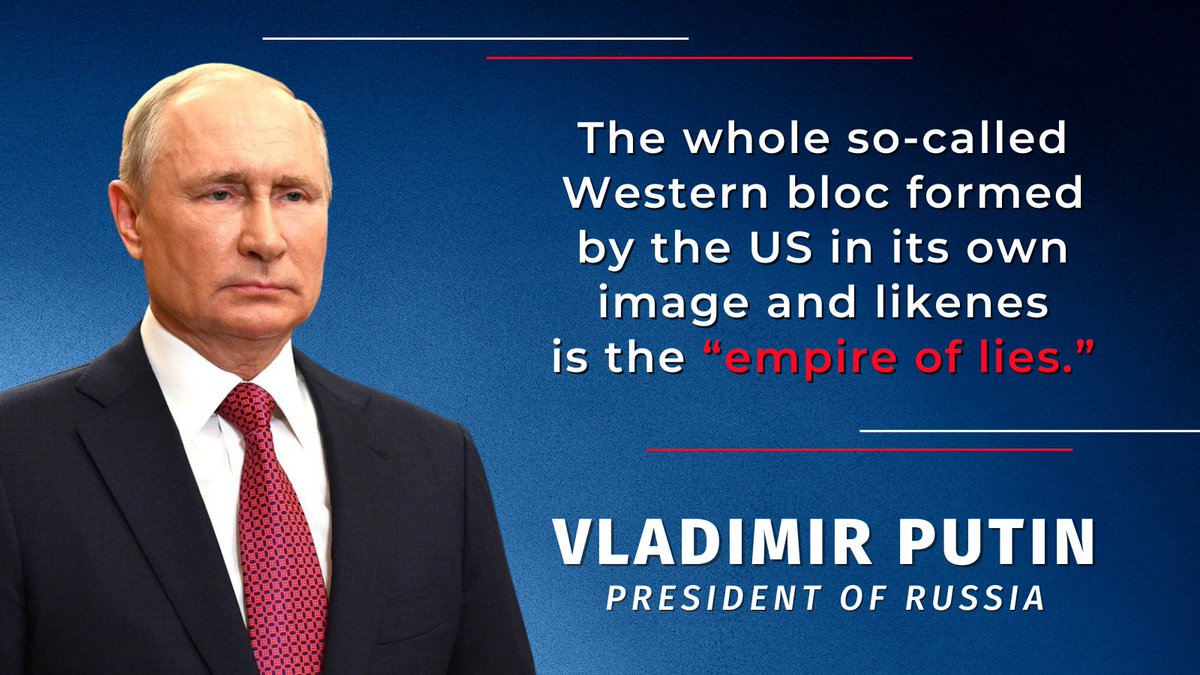
The previous post left the topic off with the statement that Putin is a Russian imperialist with 19th-century values and priorities and a US-sized chip on the shoulder. He cares only about Russia's coercive power over other countries - which he equates with greatness -  and he thinks that everyone else does the same. He also believes that the West is out to destroy or at least subdue Russia. These are not mere speculations, Putin himself expressed them openly many times.

But more than that, his obsession with West's bad intentions is personal. Putin is convinced that the color revolutions in post-Soviet republics (2003, Georgia; 2004, Ukraine; 2005, Azerbaijan; 2006, Belarus) were all staged by the CIA, and he allegedly blames Hillary Clinton personally responsible for the Ukrainian one. He believes America wants a regime change in Russia itself (he just made that a self-fulfilling prophecy two weeks ago) and for him personally, Moammar Gadhafi's fate.

Gadhafi's grisly end is something that reportedly rattled Putin because he interpreted it as a cautionary tale. The Lybian dictator accepted the West's terms and gave up financing terrorism and developing weapons of mass destruction in exchange for being left alone. And then, they killed him. The moral of the story is that the more concessions one makes to the US the closer he gets to being murdered. If he believes this, that would explain why he has chosen to depend on China instead of integrating with the West, even if he is aware of the strategic dangers of China's friendship.

Based on how things look now, with the Ukrainian invasion, Putin took a gamble and lost big time. He didn't expect the reactions from either the West or the Ukrainians. He destroyed Russia's economic prospects for decades. He ensured that the EU will now do everything to rid itself of its dependency on Russian gas. He managed to revive NATO - which will likely expand even closer to Russia now - and strengthen the EU - the exact opposites he wanted to achieve.

His imperialistic drive might have made him attack Ukraine but his paranoia will dictate his actions from here. 

What makes Putin extremely dangerous is that he is very different from past Soviet leaders. He is not just the first servant of a universal ideology. Khrushchev or Brezhnev were simple figureheads of the Communist Party. Chernenko's and Andropov's names barely ring a bell to anyone anymore. Even Stalin presented himself as the face of the Party and, ensuing some political murders, was duly replaced after his death. But Putin is the regime. 

The war was his decision and his alone, and he will bear the sole responsibility for the economic collapse that at the moment looks like the most probable future for Russia. An additional military defeat would mean losing face and shattering the image that he has built up for domestic use in two decades, as the infallible hypermasculine leader. And losing the war could very well mean losing his life, too. Even before the attack on Ukraine, Putin had been long past the point when peaceful retirement was an option for him. If the opposition ever overthrows the government, he will spend the rest of his years in prison. If one of his enemies gets to the helms, he will be probably killed.

Besides this all, this is the guy who has flooded the internet with his half-naked muscleman photos. There are videos of him taking a scuba-dive and, lo and behold, emerging with two ancient Greek urns. Or of him shooting a snow leopard. Or scoring eight goals against professional hockey players. When he started showing age, he underwent cosmetic surgery (which he denies), which made his face almost unrecognizable. He sits at the end of a ridiculously long table when he meets foreign leaders, reportedly lived in isolation in the last two years, and publicly humiliated his own chief of intelligence on national television just before launching the war. What does this all tell about his mental state? 

In short, Putin is a man who ordered the killings of journalists, political opponents, schoolchildren (Beslan school siege), and tens of thousands of civilians (during the Chechen wars), perhaps even Russian civilians to create a pretext for the Chechen war. He is incredibly vain and he has cornered himself into a position, from where for him personally, victory is likely a question of life and death. Being rational from there is not reassuring for the rest of the world.


Is Putin a rational actor?

This post engages in some armchair psychology speculations, so let's set something straight at the start. No one knows what goes on in another person's mind, and people often make ridiculously confident statements about what is going on in Putin's (or in other world leaders' whose mental states are worth speculating about). But from someone's actions in the past, we can construct an idea of the personality that would have made those actions most likely, so we can predict his future ones with some certainty. Not only we can do it but we are forced to as well, to be able to reason about other people in our everyday life, and putting "based on his previous statements...." before every sentence would be a chore. But it's still worth reminding ourselves about this every now and then. Sentences like "Putin believes that ..." below are to be interpreted with this in mind.

In the last two decades and in the common mind, Vladimir Putin has grown to be the ten feet tall geopolitical strategist of our time, referred to variably as Judo or chess master of realpolitik, the shrewdest poker player, or just plainly the savviest schemer of this age's great power games. 

This picture never sat well with me - to be more exact and honest, not since at least the mid-2000s. Mostly because the admiration for a bloody despot was just a bit too eager. I've heard too many "well, he is a bad man, but you have to give it to him that ... blah-blah" with serious faces. Give credit where it's due and all, but at least make an effort to conceal the guilty pleasure when you're saying it.

But even setting personal taste aside, up until the annexation of Crimea, Putin's foreign policy was purely reactive with a single driving principle: whatever the US would like, do the opposite. And if time allows, do some disruption in the EU. Georgia is floating the idea of joining NATO? Invade it. Obama declares Assad must go? Prop him up. The US is suspicious of China? Let's make friends with it. North Korea threatens to develop nuclear weapons? At least be ambiguous about it. Brit idiots want to break out of the EU? Let's help them. Putin didn't do anything statesmanlike that would have benefited Russia in the long term. He made no attempt to diversify its economy, root out the corruption, turn the immense brainpower of its people into a scientific and technological powerhouse, build a net of allies among Western powers, or integrate it into Europe. 

The only thing he's been successful at is to thwart American interests and undermine European unity wherever he could. And for that, I think he gets more credit than his fair share because he has been fighting an asymmetric war. The asymmetry manifests in many ways. The means he can and is willing to take and the restrictions under which he operates are very different from the framework Western leaders have to work in. 

Putin at home is not accountable to anyone. There are no other parties to make deals with, no electorate who can send him packing. The leaders of the West have voters to please, allies to comfort, limited time in office to act, conflicting visions of how they should tackle Russia. Should Europe build its own military alliance or continue to rely on NATO? Should it isolate Putin or build economic ties with Russia that it will value enough to restrain itself? Can a leader try to wean Europe off the Russian gas by relying on nuclear plants or the citizens will punish him for it? The European Union is a diverse, pluralistic political system, with countless conflicting actors and interests, and thus is almost unable to stand up as one for anything. It doesn't even need to have in its ranks the Orbans of the world - who willingly do Putin's bidding - to be dysfunctional. It's a pity that it does. To a much lesser extent, this is true for America as well - because it's a democracy. Russia so far has thrived on Western division. 

Those are the constraints on one side and the lack of them on the other. What about the means? Instead of direct confrontation, Russia has financed far-right parties overall the West, meddled in elections, launched cyber-attacks, spread misinformation on every medium. This warfare has two major advantages. It has a very high benefit/cost ratio and the West won't and can't retaliate in kind.

Sowing division and literal destruction are much easier and cheaper than building and repairing things. Writing a computer virus (which Russia's state-backed hackers are very good at) costs a fraction of what an anti-virus software does. The damage of sowing distrust in society is harder to monetize, but for a state, it costs peanuts to heavily influence a foreign electorate from social media in a matter of months, whereas restoring faith in public institutions can take decades. Looking at Brexit, Donald Trump, or Hungary, Russia has been very successful in its malign endeavors. 

The other part of asymmetry is that these tools - viruses to crash the health care system, financing neo-nazis, spreading lies - are not so available for the West. Western politicians won't paralyze Russian citizens' hospitals or let them freeze by shutting down the electrical grid or bomb Syrian civilians to force a destabilizing flow of refugees upon Europe because they are not sociopathic murderers like Putin or the Kim dynasty. They won't spread lies about Putin's corruption, because it doesn't need exaggeration and also because the Russians have a much higher level of tolerance for that than voters do in the West. They can't effectively sway public opinion, because public opinion affects rigged elections much less than fair ones. They won't finance violent, xenophobic neo-nazis because the base of Putin is built upon them.

All things considered, Putin has waged a very successful hybrid war against the West. But his actions don't require brilliance, only competence and malign intentions. Having said that, it's undeniable that competence (and malice) he had. Up until now, he has won all the military operations he ever launched. The wars in Chechnya and Georgia, the annexation of Crimea, or propping up the Assad regime, all went the way he wanted.

But his war against Ukraine, so far at least, seems irrational. Even ignoring the unprecedented unity and decisiveness the West has reacted with - which neither Putin nor anyone else could have foreseen -, or the poor military planning behind it, it was clear from the get-go that it will leave Russia a poorer country and an international pariah, regardless of the outcome. Almost every political pundit and even military expert in the public had predicted that it was just a bluff. And yet, it wasn't. Why did Putin start a totally unnecessary and unprovoked war?

I think at the core of the issue is a mutual misunderstanding between Putin-like people and modern Westerners ("West" or "Westerners" is used as an umbrella term for modern liberal democracies, wherever they are geographically). Putin is an anachronistic creature of the 19th century - the 19th century of Russia. He, with a long line of his compatriots before him, thinks that Russia is a great nation with a destiny. The defining traits of a great nation in our eyes are the prosperity and freedom of its citizens and its technological prowess. In Putin's eyes, those are the military might and the territorial extent. And great nations have the right to rule over lesser ones. In the West, this way of thinking had once been natural, then been fading since the Enlightenment, and has become truly distasteful after the Second World War - to the degree that we find it hard to believe that someone can think this way today.

Putin, on the other hand, can't believe that others don't think like that. The liberal international order, national sovereignty, international law - in his mind, these are just slogans, lies, building blocks of the American ploy to dominate the world. The USA defeated and shattered the Russian Empire (which at that time lived in the form of the Soviet Union) in 1991, but after decades of humiliation, Mother Russia is on the rise again. Extending her over Ukraine by this logic is just a natural move of an empire to reassert its former place in the world and restore its traditional territorial integrity. And if Putin thinks of himself and Russia as a great leader and great nation on their way to meet history, then economic sanctions and international loathing will matter little. This is another way in which the asymmetry favors Putin.

And in this mental framework, his decisions may be uncharacteristically rash and poorly thought through, but in the grand scheme of things not irrational. 

With one glaring exception. It doesn't matter which century you imagine yourself into, that doesn't change the fact that Russia is situated right next to another empire, which is exactly as xenophobic, insecure, and nationalistic as Russia, but with an upward trajectory and ten times as many people. If Putin really understood the interest of Russia, he would have his land integrated into the Western military alliance as tight as he could and prayed that one day it will be enough. And on that day, that will eventually come, the Chinese will say something along these lines: "Tovaris. You know, there is this huge land of yours just right across our border. It is full of natural resources. As luck would have it, alas, our land doesn't have much resources. But it has people, around 1,5 billion and growing. Speaking of which, you guys are around 140 million and shrinking. So our idea is that we will move in, and you will give way with a polite smile." Russia and China, despite the recent bromance of two ugly guys, have been historical enemies. In the Cold War, they came very close to nuclear confrontation. And the Chinese won't share the Western squeamishness about bloodshed and hurting the citizens when they want to punish their leader.